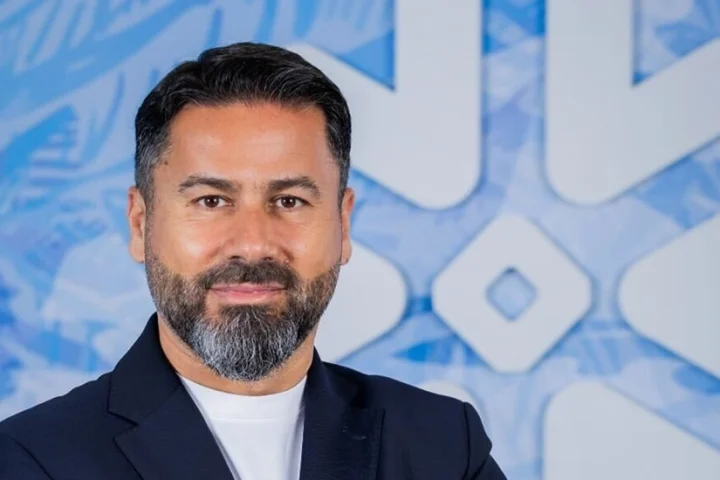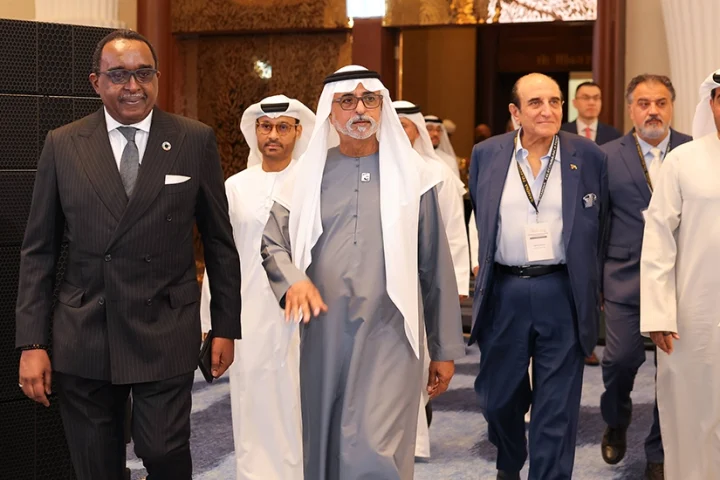


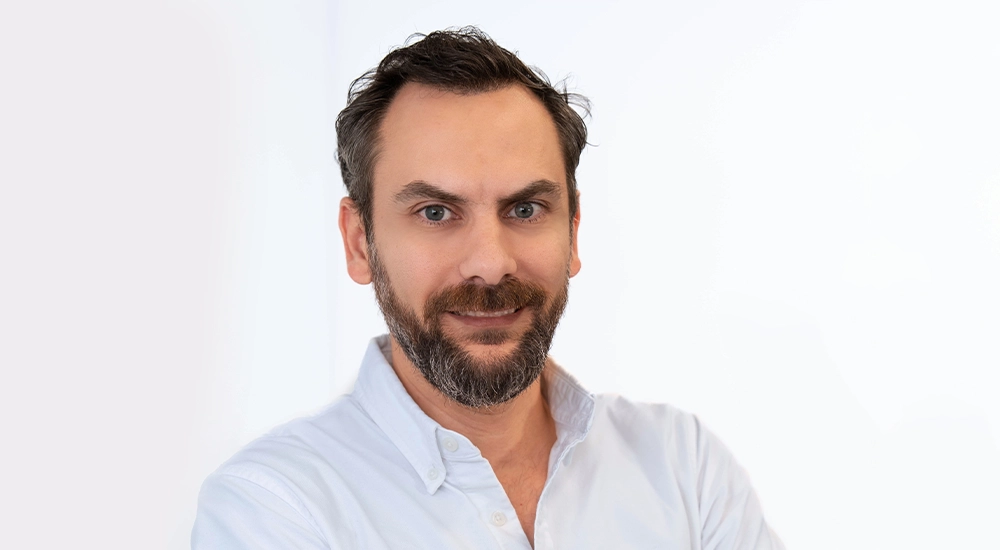
Rayan Soumsom, Head of Business Development at NMK Electronics, spoke to GEC Newswire on the sidelines of the official launch of NMK Beyond, the company’s groundbreaking 21,500 sq ft immersive technology experience hub in Al Quoz, Dubai.
When you look at how the AV market is evolving today, what structural change do you believe will matter most in the long run – and how is NMK positioning itself around it?
When looking at the evolution of the AV market today, there is a significant shift taking place between hardware and software. For a very long time, the AV market has been predominantly hardware-oriented. Now, we are seeing increasing software integration, which naturally brings with it greater AI adoption and a growing need for dedicated software and programming expertise.
At NMK, we are not ignoring this shift. On the contrary, we are investing more and more in people who understand programming and can navigate this transition. We have also opened opportunities for interns from universities with IT and programming backgrounds, ensuring that we strengthen and solidify this side of the business for the future.
As NMK has scaled, what internal choice helped protect its technical depth while the business grew?
I would say consistency in closely following technological developments has been key. At NMK, and through our alliances with global brands, we do not allow brands to operate in isolation or grow in the market alone. We grow together with them.
This approach has enabled us to build strong, trusted relationships with our brand partners. As a result, they are more open with us about what is coming next in terms of technology. This helps us understand where to scale, where to open new positions, where to invest, and what message we want to communicate to the market.
Because we have early visibility into upcoming technologies, our deep connections with our brand partners have played a major role in supporting our growth.
As AV projects become more integrated and multi-stakeholder, what is most critical to maintaining trust across consultants, integrators, and partners?
With the wide range of offerings in the AV industry today, many brands aim to achieve similar outcomes or provide comparable products. Despite this, NMK has earned trust among consultants, integrators, end users, and all stakeholders by being transparent about what we plan, propose, and deliver.
Our facilities at NMK are proof of this. The meeting rooms, recording studios, training rooms, and other spaces we have are all spaces we actively use ourselves. We showcase these environments to consultants, integrators, and end users so they can see exactly what we are offering.
Because we use these spaces daily, they are well maintained, fully functional, and proven to work in real-world conditions. We do not sell concepts or assumptions – we offer solutions we know work, because we use them ourselves.
What is one assumption about the AV industry today that you believe will prove wrong in the next few years?
One common assumption is that AV systems are treated as a secondary consideration in projects – something to be addressed later. Typically, teams prioritise ducting, HVAC, lighting, and electrical systems first, leaving AV for the final stages.
However, AV has consistently proven to be one of the core pillars of any project. In the coming years, I believe contractors and end users will start thinking about AV and technology much earlier in the process – sometimes even first – recognising what technology can truly enable before anything else is implemented.
Give us an overview of your channel partner programme. What skills and specialisations do you look for, and how is this changing with digital and AI?
Skills are a critical focus of our channel partner programmes because technology cannot function without skilled people. We look for individuals who enjoy working with electronics, are curious, and have a strong desire to explore and learn new technologies.
We also seek partners with solid technical hardware and software capabilities – people who understand how systems work, how they are assembled, and how they integrate. As the industry shifts towards software and AI, this change is pushing us to look for more IT-oriented talent, including coders and specialists who can work beyond traditional AV roles.
We are interested in people who can develop AI agents that not only analyse data or generate reports, but also interact with hardware, buildings, and multi-room environments.
A good example is an intern who joined us from a university in Dubai. His internship focused on AI, and he successfully developed an AI agent that interacted directly with meeting room hardware such as microphones, DSPs, speakers, and amplifiers. The solution handled tasks like translation and transcription through custom coding.
He was not originally from an AV background, but his coding expertise allows him to transition into the AV industry very quickly. These are the kinds of skills that may not yet be widely used in AV today, but will become essential very soon.
Who are your principal alliance partners in the region, and how do you approach go-to-market campaigns?
We have many long-standing partners whom we consider more than just alliances. Our guiding principle is to deliver the right solution for the right project.
We deeply value our partnerships and relationships. Some of our long-term partners include Neutrik, Bose, Shure, among many others. Our approach to market is solution-driven rather than product-driven.
We do not simply sell a speaker or a cable. We listen carefully to the market and to our clients, gather their requirements, and then design solutions tailored specifically to their needs. No two meeting rooms are the same, just as no two clients are the same. Each space requires a unique approach, and that is where our strength lies.
You’ve worked across different markets and growth phases. What leadership decision had the most long-term impact on the business?
Learning – continuously learning – has had the greatest impact. Investing time and effort into learning is critical. Leaders need to give themselves and their teams the time to learn, reflect, make informed decisions, and evolve.
If you give the same set of requirements to two different engineers, they will likely produce two very different designs. That difference comes from creativity, experience, and the freedom to grow. Leadership, in my view, is about enabling teams to learn, train, and develop themselves. That is how both people and businesses evolve.
Looking ahead, what does sustainable success look like for organisations in this space over the next 3–5 years?
There are many success factors, but the most important is staying close to the market. Organisations must continuously learn about new technologies and stay aligned with emerging trends, because technology evolves at a very fast pace.
As our regional director Alex mentioned recently, the challenge is that technology often evolves faster than project timelines. By the time a solution is ready for implementation, a new development may require designs to be adjusted again.
Sustainable success comes from listening to the market, remaining adaptable, and constantly developing both skills and solutions. This approach is what has shaped NMK into what it is today.