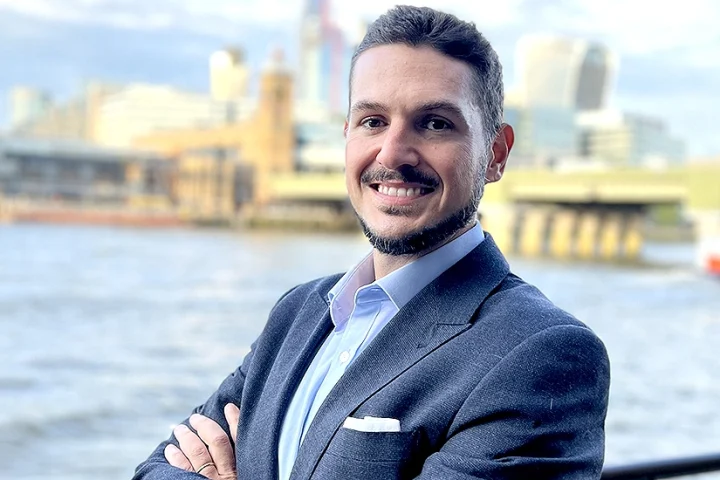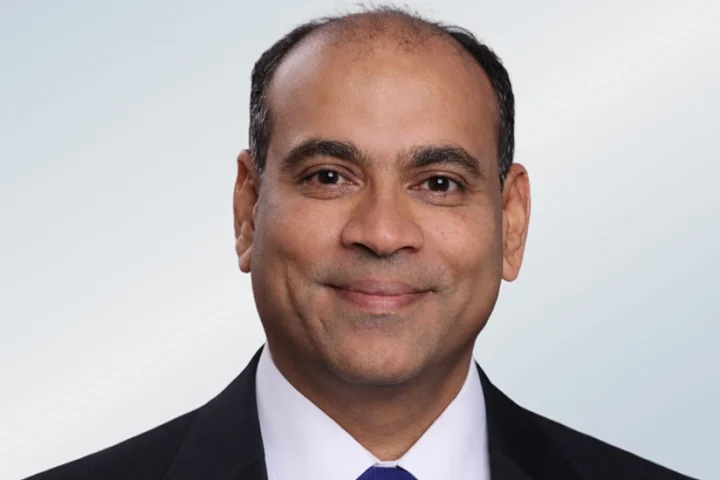



RedCloud CEO Justin Floyd says global trade is stuck in the 1970s — running on paper, WhatsApp, and guesswork. In this interview, he reveals how AI can eliminate stockouts, why Saudi Arabia is becoming a global hub for data-driven trade, and how RedCloud is building a full-stack digital trading ecosystem serving manufacturers, distributors, and retailers worldwide.
Take us back to the beginning — what problem or vision sparked RedCloud’s inception?
I’ll start by telling you a bit about myself. This is actually my fourth infrastructure business. Over the last 20 years, I’ve built technology companies worth around $4 billion. They’ve all been infrastructure plays. Essentially, I build oil rigs before the cars arrive.
RedCloud was created to become the third major intelligence infrastructure for global trade. If you think about it, the first was Bloomberg for financial markets, the second was Google for the internet, and we’re the third — for global trade of fast-moving consumer goods. That industry is worth $12 trillion, yet it wastes roughly $2 trillion every year due to stockouts, incomplete supply, and products not being in the right place at the right time. Those stockouts create massive financial losses for everyone involved — distributors, wholesalers, manufacturers, and FMCG brands. Whether you’re Coca-Cola, Unilever, or Procter & Gamble, all of these companies face major challenges in their supply chains.That’s what gave me the vision for the company — the opportunity to build an intelligence foundation for global trade. What our technology aims to do is provide an intelligent infrastructure that enables them to predict and avoid, and digitise trading and supply chains through electronic, data-driven systems.
How does the platform harness AI to drive value?
AI fundamentally rests on three elements: compute, algorithms, and data. Today, most people have access to compute and algorithms. You and I can access them through platforms like ChatGPT.
But ChatGPT doesn’t work with ERP data — because ERP systems sit behind the paywalls of distributors, manufacturers, and retailers’ point-of-sale systems.
What we built is the mechanism that allows that data to surface on our platform. It’s currently the only platform in the world that can carry this type of data at scale.
We then apply AI — machine learning, deep forest learning, decision tree models — a very sophisticated layer of algorithmic intelligence. Why? Because the FMCG supply chain today looks a lot like Wall Street in the 1980s. Before algorithmic trading, Wall Street ran on paper slips, phone calls, and manual processes.
That is exactly how a $12 trillion supply chain still operates today — on spreadsheets, pieces of paper, WhatsApp messages, and manual workflows. Our technology uses algorithms to convert all of that chaos into usable intelligence and data.
You have recent created a JV with Kayanat in Saudi Arabia to form RedCloud Arabia. What makes this region attractive for your company?
In terms of the vast trading volume and opportunity that exists, it became very clear to us early on. We’ve always been strong supporters of Vision 2030. Vision 2030 is not about building more shopping malls — it is about building the infrastructure that generates economic intelligence at scale.
And Saudi Arabia, particularly Kayanat, understands something very profound: countries that control trading data will have structural advantages for decades to come.
Just as Saudi Arabia recognised oil as the most valuable commodity on the planet, today the second most important commodity — arguably even more important — is data. And Saudi leadership clearly sees that. We are creating an entirely new global trading data structure, and Saudi Arabia is leading that effort.
Do you see RedCloud as simply a digital marketplace, or is this evolving into a full-stack trading ecosystem?
It’s definitely full-stack trade infrastructure, not just a marketplace.
Many of our customers use it end-to-end. Since we are a listed company, I can only share certain figures publicly, but we have processed more than $2.5 billion in trade volume. We have over 6,000 manufacturers, more than 1,000 distributors, and over 100,000 businesses trading on our platform.
They use it in two ways: First, for electronic trading — placing and fulfilling orders digitally;
And second, to leverage the data generated through that digital trading to make their businesses more successful.
And beyond FMCG, do you see potential for your platform model in other sectors — perhaps pharmaceuticals?
Absolutely. Inventory and supply chain integrity matter just as much in other industries.
The Middle East in particular has a structural advantage that many regions don’t — trillions of dollars in trade flow through three connected continents. Yet, most of that trade today is still trapped in phone calls, WhatsApp messages, and legacy ERP systems.
The same dynamics apply whether you’re a pharmaceutical company, a food producer, a beverage brand, a construction supplier, or a materials business. You are manufacturing, distributing, or wholesaling inventory, and buyers need access to it. But all of that trading data is currently buried in spreadsheets, messages, and offline processes. It’s extraordinary — entire industries are still running as if it were the 1970s.
And global supply chains can be incredibly volatile — inflation, shipping disruptions, and geopolitical shocks. How resilient is your model? Are you prepared for macro-economic instability?
Definitely. The core issue in supply chains is physical inefficiency.In a $12 trillion industry where 90% of the business still runs offline through Excel sheets, WhatsApp messages, and manual processes, you simply cannot scale — and more critically, you have zero visibility.
That lack of visibility is why the world burns $2 trillion every year due to stockouts.
We’ve all experienced it: you walk into a store, a bakery, or a pharmacy and ask for something and they say, “We’re out of stock.” You ask, “When will it arrive?” They reply, “Maybe next week.”
That scenario plays out millions of times a day globally. The cost — to consumers, suppliers, retailers, and economies — is enormous.
So yes, change is inevitable. Whether companies adopt it willingly or are forced into it, the shift is coming because the physics of the system demand it. If we keep operating the way we do today, we’ll run out of resources far faster than anyone expects.