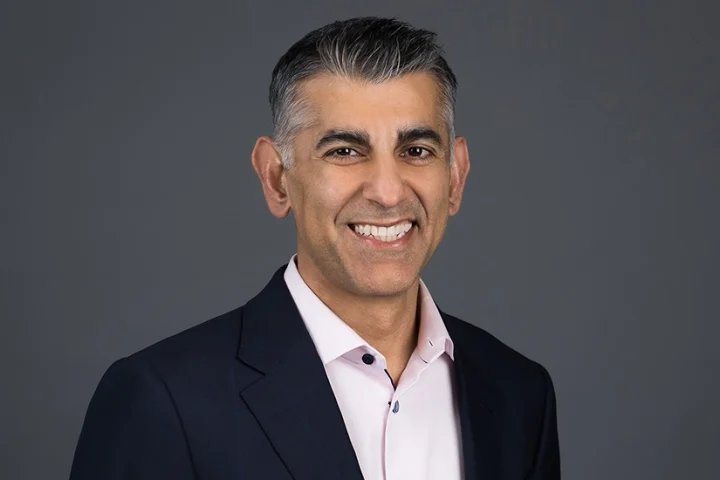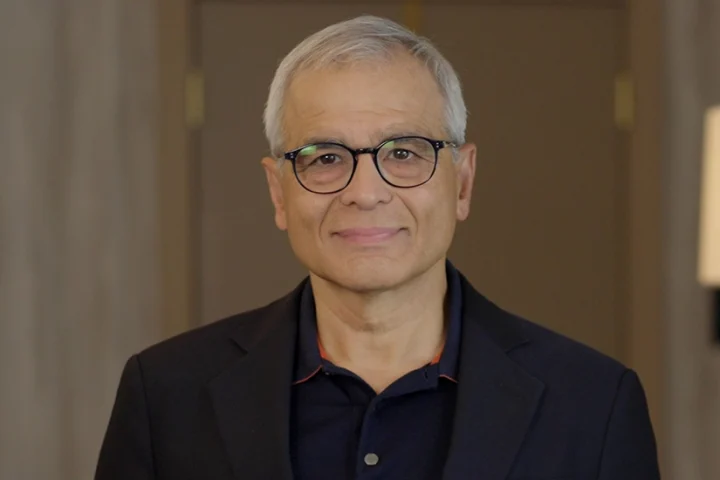



Keyur Joshi, General Manager for the Middle East, Turkey and Africa at Bull, said sovereignty, energy efficiency and local manufacturing will shape how the region builds and controls AI, with governments across the GCC already leading the shift.
When Atos bought Bull in 2014, it paid €620m for one of the oldest names in European computing. Twelve years later, with Atos midway through a restructuring, the French state completed the purchase of Bull’s advanced computing activities on 31 March 2026 for an enterprise value of up to €404m and became its sole shareholder.
The deal revived a brand that had been folded into Eviden, and it gave Paris direct ownership of Europe’s only supercomputer manufacturing plant, in Angers.
Bull came to AI Everything in Dubai on its first regional outing as an independent company. Keyur Joshi, General Manager for Middle East, Turkey and Africa at Bull, said the French government’s move reflected a calculation that states across the GCC are already making on their own account.
“The race is all about technology. The race is about who is going to have complete control over the technology, over the supply chains, over the information that is being generated out of this technology landscape,” he said.
Joshi said the question his customers bring to the table has moved on over the past few years. Data control was once the central concern, and buyers now want to know how to run a sovereign AI platform inside their own infrastructure, whether at national, regional or enterprise level.
He pointed to HUMAIN in Saudi Arabia and G42 in the UAE as national champions built on that ambition, and said the same thinking explained why Paris chose to keep Bull under French ownership.
The machines that built high-performance computing are now carrying AI
Joshi disputed the common assumption that AI is displacing high-performance computing. Customers increasingly expect AI workloads to run on the same GPUs that power traditional HPC systems, and he described the two fields as merging. “What we are seeing is that HPC is laying the foundations to run a successful AI,” he said.
Bull’s case to the region rests on density and power consumption. Joshi said the 3 most energy-efficient systems on the Green500, the ranking of supercomputers by performance per watt, are Bull machines, and he argued that operators need more compute from less space and less power as AI demand grows.
“How long are companies going to run systems building an infinite amount of data centres? We want to reduce the data centre space consumption. We want to reduce power consumption,” he said. The pitch is aimed at organisations scaling AI across a region where data centre capacity continues to expand, and Joshi said Bull was seeing strong acceptance for it across the GCC.
Saudi Arabia and the UAE are turning AI into a matter of national industry
Joshi expects the decisions over who builds and runs AI infrastructure to sit increasingly with governments. Saudi Arabia is asking technology companies to manufacture and localise in the Kingdom, and the UAE is offering off-take agreements to large IT firms that set up production in the country.
Over the next three years, he said, technology “is going to be a state-level discussion. The shifts are already happening right now.”
He described the goal for governments in the region as controlling the entire technology landscape, from supply chains to security, and said he expects the next 3 years to be defined by industrialisation as AI projects grow beyond individual use cases.
For a company that has just been brought back under national ownership for the same reasons, that is a market Bull understands from the inside, and one it has come to Dubai to build in.