


Enterprise resilience has long been defined by software—redundancy, failover, and high availability. But recent global developments have exposed a critical blind spot: the assumption that digital infrastructure operates independently of the physical world.
As organisations double down on cloud to power mission-critical services, the conversation around resilience is shifting, rapidly and fundamentally.
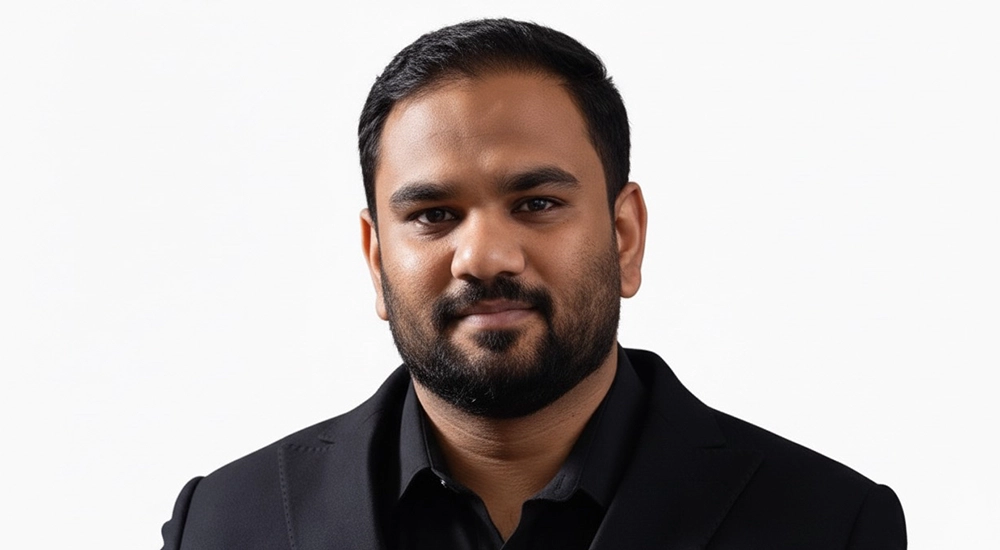
“Many organisations have traditionally focused on software redundancy, high availability, and failover mechanisms,” says Fayid Kadambodan, Assistant Director – Enterprise Solutions at Dubai Integrated Economic Zones. “However, recent events remind us that cloud services are ultimately supported by physical infrastructure such as data centres, fibre networks, and energy supply.”
This realisation is forcing CIOs to expand their definition of resilience, beyond architecture, into the realms of geopolitics, regulation, and physical infrastructure.
The illusion of absolute resilience
Public cloud platforms are engineered for scale and reliability. But that does not make them immune to disruption.
“Public cloud providers invest heavily in reliability, but resilience should never be assumed as absolute,” Kadambodan explains.
Cloud regions, after all, are not abstract constructs. They exist within national boundaries, governed by local infrastructure, policies, and geopolitical realities.
“CIOs must recognise that cloud regions operate within national infrastructure ecosystems that may be affected by political instability, regulatory shifts, or physical disruptions,” he adds.
The implication is clear: resilience cannot be outsourced.
Multi-region is the new baseline
As risks evolve, so too must architecture. What was once considered a best practice is quickly becoming a necessity.
“For organisations operating mission-critical digital platforms, multi-region architecture is increasingly becoming a strategic requirement rather than an optional enhancement,” says Kadambodan.
Active-active deployments across geographically separated regions reduce reliance on any single point of failure, whether technical or geopolitical.
But this shift raises a familiar question: cost.
Reframing the cost of resilience
Distributed infrastructure comes with a price tag. Yet, the cost of inaction may be far greater.
“The financial impact of downtime often far exceeds the cost of building resilient infrastructure,” Kadambodan notes.
When viewed through the lens of customer trust, regulatory exposure, and operational continuity, resilience is no longer a technical investment, it is a business imperative.
“CIOs should frame resilience investments in terms of long-term business protection and service reliability,” he adds.
Hybrid and sovereign strategies gain ground
Geopolitical uncertainty is also reshaping cloud strategy. Organisations are moving towards models that offer greater control and flexibility.
“Hybrid architectures allow organisations to maintain greater control over critical workloads while still benefiting from public cloud scalability,” Kadambodan explains.
At the same time, sovereign cloud frameworks are gaining traction, particularly in sensitive regions.
“They help address regulatory compliance, data residency, and national security considerations,” he says.
This shift signals a broader trend: resilience is no longer just about uptime, it is about control.
Planning for the unthinkable
Perhaps the most striking change is in how organisations approach risk.
“The modern risk environment requires organisations to expand their continuity planning to include a broader range of extreme scenarios,” says Kadambodan.
Events such as armed conflict or deliberate infrastructure attacks, once considered unlikely, must now be part of enterprise planning models.
At the same time, digital ecosystems are becoming increasingly interconnected.
“When multiple industries depend on shared cloud platforms, a disruption within a major cloud region can create cascading operational challenges,” he warns.
From banking and fintech to logistics and government services, the ripple effects can be immediate and widespread.
Beyond SLAs: A new governance reality
In this environment, traditional safeguards such as SLAs are no longer sufficient.
“Most cloud SLAs are primarily structured around service availability and technical failure scenarios,” Kadambodan points out.
They rarely account for disruptions caused by geopolitical conflict or physical destruction of infrastructure. This places greater responsibility on CIOs to take ownership of resilience.
“CIOs should engage hyperscale providers through structured governance and strategic partnerships,” he advises, including conducting resilience assessments and maintaining transparency around regional infrastructure capabilities.
A holistic approach to resilience
The cloud era has transformed how organisations build and scale digital services. But it has also exposed new vulnerabilities, ones that demand a broader, more strategic response.
“Resilience in the cloud era must be viewed as a strategic enterprise capability rather than a purely technical function,” Kadambodan concludes.