

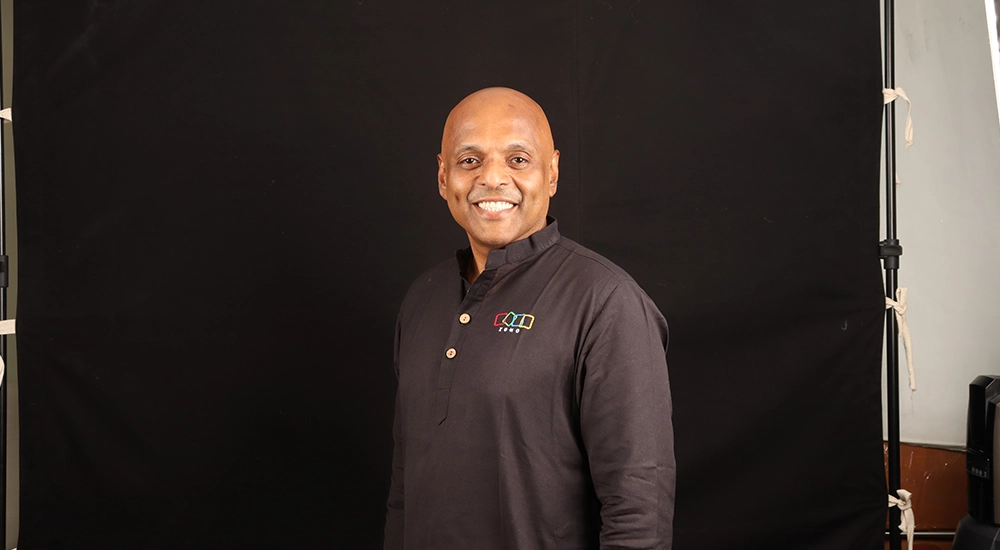
Zoho Schools of Learning (ZSL) didn’t start with a glossy campus launch. It started with a visit to a nearby school, and a simple test of belief.
“In a nearby school… six students. We conducted a basic test in aptitude,” recalls Rajendran Dandapani, President of Zoho Schools of Learning. The students didn’t have many options. Higher education was unaffordable. What Zoho was looking for wasn’t polish, it was possibility.
Test the basics. Then look for the spark.
The early framework focused on three essentials: basic mathematics, conversational English, and programming/software engineering. But the real filter wasn’t academic. “More important than the test is the interview,” Dandapani says. “Do they have the fire in the belly? Do they have the will to bounce back?”
Because many applicants arrive carrying more than a syllabus. “Most of them are shackled by economic disadvantage… generations of their life has been just making ends meet,” he says. ZSL is built for students who haven’t been taught to “dream big,” but might, with the right environment.
Learning inside the company, not beside it
ZSL’s secret sauce isn’t the curriculum, Dandapani insists. “The only thing that is special is Zoho school sits inside Zoho,” he says. That single design choice changes everything: culture is absorbed daily, learning is grounded in real work, and ambition becomes visible.
The model is straightforward:
- Year 1: fundamentals, theory, practice
- Year 2: embedded internships — meetings, code, releases, team life
“Twelve months later, they are put into a team as an intern,” he explains. “Two years later… they become a full-fledged employee.” And if life happens, the timeline flexes: “You can even take three years.”
Zoho pays students from day one
ZSL removes the biggest barrier, which is cost, by flipping the model entirely. “We don’t charge fees, we pay,” Dandapani says. Students receive a stipend immediately, then more in year two. For many, it’s transformational: “In some cases, they become very soon the highest earning member of the family.”
Peer learning, practitioners, and real pressure
Teaching is led by people doing the work, not career academics. Design is taught by designers, coding by developers, content by writers. And learning is not passive. “Put them in hot, boiling water. See them struggle,” Dandapani says, and when they’re close to giving up, support kicks in.
AI isn’t banned but trained into the workflow
While many colleges worry about AI “cheating,” ZSL treats AI as oxygen. “At Zoho schools, we encourage them to use AI,” Dandapani says, but responsibly: acknowledge it, validate outputs, watch for hallucinations, keep humans in the loop.
The outcome: talent that’s job-ready and life-ready
ZSL doesn’t claim to teach everything. In a world where knowledge expires fast, it teaches what lasts: learning agility, stamina, resilience, and practical judgment.
It’s not an alternative to college. It’s a different idea altogether: build careers by embedding learning where work actually happens, and giving overlooked students a real shot at a future they can finally imagine.