



Enterprises are deploying AI agents faster than they can monitor them, so fast that a few companies auditing their agents in recent months found far more running than they believed. That lack of visibility is showing up as unexpected AI bills.
The recent Splunk’s State of Observability 2026 report, released by Cisco, finds that 55% of organisations cannot accurately control their AI costs, while 60% say unexpected billing spikes cause more operational strain than consistently high spending.
The gap runs deeper than just the cost; the report found that 83% of the 2,050 ITOps and engineering professionals surveyed said they are concerned about the unintended consequences of AI agents, and while 87% called monitoring AI a priority, 56 per cent cannot measure workload metrics such as the quality of an LLM’s responses.
Visibility into hallucinations shows the same split, rated important by 85 per cent but tracked effectively by only 58%.
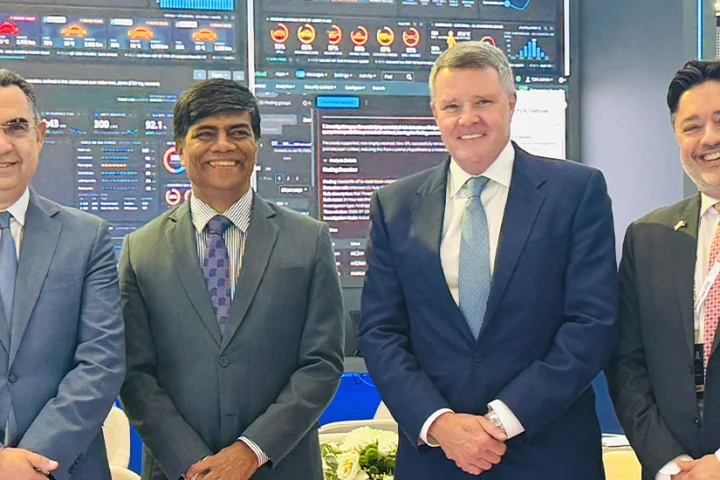
“As organisations increasingly integrate AI agents into their operations, managing performance, costs and potential risks is becoming more complex,” said Ahmed el Saadi, Group Vice President, MEA and TRC, Splunk. “Observability plays a critical role in restoring predictability and building confidence in the agentic AI era. By providing greater visibility into AI performance and spending, organisations can better manage costs, strengthen oversight and ensure their AI investments deliver measurable business value.”
Saudi Arabia, the only Middle East market in the survey, stood out as one of the most advanced. Ninety-eight per cent of Saudi respondents said AI has freed them to focus more on innovation than maintenance, against 84 per cent globally, and 90 per cent rated insight into model quality and drift as important, compared with 76 per cent worldwide. They are also the most sensitive to volatility, with 75 per cent saying unexpected bills strain operations more than high baseline costs, well above the 60 per cent global figure.
AI spending is getting harder to predict
The report describes the end of an era in which AI ran on pilot projects, flat-rate plans and subsidised inference. Spending now tracks directly to tokens, and usage is difficult to anticipate when dozens of agents run across multiple models. “The instinct is to assume falling token prices mean falling costs. The opposite is true,” said Atindriyo Sanyal, co-founder of Galileo and now senior director of engineering at Cisco. “Consumption is growing faster than prices are dropping, so total spend keeps climbing.”
Telemetry costs are climbing alongside. For 57% of organisations, observability bills exceeded the cost of the infrastructure being monitored this year, and half experienced surprise costs. The consequences are tangible: 38% cut data coverage or retention to manage spending, and 11 per cent said cost-cutting had increased their risk of downtime. AI infrastructure itself is not the main culprit, though. Only 6% named it as their top observability cost driver, against 31 per cent who pointed to overly noisy logs.
Monitoring tools and ownership lag behind
More than half of organisations (54%) have no clear business outcomes tied to their AI monitoring, and the report argues that traditional tools were never designed for the job. “Historically we’ve been interested in how many requests, how much latency, and how many errors,” said Vikram Chatterji, co-founder of Galileo and now senior director of product management at Cisco. “But AI agent behaviour is subjective and therefore requires a new class of behavioural metrics that are tied to business outcomes and agent decision-making.”
Almost half of respondents (49%) said their observability tools lack the capability to monitor AI, and 38% said their organisation has not clearly defined who is accountable for it.
What the best-performing organisations do differently
A group of 206 respondents identified as leaders shows what closing the gap looks like. These organisations rely on agents to fix and prevent issues frequently, monitor AI model quality, cost, usage, security and privacy effectively, and feed telemetry into business planning. They are far more likely to accurately attribute AI costs (91% versus 69%) and to control them (76% versus 41%), and 63% reported significant recovery-time improvements from agentic AI, against 40% of others.
The financial returns follow: the report found that leaders are 2.4 times more likely to say observability ROI significantly exceeds expectations, and 54% said their observability investment delivered at least $5 million in annual business value, compared with 28% of non-leaders. “Strategic planning without operational telemetry is just guessing,” said Patrick Lin, senior vice president and general manager of observability at Splunk.
Agents deliver gains as teams work more closely
Across the wider survey, 86% reported faster mean time to detect incidents and 42% said agentic AI had significantly improved recovery times. Trust, however, follows reversibility: 62% use agents frequently or all the time to find root causes, but only 6% use them all the time to write new code. A minority (14%) said agents had slowed recovery, which Splunk attributes to the early effort of checking their work. “Introducing agentic AI into your observability stack is essentially like onboarding a new teammate,” said Sahinaz Safari, head of artificial intelligence for observability at Splunk.
Monitoring agents are also drawing IT, engineering and security teams together. Eighty-one per cent said it has increased collaboration with security, 77% now troubleshoot jointly with security teams, up from 62% in 2025, and data sharing between teams has climbed from 74 to 84%. Cory Minton, global field CTO at Splunk, cautioned that this needs rules. “Collaboration without structure just spreads the pain around,” he said.
Although 76% of respondents now trust AI with mission-critical tasks, Craig Robin, field CTO at Splunk, noted that for most teams trust still means “trust but verify”, and that the industry remains early in proving it through consistent, measurable performance.
The study, the sixth edition of Splunk’s annual research, was conducted by Oxford Economics between February and March 2026 across Australia, France, Germany, India, Japan, New Zealand, Singapore, Saudi Arabia, the UK and the US, covering 16 industries.