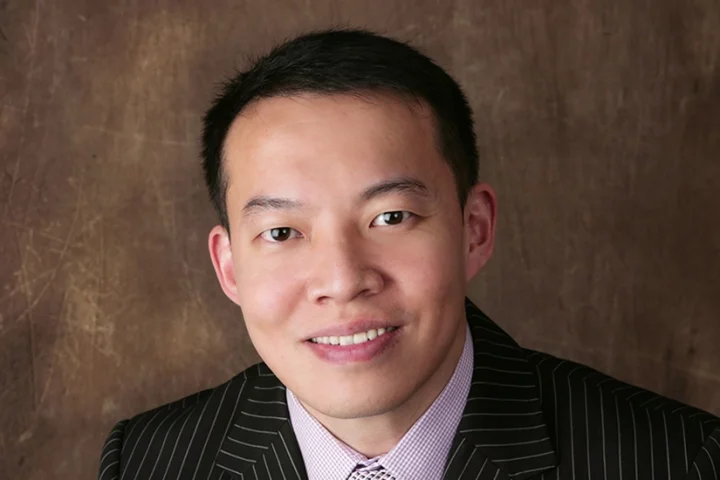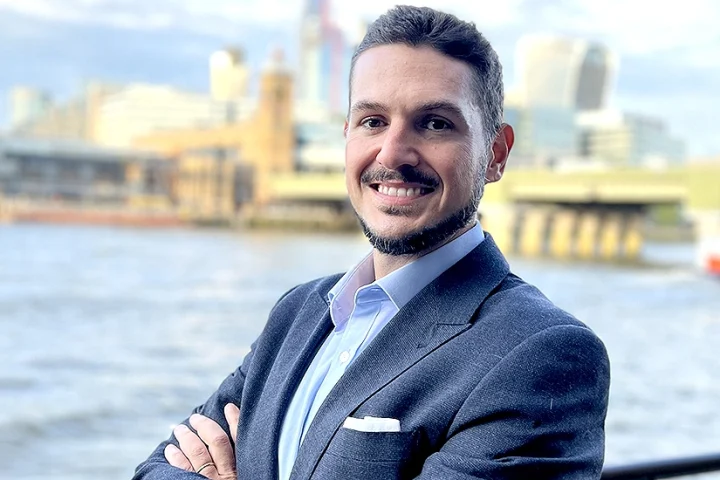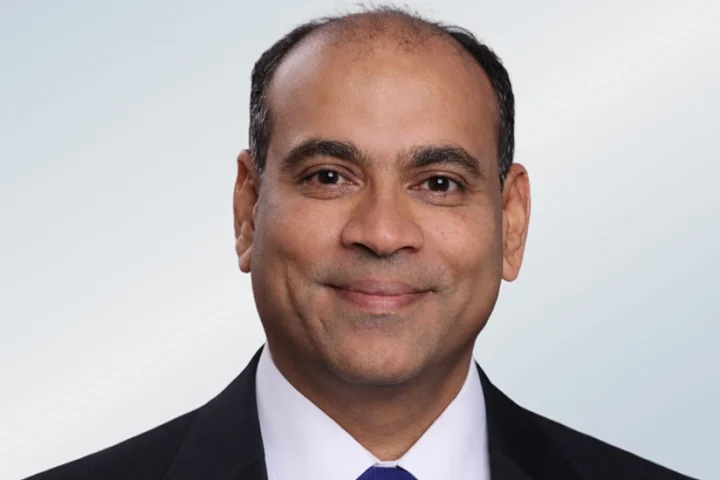


We caught up with Vivek Kanade, Managing Director, Middle East & Africa, Siemens Healthineers, at WHX. He explains how the company is helping regional hospitals integrate AI seamlessly into clinical workflows while maintaining regulatory trust and patient safety.
Tell us a little about what you are showcasing at WHX this year?
We are showcasing several things. First, we are presenting the latest generation of scanners across CT and MRI, along with our ultrasound portfolio and other imaging solutions. But beyond hardware, we are really highlighting our positioning around artificial intelligence and digitalisation, and how we bring these individual products together as integrated solutions for customers.
What AI solutions are you bringing to the healthcare market?
When we talk about AI, it covers a broad spectrum. One key focus is embedding intelligence directly into scanners themselves. The goal is to make devices more efficient in terms of throughput, deliver consistent image quality, speed up processes, and improve patient comfort.
The second area is around reporting. AI analyses images to identify abnormalities and acts as an assistant to radiologists, highlighting areas that require attention. This significantly reduces workload while also improving consistency and reducing reporting errors.
The third area is operational AI within solutions like command centres or “cockpits.” These enable remote scanning and help make workflows more intuitive and efficient. For us, AI is not a single standalone product. It is embedded throughout the entire workflow, from scanning and imaging to reporting and remote diagnosis.
Many AI use cases in healthcare remain stuck in pilot stages. Why do organisations struggle to scale? Is it skills, data, or infrastructure?
Healthcare is highly regulated, and rightly so. Errors in healthcare AI can have life-or-death consequences, unlike consumer AI mistakes. Governments and regulators therefore take a cautious approach, which often slows scaling beyond pilot phases.
Another challenge is data quality and scale. For example, our AI algorithms are trained on datasets of billions of images. Some startups may work with tens of thousands of images, which may not capture the full diversity required for accurate machine learning. Genetic differences across populations also matter. Treatments and diagnostics that work for one group may not work for another, so AI must be trained on globally diverse datasets to ensure precision and personalisation.
Are you moving AI beyond diagnostics toward clinical decision support?
Yes, and I can share a vision we are working toward. Imagine creating a digital twin of a person from birth, capturing physiological and genomic data over time. As this individual grows, imaging data, medical history, and lifestyle factors feed into the twin.
Years later, this digital twin could predict vulnerabilities to certain diseases or simulate treatment pathways. For example, if a patient has a cardiac condition, doctors could test different therapies on the digital twin to determine the most effective approach before applying it in reality.
Today, we are already working on digital twins of organs, such as the heart or liver. The long-term vision is a complete digital twin of the individual to enable predictive and personalised care.
Which specialties will see the biggest impact from AI, cardiology, oncology, neurology?
I don’t think AI will impact only one specialty. However, non-communicable diseases, which account for roughly 70 percent of global deaths, will benefit significantly. The biggest impact will come from early diagnosis, personalised treatment, and precision care. These advances not only improve patient outcomes and life expectancy but can also help reduce healthcare costs for governments and providers.
Healthcare is highly regulated and many systems still run on legacy infrastructure. How do you address compliance and technology challenges?
From an R&D perspective, we focus on building scalable and modular platforms. Hardware and software are designed so components can be upgraded without disrupting the core imaging output. Over a typical 10-year equipment lifecycle, we plan multiple upgrades to ensure systems remain aligned with evolving technology and regulations.
Do you see AI replacing human expertise in healthcare?
At least for the foreseeable future, AI will complement rather than replace clinicians. For example, modern scanners can generate thousands of images for a single study, far more than a human can analyse quickly. AI helps filter and highlight relevant findings so radiologists can focus on verification and decision-making. In many ways, a radiologist using AI will replace one who does not use AI, rather than AI replacing humans altogether.
Healthcare is one of the fastest-growing AI adoption areas globally. Why do you think that is?
Because the cost-benefit equation is very strong. Early diagnosis improves outcomes and reduces long-term costs, which is critical as healthcare spending already represents a large share of national GDP in many countries. Despite strict regulations, the potential impact of AI on population health and efficiency is enormous.
Training AI on medical images raises privacy concerns. How do you ensure compliance?
We strictly follow data privacy regulations such as GDPR and HIPAA. Images used for training are fully anonymised. What matters for AI training is the clinical finding, not personal identifiers. Radiologists contour and annotate anonymised images, which are then used to train algorithms on secure infrastructure, including high-performance computing systems.
Finally, what differentiates you from competitors?
Our differentiation lies in our end-to-end approach. We design both hardware and software, which allows us to integrate AI across the entire value chain, from image acquisition to reporting and workflow management. Companies that only focus on software work with images after they are created, whereas we build intelligence into the scanners themselves. Combined with our history of innovation and reliability, this integrated approach gives us a strong advantage.