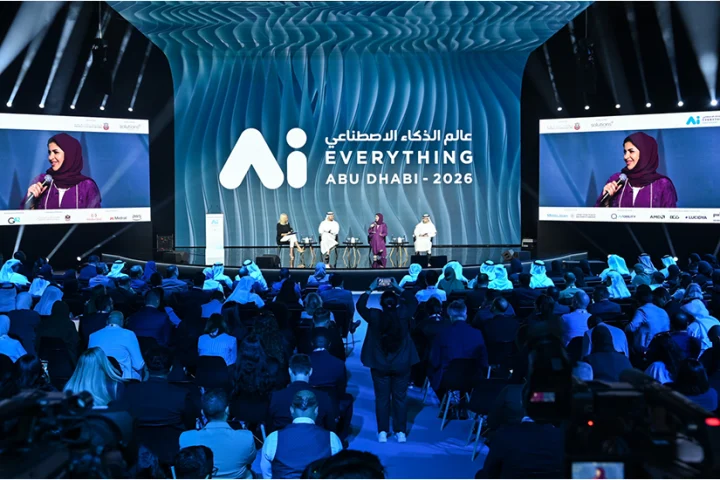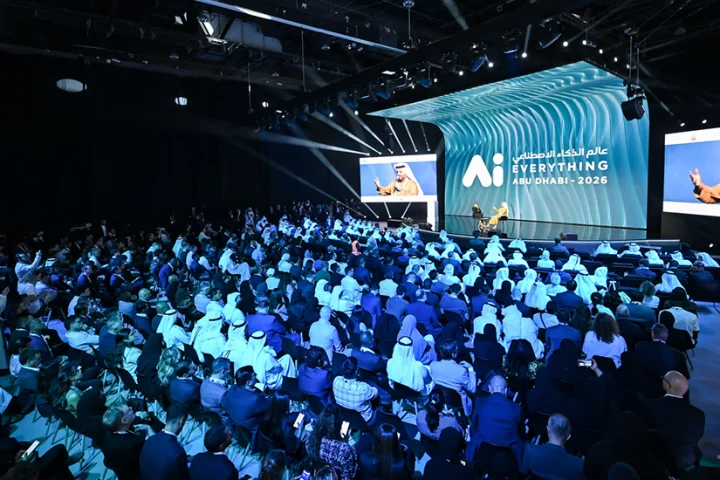



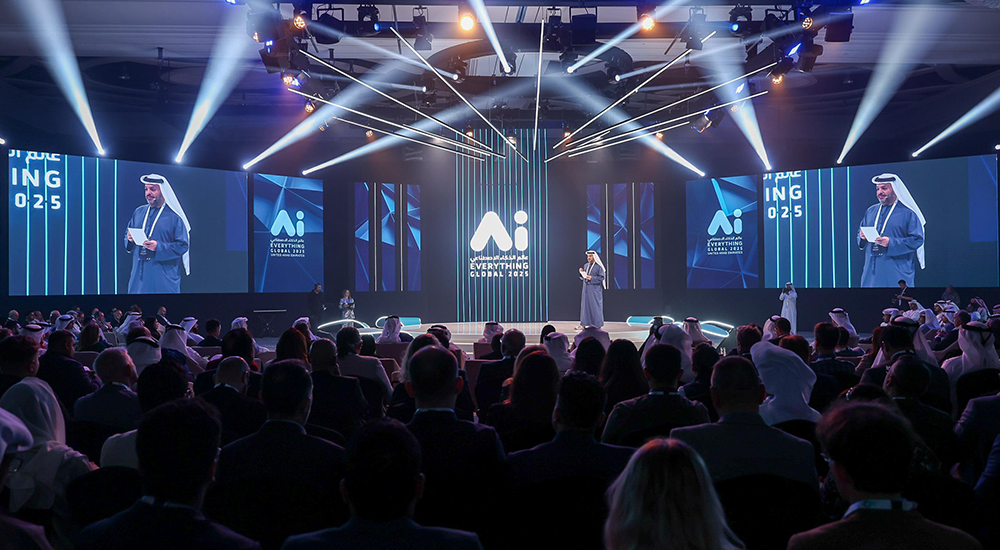
Ai Everything Abu Dhabi 2026 brings together over 180 global leaders to discuss sovereign AI, regulation, and infrastructure. The summit addresses the critical balance between technological progress and human oversight, featuring key insights from UAE ministers and industry pioneers such as Mistral AI and Boston Dynamics.
Taking place as the world’s largest AI-first Summit and Expo from 6-7 October at ADNEC Centre,
Ai Everything Abu Dhabi places over 180 global leaders on stage, pushing sovereignty, regulation, responsible development and AI infrastructure to the top of the agenda. Organised by inD, the event is hosted by the Department of Government Enablement – Abu Dhabi (DGE) and accelerated by Solutions+ as Global Partner.
Abu Dhabi hosts the year’s most strategic dialogues as Middle East and East Asia lead the sovereign AI movement globally
The changing geography of sovereign AI gives renewed impetus to the discussions. The Middle East and East Asia together now account for more than 80% of the publicly disclosed sovereign AI investment worldwide, as per the CNAS Sovereign AI Index. The concentration points to the growing role of the region, in particular Abu Dhabi, in investing, scaling and influencing the future trajectory of artificial intelligence across public and private sectors.
Addressing how the changing global AI order is placing new demands on government itself, H.E. Omar Sultan Al Olama, UAE Minister of State for Artificial Intelligence, will examine how governments can harness data and agentic AI to redesign public services, strengthen decision-making and build resilience to remain competitive globally.
Abu Dhabi’s ambition to become the world’s first AI-native government by 2027 brings the relationship between capability and governance to the centerstage. Spearheading the AI-native transformation, H.E. Ahmed Tamim Hisham Al Kuttab, Chairman of DGE, will deliver the opening address, exploring what it takes to translate technological vision into institutional strength and capacity to shape new intelligence frameworks.
That capacity also rests on sovereign research and expertise. H.E. Faisal Al Bannai, Adviser to the UAE President and Secretary General of the Advanced Technology Research Council (ATRC), will address the foundations of sovereign strength: a combination of compute power, homegrown models, and talent to give nations greater command of their technological future.
Even at frontier models, the conversation is shifting. Global developers once locked in a sprint to assert market and model dominance are now leaning towards greater control and collaboration. Arthur Mensch, Co-Founder and CEO of Mistral AI, Europe’s sovereign AI leader, will step into this debate in his first-ever appearance on-stage in Abu Dhabi.
His session captures the dilemma, how open models can broaden access and strengthen independence yet also complicate oversight and risks. Mensch weighs in on whether that trade-off is inevitable, or whether sovereignty, openness and safety can reinforce each other.
The conversations acquire a new dimension when intelligence enters the physical world. Marc Raibert, Founder of Boston Dynamics and Executive Director of the RAI Institute, whose pioneering work thrust dynamic robots into the global spotlight, dives into the rise of physical AI and how to turn robotic capabilities into productive operations across factories, workplaces and daily life.
Architecting trust in AI
Greater autonomy also raises questions on accountability. Prof. Dr. Virginia Dignum, Professor of Responsible AI at Umeå University, Sweden, and a former member of the European Commission’s High-Level Expert Group on AI, will examine what meaningful oversight requires, especially when increasingly powerful AI systems affect vulnerable people.
“Oversight is too often reduced to placing a person next to the machine to take the blame when it fails. That is not oversight, it is liability laundering,” says Dr. Dignum.
For governments, she argues, the starting point is purpose: “This is ‘Question Zero’, purpose first. Invest in public capacity: skills, data infrastructure, evaluation and procurement expertise, so that governments are informed buyers and regulators rather than passive adopters.” Deciding who has authority over AI also requires broader participation: “Democratic institutions, regulators, civil society and affected communities need a seat in deciding what AI systems are for and where the limits lie.”
These principles must integrate within the infrastructure on which AI operates. George Kurian, CEO of NetApp, whose technology is used by 84% of Fortune 500 companies, will connect trusted deployment with data sovereignty, governance and resilience. As enterprises grant AI greater authority to act, the systems it accesses and the safeguards surrounding its decisions become part of the same accountability chain.
From the sovereign ambitions of states to the crossroads facing frontier developers and agentic systems in public services, the conversations at Ai Everything Abu Dhabi tackle the hard questions that will decide the next intelligence order, with Abu Dhabi setting the global agenda.