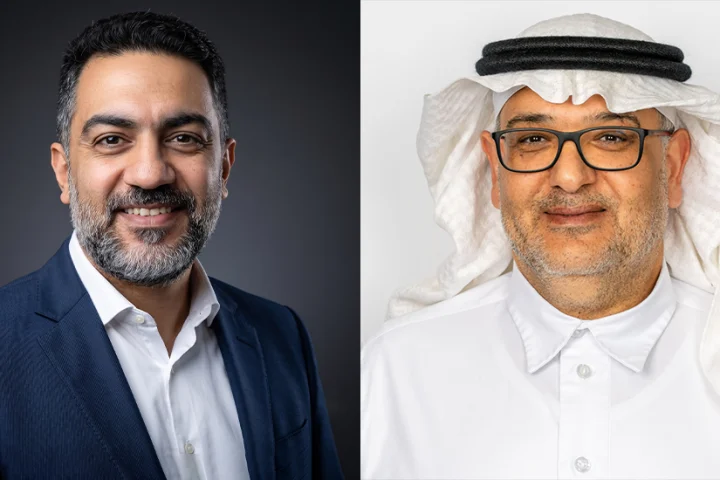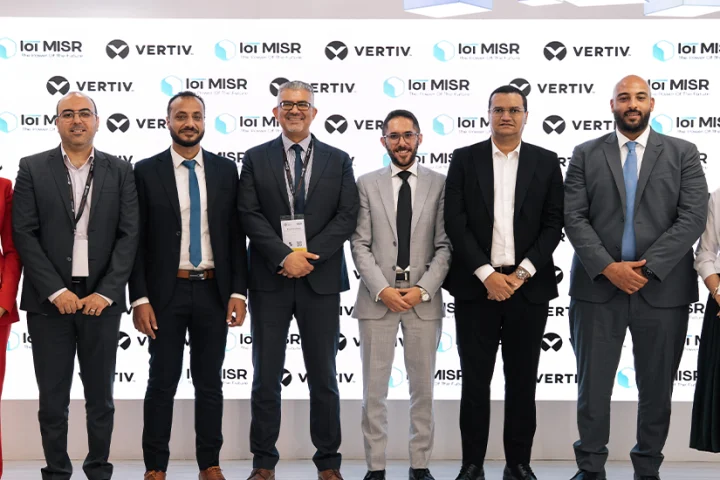




Khalid Aljamed, General Manager and Managing Partner for Submer Middle East, Africa and Turkey, came to data centre infrastructure after more than two decades in ICT and cybersecurity, with leadership roles at Cisco, Nozomi Networks, Juniper Networks and Alcatel-Lucent, working across telecommunications, energy, government and critical infrastructure.
At Submer, he runs regional strategy, business growth, operations and ecosystem development, with a remit to build Submer, MEAT into a regional hub for AI-ready, sustainable data centre infrastructure.
His work covers full-stack AI and HPC infrastructure, bringing together advisory, design and build, integration and advanced infrastructure capability. He holds a BSc in Information and Communication Systems Engineering from Kyoto Sangyo University in Japan.
We spoke to him at LEAP 2026 about what sovereign AI ambition is doing to infrastructure specifications in the Gulf, why very few existing facilities anywhere can absorb GPU workloads, and what he expects regulators to do next.
Saudi Arabia and the UAE are both building sovereign AI capacity at speed. What does that shift mean for how data centre infrastructure is being specified in this region, specifically?
You have to keep in mind that sustainability is part of Vision 2030, and it is part of the UAE’s vision as well. So yes, there is a great deal of focus on sovereign AI. There is a great deal of focus on having AI in-country, and on having data centre capability in-country. But building a data centre for AI carries its own set of challenges. Power management. The availability of power. The supply chains, and the development timelines that come with them. The GPUs, and everything that sits around them.
What we are seeing in both the UAE and Saudi Arabia is a focus on local content and local supply for that infrastructure. That covers generators and turbines, and it covers the capability needed to build the facility itself. It applies equally to containerised and modular prefabricated shells for data centres, and to integration capability, which has to exist locally if the rest of it is going to work.
So a niche economy is forming around data centre infrastructure alone. That is a very smart investment for these countries to be making now, and a very progressive one.
Sovereign AI is usually discussed in terms of chips and data residency. Where do cooling and power efficiency fit into that conversation, and why is that important?
If you look at the US today, the biggest challenge is not demand for data centres. Demand is there. Nor is it the availability of chipsets, although availability is part of the conversation. It is cooling, and it is public opinion around these builds. You read about it almost every day. In one state or another, residents are objecting to data centres being built near them. A key reason is that the enormous power consumption of a data centre increases the bill every household has to pay.
In our region we are not at that stage yet. And because we are not, we are learning from the mistakes of others. We are introducing data centres into the power grid gradually, and within defined limits. During peak times, during summer, can you control the consumption of that data centre so that it does not affect the power supply in Kuwait City, in Dubai, in Riyadh?
Those questions are now asked at the start of any data centre project in this region, because the answer protects more than AI sovereignty or data sovereignty. It protects the future growth of the country, which depends on that same power. That is one example. Sustainability is another, and it is a key target in Saudi Arabia, in the UAE and across the region.
How prepared are the existing data centres in the region for the AI workloads that are coming? With everything on show at LEAP, the assumption is that this only expands from here.
It depends entirely on the facility. I would say that very few data centres today, and this applies globally rather than only here, are ready to be repurposed or retrofitted into an AI data centre.
Modern GPUs carry very high power consumption requirements, which gives them very different thresholds for heat dissipation. Air cooling is not applicable to most of these deployments. That means you have to reconsider your cooling, and reconsider your power alongside it. Unless your data centre was built from day one with modularity in mind, heavy modification is needed to accommodate any of it.
We are, however, seeing hybrid solutions that can work as a transitional step for operators who are not in a position to rebuild.
What is the biggest gap between the ambition and what organisations are actually prepared for?
Everyone is jumping on the bandwagon of AI, and the question that is not being asked is what do I actually need, and how much of it. Do I need a training model, or do I need inferencing? The requirements and the complexity are very different.
Most companies today could manage with inferencing alone. They opt for training instead, which is more expensive, more complex, and exposed to supply chain problems, and the whole process ends up delayed.
This is why, at Submer, we try to start with the why. Why do you want this? Why did you decide that you need 1,000 or 2,000 GPUs? Perhaps we can optimise that to 500. There are a great many projects moving and there are funds readily available, but without a properly optimised use case the implementation runs into problems. We are seeing a lot of projects delayed for exactly that reason.
Looking at the end of this year and into early 2027, what do you expect from GCC regulators in their approach to AI sovereignty? It is a live topic right now.
That is a great question. I think we will see specific regulations. Based on what is happening in the US and in Europe, we would expect regulation aimed at power consumption in particular. That covers isolated power supply as well as integration into the power grid.
I also expect the GCC to introduce data embassies, following what we are seeing in Europe. The GCC and our neighbours could draw on excess capacity, and on the availability of data centres, to create disaster recovery zones within the region. That is best practice when it comes to data availability. If one side is affected, you still have a backup.