

The most consequential news out of Riyadh this week arrived without any of the staging. On 31 August, AMD, Cisco and the Public Investment Fund’s HUMAIN confirmed that their first AMD Instinct GPU systems had gone live in Saudi Arabia, serving customers inside the Kingdom and beyond, with plans to add up to 250MW of capacity from 2027 and reach a gigawatt by 2030. AWS said its first Saudi cloud region remains on track for December 2026.
Microsoft gave November as the availability date for its Saudi Arabia East region, built across three availability zones in the Eastern Province. Saudi officials put the opening day’s launches, investments and partnerships at more than $15 billion.
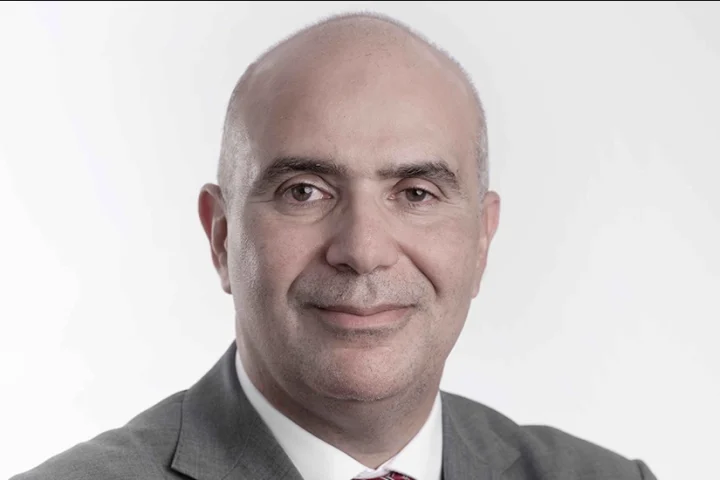
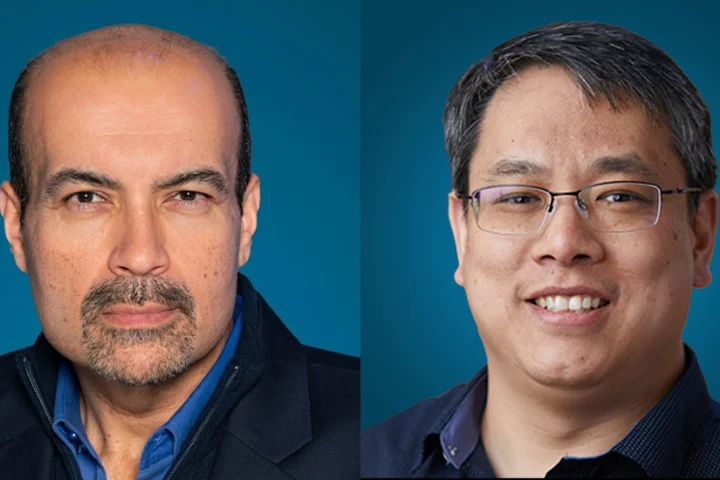
Somewhere inside that total sits a document with no capital figure attached to it at all. Magna AI and VAST Data used LEAP to formalise a collaboration framework covering sovereign AI infrastructure across the Kingdom, signed in the presence of Magna AI chief executive Dr Moataz BinAli and Haider Aziz, VAST Data’s general manager for the Middle East, Turkey and Africa.
It commits the two companies to pursuing government, regulated-industry and enterprise work together, with Magna supplying strategy, engineering, integration and security, and VAST supplying the AI Operating System that unifies storage, database and distributed compute on its Disaggregated and Shared-Everything architecture. Roles get decided deal by deal.
The company that a security vendor and a contract manufacturer built together
Magna AI is an unusual corporate object. It was established through a partnership between Trend Micro and Wistron Digital Technology Holding Company, the investment arm of the Taiwanese electronics group, with underlying technology from NVIDIA.
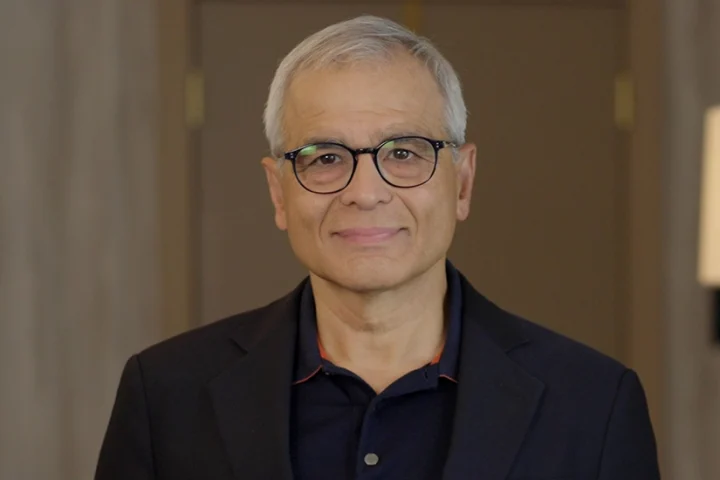
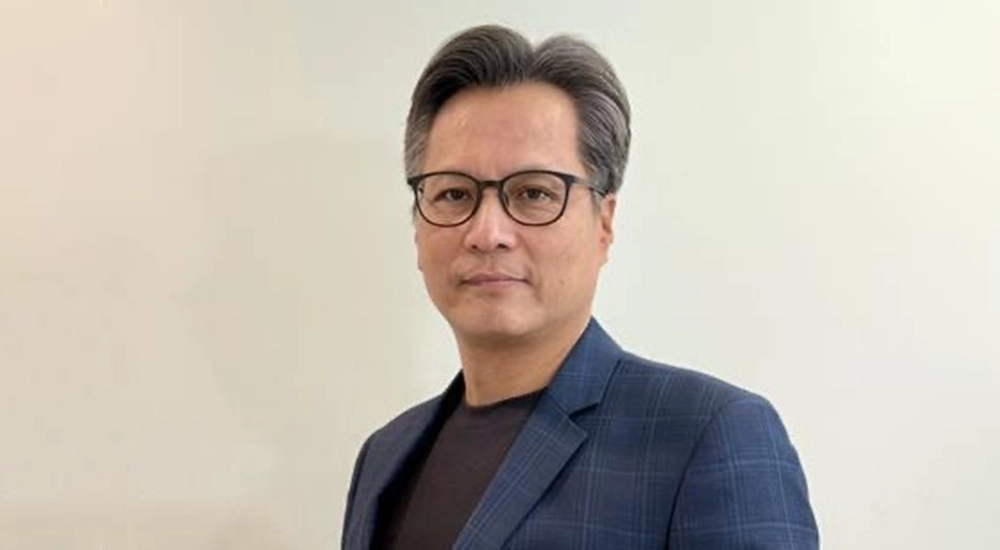
That parentage produces a company with a cybersecurity instinct on one side and a hardware supply chain on the other, and Andrew Chen, Vice President of Platform at Magna AI, sits at the join. He took the role after 19 years at Trend Micro, where he was Director of Product Management and built enterprise security products around machine-learning threat detection.
Chen described engagements in the Kingdom that begin much further upstream than most vendors would admit to. Magna sits down with the customer and with government together, he explained, and some of those customers arrive with almost nothing already running, which turns the opening conversation into a sequencing problem long before it becomes a procurement one.
The destination he named for that work was national in scale. Magna’s job, he said, is to work out “how we best optimise the journey to build the, quote unquote, national level token factory”.
Wistron’s manufacturing base does the unglamorous part of getting there. “With our supply chain from Taiwan, and also the entire area,” Chen said, describing how the company sources for deployments across the region. Delivery runs through Magna’s own engineers and its own software. The applications go out “with our [forward] deployed engineer approach”, he explained, or through what he called “our homegrown application”, depending on the nature of the project.
The compute phase ends and the harder arithmetic begins
The sequencing argument inverts the way LEAP has been read for three consecutive years. Compute is the phase a sovereign wealth fund can compress by writing cheques. “Once you pass through the compute phase,” Chen observed, the problem changes shape entirely and becomes a question of what tokens cost to produce and consume at national scale.
The VAST agreement makes the same argument in contractual form. Large-scale model training, inference and increasingly agentic workloads all need data, compute and governance layers that operate together, and buying more accelerators delivers none of the three.
Chen has a habit, formed over two decades at a security company, of settling the confidentiality question before the architecture discussion opens. However far a conversation has travelled, he said, Magna goes back to the beginning of it, and “the first topic would be [confidentiality and] security”. The reasoning is plain enough. “We want to make sure the security and governance is not left behind,” he said, describing it as the subject Magna works through with customers until it is satisfied they are covered on that front. The proof point he offered came from one of the least forgiving environments available: “We are working on the project with the healthcare sector.” He would not name the customer or the scope.
The VAST framework carries the same emphasis in writing, tying potential projects to Saudi data residency, cybersecurity and regulatory requirements.
An ecosystem assembled in pieces, one signature at a time
That assembly is documented. At the Global AI Show in Riyadh in June, where Magna AI was title sponsor, the company signed a strategic collaboration with Emaar Executive Company, a Saudi data centre construction and EPC specialist, under which Magna leads AI Factory architecture, platform development and AI security and governance while EEC delivers the engineering and construction.
A second agreement with Saudi Xerox covered local infrastructure integration, security operations, compliance alignment and on-ground services. A third, with Arabic.AI, covered Arabic-native platforms and applications, secure AI operations and skills development. Magna’s earlier partnership roster includes NVIDIA, TechnoVal, Zchwantech Group and GMI Cloud, and a memorandum with Corvit Networks aimed at Pakistan.
Chen did not attempt to present any of that as opportunism. “We’re very into the ecosystem play,” he conceded. The VAST framework fits the pattern precisely, adding a data layer to a stack that already had construction, integration, language and compute partners attached to it. Asked whether the Kingdom’s programme is moving from signature to substance, he was measured: “It’s a good year to start to materialise.”
What 2027 has to prove
Ask Chen where sovereign AI is headed and the answer comes back as a date. “2027 will be a year for full sovereign deployment,” he said, with the current year serving as the point at which the groundwork gets laid. That timeline is not obviously convenient for a vendor selling into an event built on immediacy, and it puts a testable claim on the record.
Dr Moataz BinAli made the underlying case at the signing, arguing that “Saudi Arabia’s sovereign AI ambitions rest on infrastructure that can perform at national scale”, and that organisations now need data infrastructure able to keep pace with how intelligence is stored, accessed, governed and put to work. Haider Aziz put the same point from the other side of the table, noting that “compute capacity alone does not create production AI” and that the opportunity lies in getting data, models and infrastructure to operate together as workloads leave experimentation.
By the time Chen’s deadline arrives, the GPUs that switched on in Riyadh at the end of August will have been running for well over a year, the Microsoft region will have been open since November and the AWS region since December. Whether anything of national consequence is running on them is the question Magna AI has now attached its own timetable to.