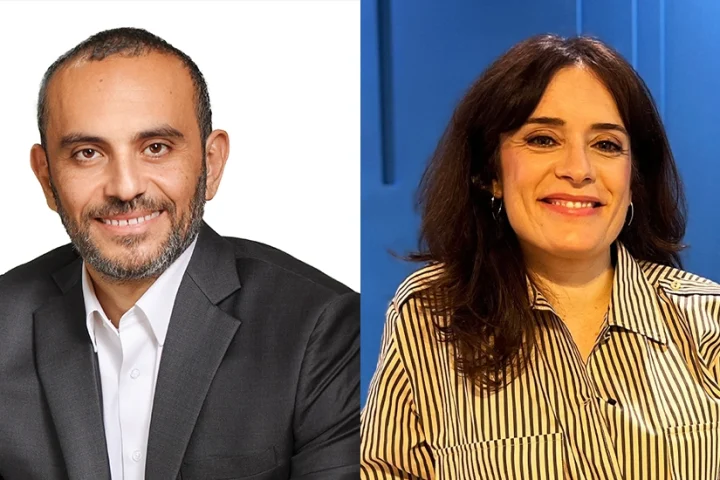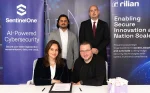



At Black Hat 2025, Meriam ElOuazzani, Regional Senior Director for the Middle East, Turkey, and Africa at SentinelOne, discusses why the company has anchored its presence in Riyadh, how Saudi Arabia’s digital transformation is reshaping cyber priorities, and what the surge in AI adoption means for security teams across the Kingdom.
With your new regional headquarters now established in Riyadh, how will this translate into value for customers in Saudi Arabia?
We are very proud to support Saudi Vision 2030. We registered the entity a few months ago, completed the setup in the Kingdom, and have now finalised our RHQ, which we officially launched on the first of December. We are also bringing our own services into the Kingdom and will be supporting customers directly from Saudi Arabia.
Are these services offered through partners?
Our two-tier model does not change. We continue to work with distributors, system integrators, and partners in the country. We also maintain alliances with organisations such as Lenovo and Barracuda.
So the model remains the same — what changes is our presence and the capabilities we now bring directly into Saudi Arabia. Whether it is our sales and customer relationship teams based in the Kingdom, or our technical teams — our engineering expertise is now physically located in Saudi Arabia. We also have technology account managers on the ground to provide additional support.
What opportunities do you see in the KSA market?
It is very clear that Saudi Arabia is focused on digital transformation, adopting the latest technologies, and ensuring services are delivered within the Kingdom. This shift is also transforming security priorities.
We are now seeing customers who previously approached us only for EDR solutions coming back requesting full XDR platforms, solutions that provide end-to-end security, secure all services, manage data, and simplify threat hunting.
Customers increasingly want autonomous SOC capabilities, automated functions, better visibility and stronger control over their security posture. It’s remarkable — there is both a major technology evolution and a significant shift in security expectations.
We are also seeing new discussions around securing AI workloads. Everyone is moving toward AI; all the corporates we visit use tools like Claude and ChatGPT. As a result, many customers are now asking how to secure AI usage and prevent abuse or leakage. That’s why we recently acquired a company called Prompt to address this growing demand around AI security.
It is a security platform purpose-built for AI environments. We analyse the content users upload into AI tools — including ChatGPT and similar platforms — and we protect it. We detect sensitive data that should never be shared, enforce policies to block exposure, and ensure it does not get processed or leaked through AI systems.
What kind of uptake are you seeing for your AI-driven platform, Purple AI?
When we launched Purple AI, many people questioned whether it was a real platform. There was scepticism at the time because many AI projects had failed — lots of promises but little delivery.
Purple AI, however, is a practical platform actively used by our customers. It significantly simplifies operations. Threat hunting can now be performed using natural language, and the platform can be leveraged by highly skilled cybersecurity experts as well as junior analysts.
It enables junior analysts to perform threat hunting in their day-to-day work, while also elevating their role. They become more strategic, gain more time to focus on higher-value activities, and ultimately manage cybersecurity and the SOC more effectively.
In short, Purple AI allows analysts to use technology to their advantage and improve overall security outcomes.
Are you seeing a rise in AI-driven cyber exploits?
Absolutely. The more advanced we become, the smarter attackers get. That is the reality today, it’s a constant race.
Attackers are using AI to make their exploits faster, more sophisticated, and harder to detect. On our side, we continuously develop technology to stay ahead — improving our ability to detect, stop, and remediate these threats before they have impact.
So yes, AI is empowering both sides, which is why cybersecurity innovation must accelerate even faster than attacker capabilities.