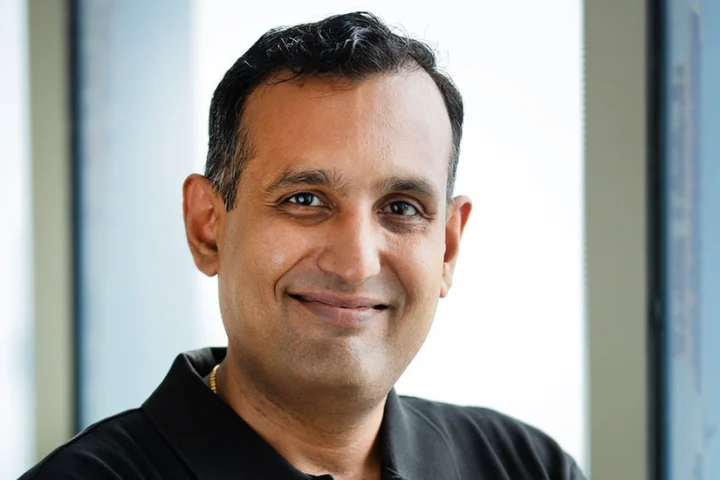


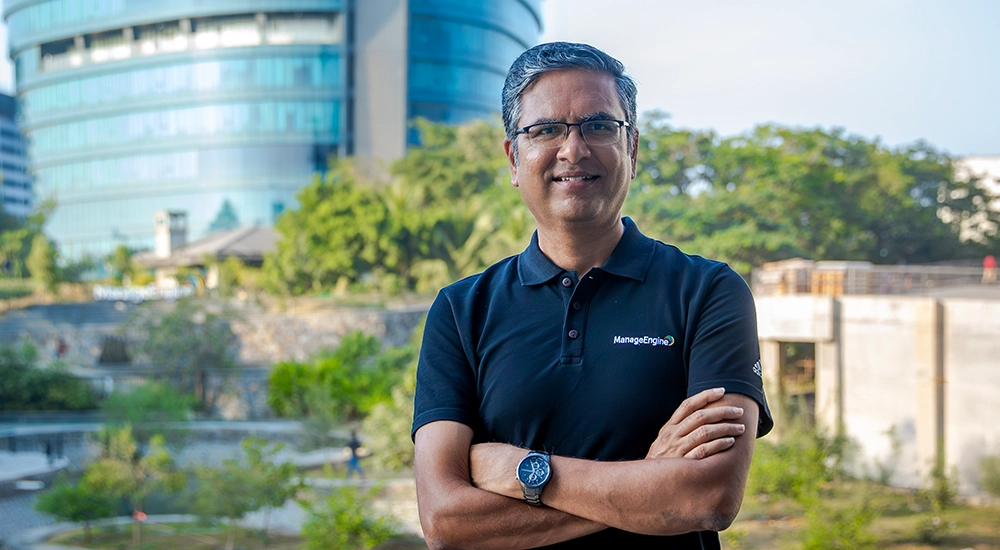
In this candid conversation, Rajesh Ganesan, CEO of ManageEngine, explains why accountability, access control, and governance remain the biggest barriers to enterprise AI adoption, and why confidence, not capability, is the real missing ingredient.
You said it’s very easy to use ChatGPT, Gemini, and similar tools, but much harder to build and operationalise AI for specific business use cases. What capabilities are we still missing today?
Let me start with the basics. Take something like Google Search. When it launched in 1998, the world adopted it almost instantly. We used it like fish to water. But in enterprises, even today, business search is not widely adopted. The reason is that business data carries far more sensitivity. It involves entitlement, access control, and strict governance over who can see what. That’s the foundation.
The same applies to AI. Today, we talk about AI largely because of the magic of generative AI. But think about when Siri and Alexa arrived a decade ago. If Alexa makes a mistake when I ask it to play a song, there’s no real consequence. But if I ask a business-critical or legal question and receive a wrong answer, the consequences can be serious.
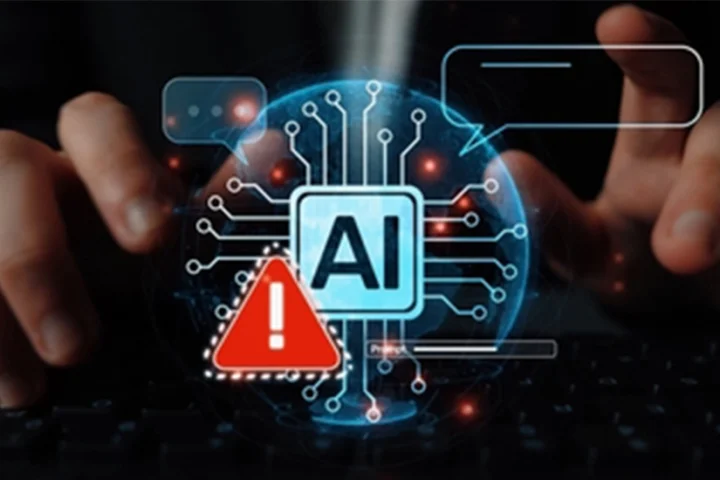
AI still has issues, even in personal use, such as bias, hallucination, and inaccuracies. Businesses simply cannot afford wrong answers. That’s unacceptable.
Then there’s the access control challenge. It’s already public knowledge that even companies that are strong proponents of AI have faced exploits related to AI agents and permissions. If an AI agent has unrestricted access, it can retrieve far more information than intended.
For example, in an IT system, a service desk application may need to check whether a technician is available. To do that, it may access a small piece of data from the HR system, such as whether the person has checked in that day. But that doesn’t mean it should access personal or salary information. Without tight controls, that boundary becomes blurred.
These are the issues that stop enterprises from fully operationalizing AI. Confidence is still not there. Low-risk decisions can be automated, but for high-risk, high-consequence decisions, accountability remains unclear. Who is responsible, the model developer or the person deploying it?
Regulation will follow. The benefits of AI are clear. But until accountability, governance, and trust reach a very high level of confidence, enterprises will continue to move cautiously.
You mentioned that when you speak to customers, the first question they ask is, “How do we become future-proof?” What is your practical answer to that?
We’ve learned this the hard way, through experience and a lot of scars.
The reason customers ask this is simple. I often use an analogy. If you’ve ever driven in India, you’ll understand. You stop at a traffic signal, but you’re not always sure when to move. When it’s red, some people are driving. When it’s yellow, people are driving. When it’s green, everyone is driving. The point is, enterprises see everyone rushing toward AI and they wonder: should we run, should we wait and watch, or should we stop? They genuinely don’t know.
My answer is: go back to the basics.
Do you truly understand your customers? Do you understand the channels through which you serve them? Do you understand your business model, and how technology meaningfully changes it? Customer experience, personal touch, and core value don’t change overnight. If you stay focused on those fundamentals, the rest will follow.
Disruption happens when companies lose sight of their core model. We’ve seen famous examples, companies that were market leaders but failed to adapt. There is no guarantee of survival. In my 30 years of experience, we’ve lived through seven major disruptions. In 2001, for example, 90% of our customers disappeared within weeks. We had to completely rethink our approach.
Today, we’re going beyond software. We’re investing in hardware, robotics, farming, and even rethinking how education can be delivered. If you’ve visited our R&D campus, you’ve seen how we invest for the long term.
Future-proofing isn’t about betting on a single technology. It’s about continuously re-examining your fundamentals and being willing to reinvent yourself when necessary.
It may sound cliché or even boring, but it’s practical. And it’s exactly what we’ve done.
Do you see ITSM as the primary sweet spot for agentic AI?
The answer is: it already is. ITSM is naturally positioned for this.
If you look at companies like ServiceNow and their acquisition of Moveworks, this direction was inevitable. As I mentioned yesterday, we will see much more of this very soon. It makes complete sense. Internal tech support, especially Level 1 queries, can largely be automated.
This frees up teams to focus on more complex and higher-value tasks. With internal support, there is slightly more room for minor errors compared to customer-facing environments. We’re not talking about high-risk decisions, but routine service enablement and common support requests.
In that sense, ITSM is absolutely ripe for agentic AI adoption.
One of the pivotal moments for ManageEngine was putting the software on the website for free for anyone to download and experience instantly. How did that philosophy shape your go-to-market approach?
All the credit goes to our founder Sridhar Vembu.
He had no patience for traditional sales cycles; calling customers, convincing them to buy, scheduling demos. His view was simple: if the product is ready, put it out there. Let people try it. Let the product speak for itself.
So we launched OpManager and simply put it on the website. No barriers. No long forms. No complicated process. Just download it and use it. To our surprise, people started downloading it immediately. That’s how the internet works, adoption can spread in ways you don’t even expect.
Our earlier experience had been frustrating. Even to evaluate software, you had to wait weeks. Sridhar believed customers would be just as impatient as he was. They should see the product and start experiencing value immediately. That became our philosophy.
If they liked it, they would come back to us. And when they did, we were expected to respond instantly, sometimes within five minutes. That responsiveness created enormous goodwill, especially with customers in North America and Europe. They were surprised to receive immediate replies, even if it was the middle of the night for us.
We didn’t over-strategise it. We simply removed friction and focused on speed and customer experience. The rest fell into place.