



United Arab Emirates equity markets have faced increased volatility in recent sessions amid global financial uncertainty. According to analysis from eToro, the Dubai Financial Market (DFM) has dropped about 17% since March 4, marking six straight days of losses, while the Abu Dhabi Securities Exchange (ADX) has declined nearly 6% over eight sessions.
Banking and property stocks have led the selloff, with companies such as Emaar Properties, Emirates NBD, Dubai Islamic Bank, Aldar Properties, and First Abu Dhabi Bank frequently hitting the 5% daily limit down cap. Dubai’s real estate index has been particularly impacted, falling about 20% in five sessions and wiping out all gains recorded earlier this year.
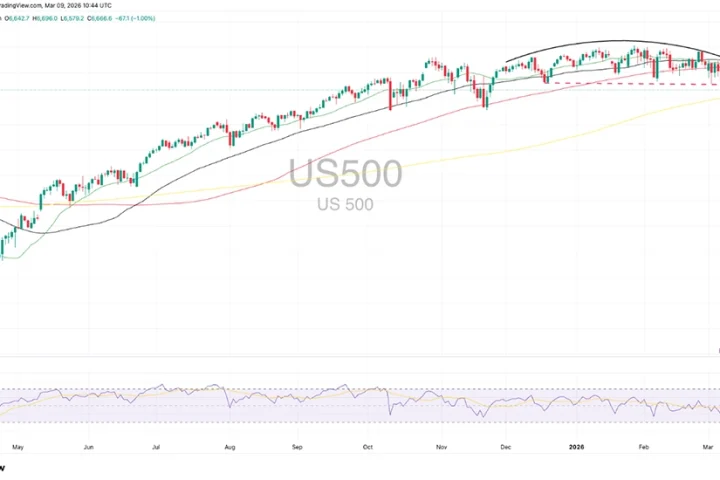
Commenting on the current market environment, Josh Gilbert, Market Analyst at eToro, said volatility has become a defining feature of global markets.“Volatility is the price of entry in markets right now, and investors who understand that will be far better positioned than those who try to time their way around it. This is a market being driven by headlines and those headlines can turn on a dime, making this a particularly challenging environment for investors,” Gilbert said.Market sentiment remains heavily influenced by geopolitical headlines. On Monday, global markets demonstrated how quickly sentiment can shift, with the S&P 500 reversing early losses to close 0.8% higher after comments from US President Donald Trump suggested that tensions with Iran could be nearing resolution. That late-session rebound has carried into Asian markets, where indices opened higher following the US recovery.
Oil markets have been at the center of recent volatility. Crude prices experienced dramatic swings during Monday’s session, trading in a nearly USD 40 range before retreating after signals of potential de-escalation in the Middle East.“Such extreme intraday moves in oil markets highlight just how headline-driven the current environment has become,”
Gilbert added. “A single comment from a political leader can reverse billions of dollars in market losses within hours.”While higher oil prices typically strengthen fiscal positions across the Gulf region, this particular surge is different because it is tied directly to disruption within the region itself.
Infrastructure, trade flows, and broader economic activity have all been affected, offsetting some of the benefits governments typically receive from higher crude prices.The Strait of Hormuz remains heavily disrupted, forcing several Gulf producers to scale back output, while the G7 has indicated it stands ready to release strategic petroleum reserves if supply disruptions intensify.
For now, markets appear to be treating the current oil shock as temporary rather than structural, an important distinction for investors assessing the outlook.Periods of heightened volatility can often lead investors to make decisions driven by fear. However, history shows that some of the strongest market rebounds occur immediately after the sharpest declines.“The worst time to make investment decisions is when fear is at its highest,” Gilbert said. “Selling after a sharp market decline risks locking in losses and missing the early stages of a recovery, which can have long-term implications for portfolio performance.”In uncertain market environments, defensive and dividend-paying companies often provide greater stability. Businesses with strong balance sheets, consistent cash flows, and resilient demand tend to perform better during periods of geopolitical stress.
“During times like this, boring can be brilliant,” Gilbert said. “Investors should be focusing on companies with strong balance sheets, reliable cash flows, and businesses that people continue to spend with regardless of geopolitical developments.”Looking ahead, de-escalation signals could create room for a recovery in UAE markets, especially given how much negative sentiment has already been priced into equities. While the recent selling has been severe, it has also been broad-based, suggesting that any relief rally could be equally sharp.Investors will also be closely watching upcoming US inflation data, with the latest Consumer Price Index (CPI) figures expected later this week.
Rising energy prices have already prompted markets to reassess the outlook for interest rate cuts, and a stronger-than-expected CPI reading could further influence global monetary policy expectations.For now, investors should expect continued volatility driven by geopolitical headlines and macroeconomic developments. However, for patient long-term investors, such periods can also present opportunities to focus on fundamentally strong companies positioned to weather short-term market turbulence.