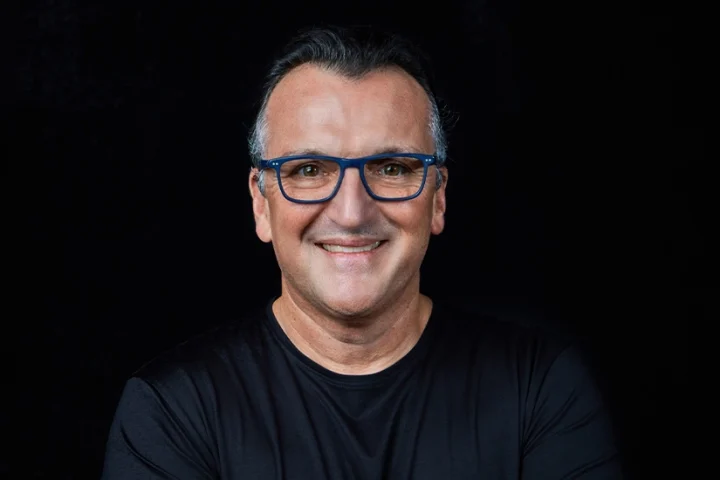



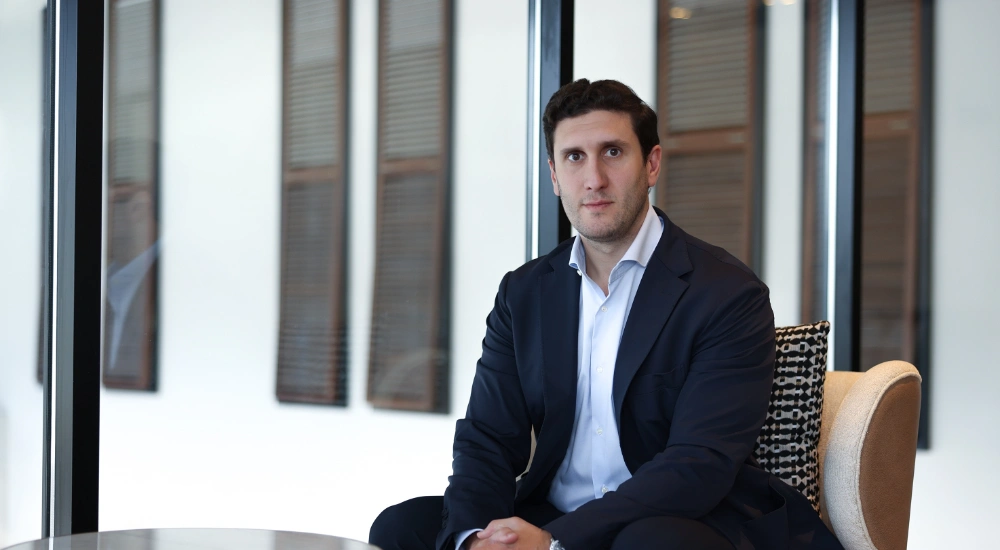
Federico Pienovi, CEO and CBO, APAC, MENA, and New Markets, Globant, has spent three years building the company’s business in the Gulf. He says the change underway in Saudi Arabia has very little to do with adding AI to existing processes, and that most companies are still redesigning the wrong thing.
Globant arrived in the Middle East three years ago, at a time when AI sat somewhere below cloud migration on most enterprise agendas in the region. The professional services model it brought with it was the one the industry had used for decades. Engineers, hours, rate cards, statements of work.
That model is now being taken apart from the inside. The company has built a set of software agents, programs that carry out tasks with limited human instruction, which now run testing, development, design and product definition as a single connected process under the supervision of Globant’s engineers.
The output of those systems is sold on subscription. Federico Pienovi, CEO and CBO APAC, MENA and New Markets Globant, said the Kingdom is where that commercial change is moving fastest, because buyers there have shown an appetite for contracting in ways the market has not tried before.
His argument about infrastructure runs along similar lines. Moving from AI pilots to full corporate implementation requires data centres, energy, chips, the models themselves and the applications sitting above them. Saudi Arabia has spent heavily across all of those layers while regulators have tightened requirements on data residency and sovereignty. Pienovi’s view is that the two developments are connected, and that a company handing its information to an ungoverned model has no way of knowing where that information travels afterwards.
We spoke to him at LEAP about accountability, the talent shift inside engineering teams, and the question he thinks boards are getting wrong.
The region has moved from AI strategy to AI infrastructure at a pace most markets have not matched. What has that looked like from where you sit, and why does it make Saudi Arabia the right base for your regional business?
If you are trying to move from an MVP on AI to full-blown implementation, which is what is happening in the Kingdom, what you need is a complete infrastructure underneath. By infrastructure I mean data centres, energy, chips and the models themselves, and then you need applications on top of that. For an ecosystem maturing as fast as the Saudi one, that infrastructure layer is the thing that makes the move out of pilots possible. It becomes even more important once you add the regulation around data and around sovereignty, which is where a lot of the attention is here.
Think about what happens when a company gives all of its information to an AI model and that model is not governed properly. It feeds into other models, and into other companies. That is the risk enterprises are trying to control, and it is why the location of the model and the rules that sit around it matter as much as the capability of the model itself. The advancements and the investments being made here position the Kingdom very clearly among the leading markets investing in AI.
You have been in the Middle East for three years. What has changed most in what clients ask for, and what does that tell you about how far the region’s AI economy has actually matured?
When we started three years ago, AI was not there as strongly as it is today. That has fundamentally changed the professional services business, and it means Globant itself needs to change. Software development is now being done by AI.
So we announced Globant AI, a company within Globant, to build a platform of agent systems that develop software. We now have those systems doing testing, software development, design and product definition as one connected process, supervised by our engineers. Historically, the consulting business contracted by the hour. This is contracted by subscription, the way Netflix is. We are moving the business from a pure consulting hourly rate into an outcome-based subscription that uses AI agents, and the Kingdom has been quick to take on new and innovative ways of doing business. That is an area where we are growing massively here.
Which parts of the Vision 2030 agenda are generating the most demand for the work you do, and what capability does the market still need to build?
Technology is needed across all sectors and all areas of the giga-projects. Entertainment with Qiddiya. Travel and hospitality with the Red Sea. The FIFA World Cup and the Asian Cup on the sports side. You have Expo 2030, which will be the most technologically advanced in history. Every one of those industries is now a serious focus for us, and each one of them needs the same underlying capability.
The bigger shift has been in talent. The people who were building software solutions have migrated into AI engineers. Their work now sits in the supervision of the models that write the software, and much less in the writing of the software itself. That is a different skill set, and it needs to be built deliberately, which is why we are investing in training and retraining people. That is the talent that will be needed to implement AI across the projects and across Vision 2030.
What are the two or three things a chief executive has to get right on AI over the next 24 months, and where are boards still asking the wrong question?
Twenty years ago, when we started with digital transformation, there was a big distinction between digitalisation and digital transformation. Transformation meant looking at your business as a fully digital business and asking whether you would still do the same things you did 30 years ago, now that this technology exists. The same distinction applies today, and most companies have not made it.
The big gap is that we are still thinking about using AI on the processes and the companies we had four years ago. The question worth asking is what my company would look like if I created it today, with agent systems available to me and with a new category of employee that is an agent, which did not exist three or four years ago.
Most people are focused on how to implement AI in the processes they already have, whether that is in finance, in procurement or in HR. What I would want a board to be asking is how to rethink the whole architecture of the company as an agent-run company. Those are different exercises, and they produce very different companies at the end of it.
As agent systems move work from people to software, what does leadership become accountable for that did not exist before, and how does that play out here given the sovereignty and residency rules?
Accountability still resides with humans. These systems create the need for a new role, which is a human being overseeing the agent system, because the responsibility sits with us to train those systems on the model of what we want to offer a customer. If a client asks something, I have to make sure that the answer stays within the grounds of the services they actually bought. That is a supervision job and somebody has to own it.
What is changing is the quality of the decision. As these models train, they get better at decision-making.
They can now make decisions in uncertain situations in a way they could not do before, still with a person supervising the output.
In this region, there is a great deal of attention on data privacy, data residency, sovereignty, how those models are trained and what they see during training. Everything the Kingdom is doing on its own models and its own infrastructure will pay off for enterprises that want to use them and remain compliant at the same time.
Globant works across entertainment, sports, tourism and technology. How does this change those sectors specifically?
This week we announced an agent system for tourism, which defines a protocol for agents to talk to each other. Those agents do not need to go through websites, and they do not need to speak natural language the way you and I do, because they can speak their own language to another system.
That will fundamentally change how the tourism industry works, because today there is a great deal of money sitting in the middle of the process.
Our intention is for every industry to be rethought this way, and tourism is one example where the leadership and the investment are already behind it. The dream is that you tell your AI agent you want to go to Saudi Arabia, and it books your flight, your experiences, your hotels and your transportation without you visiting a single website.