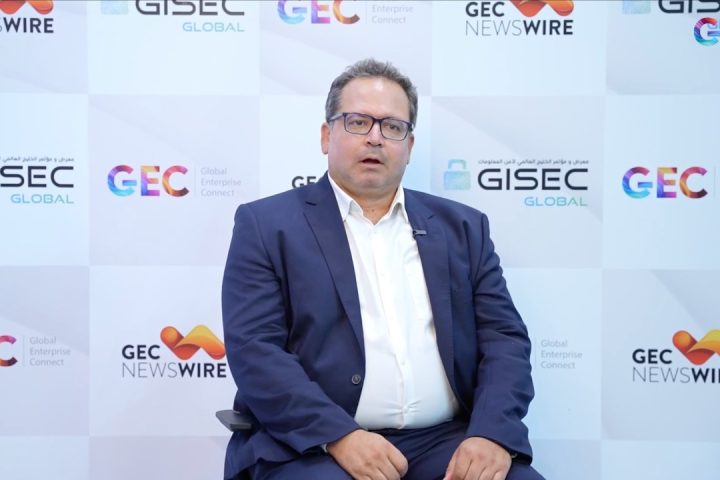



Amit Mishra, Co-founder and CPO, Evolvable AI, told GEC Newswire that legacy security operations have been outrun by machine-speed exploits, and that the token bill is about to reshape how enterprises deploy AI.
Security operations were designed around a human reading an alert. Amit Mishra, Co-founder and CPO, Evolvable AI, said that assumption no longer survives contact with the threat. Exploits now execute in fractions of a second, which leaves the legacy combination of technology, people and process without a role. “The amount of time an analyst would take to open a console, the attack would have happened by then,” he said.
His conclusion is symmetrical. “When the attackers are using AI, or essentially attackers are AI, the defenders have to be augmented with AI as well,” Mishra said. Evolvable AI, which he described as a sovereign AI operating system built for the region, positions its AI SOC on that argument. The company offered no detection or response data to support the positioning. Syntrix Technologies distributes the platform in the UAE, Saudi Arabia and elsewhere in the GCC, and currently leads its go-to-market across the region.
Mishra expects edge AI to become the dominant trend, driven by cost rather than capability. Enterprises that adopted aggressively are already examining what they spend, and he said many will be burned by token costs on the large commercial models before they optimise. The precedent he pointed to is the cloud migration wave, where enthusiasm ran ahead of the bill and cost optimisation arrived afterwards as a separate discipline. Cheaper models running at the edge are where he expects that correction to settle, with organisations keeping the large commercial models for work that genuinely requires them.
Tool sprawl became AI sprawl, and nobody wrote the governance
The second problem is accumulation. Every platform and technology now ships an AI component, which reproduces the tool sprawl that enterprises spent a decade unwinding. “While we are introducing AI everywhere, the governance is missing,” Mishra said, describing a situation in which a CISO faces different agents, different systems and different point solutions with no coherent way to manage or control them.
That leads to the question he considers unresolved across the industry. “When AI starts making decision or taking action, how do we hold AI accountable?” Mishra said. His answer rests on AI identity, traceability over every decision and action, and a human retaining control through human in the loop. Evolvable AI is built around those 3 requirements, though Mishra gave no detail on how the traceability is implemented or audited.