



Dynatrace signed a definitive agreement on 13 August to acquire AI observability company Arize in a cash and stock transaction valued at $915 million, the largest acquisition in the company’s history. The capability gap it closes is narrower than the price implies, since Dynatrace was already tracing gen_ai spans, scoring live production responses using LLM-as-a-judge evaluators and detecting drift in those scores over time.
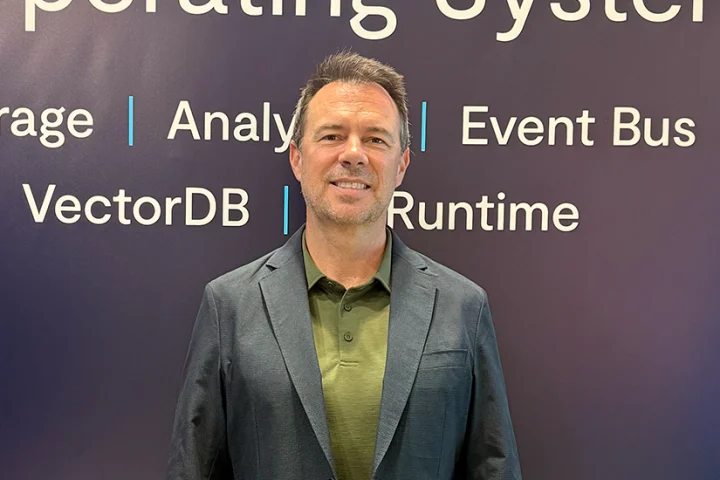
Roman Spitzbart, VP EMEA Solutions Engineering at Dynatrace, said the deal was about timing rather than capability. “Arize was mainly an acceleration,” he told GECnewswire, describing it as a way to bring the full set of capabilities to market immediately, in enterprise-grade and scalable form, rather than assembling and testing them one at a time.
Asked why an in-house build was the worst option, he pointed to the pace of the category rather than the difficulty of the engineering, noting that anyone covering AI encounters something new every few weeks that was already happening without their knowledge.
The $915 million headline is the total transaction value, subject to customary adjustments. It comprises approximately $815 million in cash, funded from cash on hand and the company’s existing credit facility, plus replacement equity awards issued to Arize employees joining Dynatrace.
Closing is expected later this quarter or early in Dynatrace’s fiscal third quarter, subject to regulatory review — a point Spitzbart marked during the interview, noting the company has announced its intent to acquire rather than a completed transaction.
Arize founders Jason Lopatecki and Aparna Dhinakaran both join at closing, with Lopatecki continuing to lead the Arize team and reporting directly to CEO Rick McConnell. Dynatrace expects the transaction to add approximately 200 basis points to ARR growth in fiscal 2027 while reducing non-GAAP operating margin by approximately 175 basis points over the same period, with margin expansion resuming from fiscal 2028, and has told investors it will not materially affect second-quarter guidance or the share repurchase programme. J.P. Morgan Securities advised Dynatrace with Goodwin Procter as counsel, while Qatalyst Partners acted as exclusive financial advisor to Arize alongside DLA Piper.
The developer audience Dynatrace has not won
Arize’s users are AI engineers and developers. Dynatrace has built its business selling to operations and platform teams. Put to him that these look like two markets rather than one, Spitzbart agreed and said the combination was what made the deal attractive, describing Arize’s user base as an audience Dynatrace has traditionally not been strong with.
He was unusually direct about why. “We’ve always had a value proposition for developers, but I concede that it wasn’t as strong as, for example, what Arize has with their offering today,” he said. What he wants after closing is a single offer running from the AI engineer and the developer through to production.
Timing is what makes that commercially significant. Evaluation tooling is chosen while an application is still being written, months before an operations team sees it, by engineers with no historical claim on the observability budget. DORA’s 2025 research put AI adoption in software development at 90%, which makes that group the entire engineering organisation rather than a specialist subset.
Dynatrace projects AI observability will exceed $10 billion by 2030, though that is a company projection and third-party estimates differ sharply by category definition. Research and Markets values the LLM observability platform segment at $1.97 billion in 2025, forecasting $9.26 billion by 2030 at a 36.3% CAGR, while narrower agent observability estimates put the 2026 base under $1 billion. The stronger demand signal sits in agent deployment: Gartner expects 40% of enterprise applications to embed task-specific AI agents by the end of 2026, up from under 5% in 2025, and separately forecasts that 40% of enterprises will demote or decommission autonomous agents by 2027 because of governance gaps identified only after production incidents.
Why the two toolchains do not meet
Dynatrace argues that AI software delivery has split into two toolchains that never meet. AI engineering teams evaluate model and agent behaviour in one set of tools, while platform engineering, SRE and operations teams work in another. When output quality slips or a customer transaction fails, the cause can sit anywhere from the prompt to the GPU, and the developers positioned to fix it rarely see the signal.
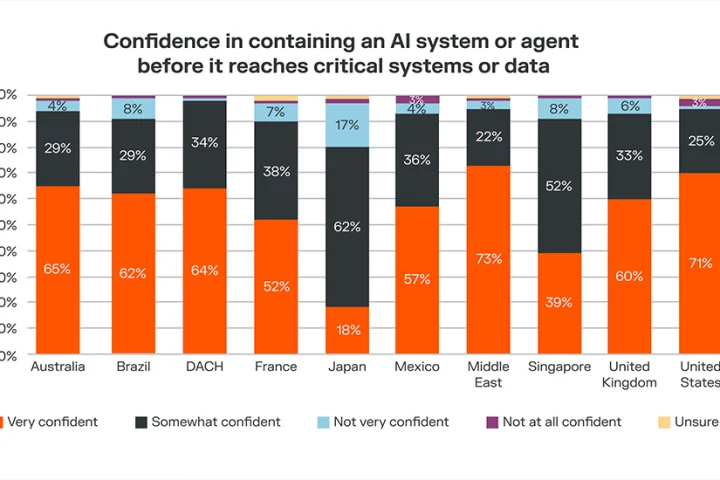
The company’s own research supports that. In a Dynatrace study of 919 agentic AI leaders, 51% cited technical challenges in managing and monitoring agents at scale as a top barrier to production, and 45% said they lack clear rules for when agents may act autonomously and when a human must intervene. Separate Dynatrace research found 42% of organisations with limited real-time visibility to trace and troubleshoot agent behaviour, and 44% still reviewing agent-to-agent communication flows manually.
Dynatrace product chief Steve Tack, writing on the deal, said AI systems fail differently from conventional software. An application can be available without being accurate. An agent can complete a workflow while taking the wrong path through it. A model can perform well in development and behave differently in production as prompts, data sources or dependencies change, without triggering an infrastructure alert.
Much of what Arize brings sits outside its commercial platform. Phoenix is its open-source tracing and evaluation project, and OpenInference, created and maintained by Arize, is an open specification for AI tracing built on OpenTelemetry that lets teams instrument AI applications without proprietary tooling.
Dynatrace has said it intends to support Phoenix and continue stewarding OpenInference, that both companies will operate independently after closing with existing commitments unchanged, and that developers can begin on Phoenix and scale onto the full platform using the same instrumentation.
Asked how an enterprise vendor sustains that kind of community, Spitzbart pointed to Bindplane, acquired in April, noting that customers still run its open-source collectors to feed data into Dynatrace, and argued the company’s value has always sat above the collection layer, in what an enterprise platform does with data once it arrives.
Kubernetes, coding agents and the MCP problem
The CNCF’s annual cloud native survey, published in January, found 82% of container users running Kubernetes in production and 66% of organisations hosting generative AI models using it for some or all inference workloads. Coding agents are now pushing changes into those clusters through MCP servers faster than review processes were designed to absorb, and DORA found software delivery instability continuing to rise even as AI adoption turned positive for throughput, with no support for the argument that added speed compensates by enabling faster recovery.
Asked what Dynatrace sees at that layer that a cluster’s own tooling does not, Spitzbart described a scenario in which Kubernetes reports a perfectly healthy cluster precisely because no requests are arriving — low load, no alerts, nothing to act on — while the business layer shows revenue has halved and end users are affected. His argument is that autonomous operation requires the complete picture, and Kubernetes only ever supplies one part of it.
He expects platform engineering to change character rather than volume, moving from locating a fault and fixing it towards receiving a root cause and directing the environment, with approval staying human. Most organisations, he said, are not yet at the point where agents deploy fixes unsupervised.
Working out which change broke something is harder than keeping the data that recorded it. Retention is rarely the constraint, since most Dynatrace customers hold trace data for a 7 to 10 day window chosen so a weekend or holiday cannot fall outside it. Spitzbart said the answer is change point detection rather than traceability alone: traces viewed in isolation show transactions suddenly running slower or taking a different route, with no indication of why, and without knowing what changed there is no way to establish the root cause. The remedy is often simply reverting the last change, whether an agent or a person made it — which only works if the system knows what that change was.
Dynatrace shipped its own MCP server in January, giving AI assistants access to live production insight, and the protocol’s security record since has been poor. Researchers disclosed more than 40 CVEs against MCP implementations between January and April across the Python, TypeScript, Java and Rust SDKs, while an OX Security analysis identified a systemic flaw in Anthropic’s official SDK affecting over 7,000 publicly accessible servers and packages with more than 150 million combined downloads, which Anthropic confirmed as intended behaviour, treating sanitisation as a developer responsibility.
Spitzbart’s answer here comes back to human checkpoints, framed around a term he says the industry has been circling for 15 or 16 years: quality gates that test whether an application still performs its business function, rather than gates that only confirm it is running and responding quickly. Where such gates are absent, he argued, real user monitoring can close the loop instead — an insurer whose claims stop going out knows the agent broke something, regardless of what the infrastructure reports. How far past that point a company automates is a matter of risk appetite, and while some will accept breakage on the assumption that agents repair damage as fast as they cause it, he does not think the evidence supports that yet.
On what Arize itself adds, he placed the deal as filling a hole rather than opening a front. “It’s data that we currently capture incompletely, or not to the same level of depth,” he said. “For me, it really closes the gap between AI engineering and observability.”