



Of the 60 UAE chief information officers surveyed by The Harris Poll in July, 3 said their organisation could reliably identify a misbehaving AI agent and contain it across every environment it touched within one to two hours. The same group reported the strongest record of any market in the study for stopping such agents before they damaged customers, finances, compliance or operations.
Both findings come from the Global AI Confessions Report: CIO Edition 2026, commissioned by Dataiku and fielded between 9 and 29 July among 685 CIOs at companies with annual revenue above US$500 million in the US, the UK, France, Germany, the UAE, Japan, South Korea and Singapore.
Catching an agent that has gone wrong in the system where it was spotted depends on monitoring. Stopping it across the cloud platforms, data estates and business applications it has been wired into depends on how the organisation itself is built, and on that second measure the UAE ranks near the bottom of the eight markets.
A small cohort of UAE enterprises is running agents at a volume few peers have reached
62% of UAE CIOs estimate that more than 50 AI agents are running in production inside their organisation, slightly below the 67% global figure. At the top end the order reverses: 15% report more than 500 agents in production, the highest share of the 8 markets and well above the global average of 9%. The UAE therefore has a concentrated group of very heavy deployers sitting on top of a mainstream that tracks the global pattern.
Hiring intentions match that ambition. Among CIOs whose organisations are creating or planning embedded roles for AI experts or forward engineers, 22% expect to recruit more than 10 such people over the coming year, again the highest figure in the study.
Four in five UAE CIOs have watched an agent break the rules while working exactly as built
The research asks about a specific kind of failure: an agent that violates business intent, policy or expectations while continuing to operate within its technical parameters. Nothing crashes and no alert fires, because by every technical measure the system is doing what it was designed to do. 80% of UAE CIOs said they had encountered one, almost identical to the 79% recorded globally.
UAE organisations pulled clear of every other market once such an agent surfaced. 62% of UAE CIOs said the incident was caught before it caused customer, financial, compliance or operational impact, against 48% globally, while 18% said it did result in real impact, the lowest in the study and well below 31% globally and 53% in the UK. Measured against the number who had encountered such an agent, roughly 1 in 5 UAE incidents reached the business, compared with close to 2 in 5 worldwide.
Catching an agent in one system does little good if it keeps running in the next
The advantage disappears at the containment stage. Only 5% of UAE CIOs said they could reliably identify and contain a problematic agent across environments within one to two hours, half the global figure of 10% and among the lowest results in the study. A further 27% could act later the same day, 45% put containment at 24 to 48 hours, and 23%, one of the highest shares recorded in any market, said it would take two days or more. More than two-thirds of the UAE sample could not reliably stop a misbehaving agent on the day it was found.
The reason for the delay is visible in how few organisations can see their whole agent estate. Only 18% of UAE CIOs have a fully unified view of agents across cloud platforms, data environments and business applications, below the 23% global figure, and 12% say agent lifecycle management is standardised across their organisation, compared with 17% globally. An agent flagged by one team’s monitoring can keep acting through another system that nobody on that team can see or switch off.
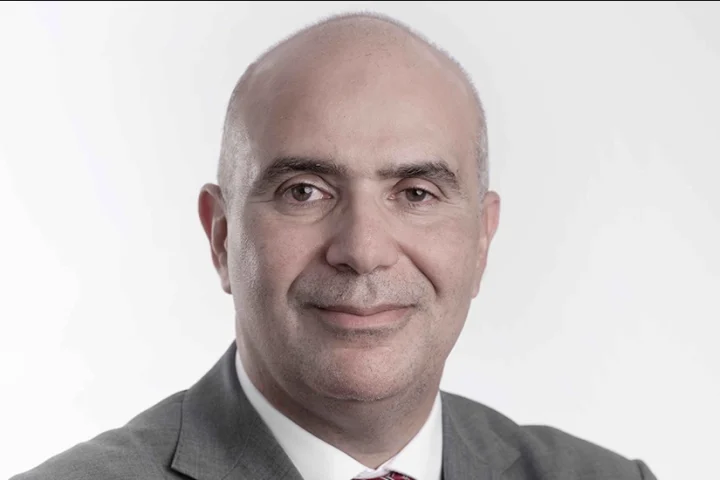
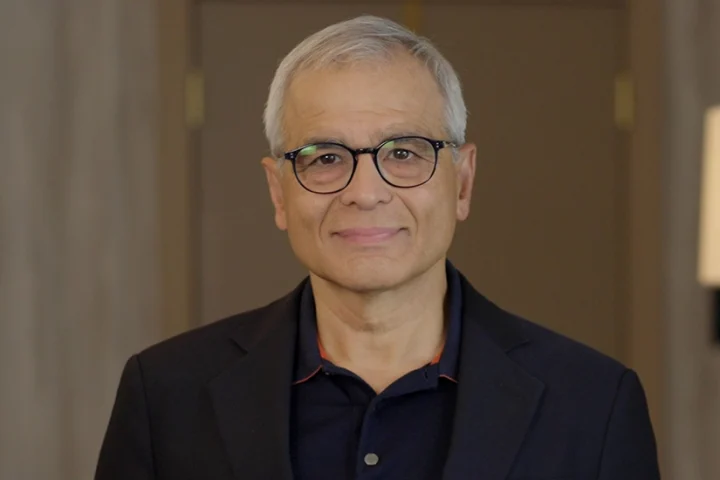
Florian Douetteau, CEO and co-founder of Dataiku, drew the distinction sharply. “CIOs in the UAE are running agents at a scale few markets have reached, and they’re unusually good at catching bad behaviour before it does damage. But detection and control are different capabilities, and the research shows a real gap between them. An agent you can spot in one system but can’t stop everywhere else isn’t contained; it’s just been noticed,” he said.
That diagnosis should be weighed alongside its source. Dataiku sells an orchestration and governance layer designed to sit across multi-vendor AI estates, which is close to the remedy the report’s closing section recommends, and the UAE figures rest on 60 respondents, the smallest national sample in the study, with no published margin of error. The direction of the findings is consistent with the report’s global data, where roughly 6 in 10 CIOs also said they could not contain an agent on the same day, but individual UAE percentages are best read as indicative.
No CIO in the UAE sample is escaping board pressure over AI returns
The containment gap matters more because of who carries the risk. Every UAE CIO surveyed reported greater board pressure to demonstrate measurable AI return on investment than in 2025, against 97% globally. 93% said their CEO had indicated that their job security depends on AI outcomes, compared with 86% worldwide, and 90% agree that their professional reputation or career trajectory will be shaped by their success with AI.
Belief in the technology runs just as high. 92% of UAE CIOs think an AI agent could offer business counsel equal to or better than a human board member. Confidence in the specific bets made to deliver on that belief is far weaker: 97% regret at least one major AI vendor or platform selection made in the past 18 months, the highest rate of regret in any market surveyed.
The June model suspension exposed a dependency the UAE is hedging more slowly than its peers
The events of June give that regret figure practical weight. On 12 June, Anthropic suspended access to its Fable 5 and Mythos 5 models to comply with US Department of Commerce export controls, restoring access on 1 July after the controls were lifted. The Harris Poll fieldwork began 8 days later, and the report says the episode prompted CIOs to think differently about model dependency and continuity.
Dataiku’s release presents the UAE response as a strength, noting that 63% of UAE CIOs plan to use more or different models to protect business and AI continuity and 62% are considering open-source alternatives as a hedge against future unavailability. Both figures sit below the global averages in the same report, 75% and 74% respectively, and well below the US, where 87% and 86% are pursuing each measure. A market that reports the highest vendor regret in the study, and runs some of its largest agent populations, is diversifying its model base more slowly than its peers.
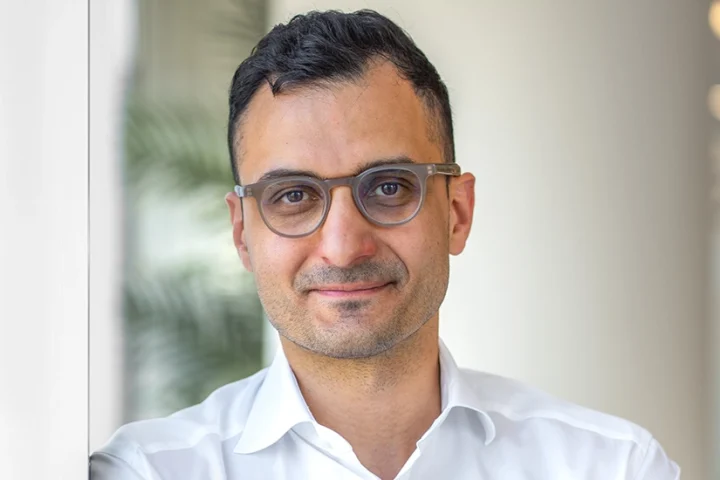
Sid Bhatia, Area Vice President and General Manager, Middle East, Turkey, and Africa at Dataiku, argued that the safeguards UAE organisations have built now need to be joined up. “The next stage is to connect those safeguards across the enterprise. That means giving CIOs a unified view of their agent population, clarity on who has the authority to act, and the ability to intervene immediately, regardless of where an agent was built or which system it uses,” he said.
Authority to act is the part of that list most likely to stall. Globally, CIOs are split almost evenly on who should answer for a harmful agent decision, with 23% placing responsibility across multiple teams, 21% with central IT, 20% with the data or AI team, 18% with security, risk or compliance, and 13% with the business owner of the workflow. Until one of those groups holds the authority to take an agent offline everywhere it runs, a unified view of the estate will do little to shorten the containment times UAE CIOs reported.
Every CIO in the UAE sample now answers to a board asking for proof that AI pays. On the systems they described in July, 14 of those 60 would need two days or more to take a misbehaving agent offline across their estate, and 41 would not manage it on the day the problem was found.