

Oracle’s pitch to the AI market begins with a number that is easy to say and hard to build: 132,000 GPUs in a single cluster, provisioned for the kind of workload that trains a national language model rather than fine-tunes a chatbot.
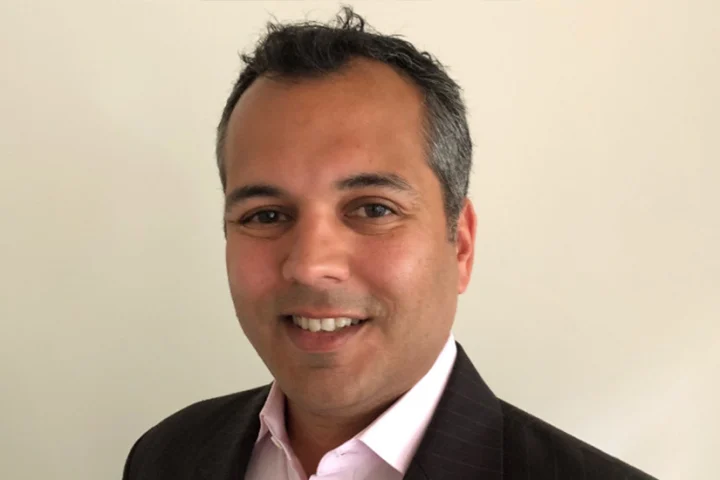
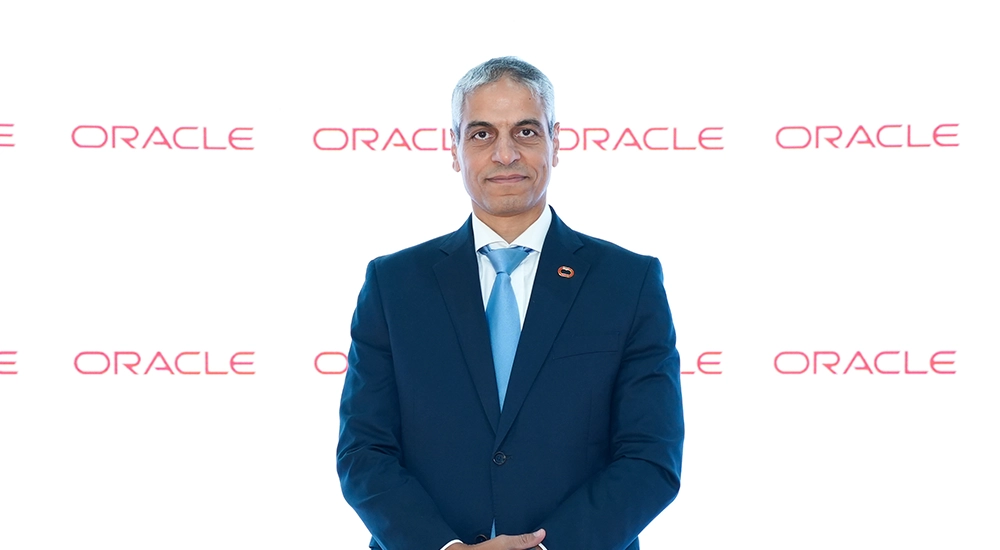
On the sidelines of LEAP 2026, Ahmed Adly, Vice President of Cloud Engineering for the Middle East and Africa at Oracle, used it as his opening because it sets the stage for where the company thinks the contest is being fought.
“Unlike many of the other technology providers, AI is an important pillar for them. For us, we’re putting the future of the company on AI,” he said.
He backs the claim with the customers as well. Oracle runs infrastructure for four of what he counts as the six leading large language model developers in the market, naming xAI, Cohere and Meta among them, with conversations open with others.
That is the global story, and it is the one most vendors are telling in some version this year. The more interesting part of the conversation begins when Adly explains what happened when Oracle brought that story to Riyadh.
Residency was the easy part, and Saudi buyers worked out quickly that it was not the whole answer
When Oracle first moved GPU capacity into its Saudi data centres, in Riyadh and Jeddah, the proposition was straightforward. Government, financial services and commercial customers wanted AI compute that sat inside the border, because the alternative was routing critical data to a facility somewhere else in the world. Adly reports strong take-up, particularly from government and the financial sector.
Residency, though, turned out to be the first pillar rather than the finished structure. Adly describes a pattern he has seen with competitors operating in the region: the compute arrives in-country, the marketing says sovereign, and then a dependency surfaces somewhere in the stack.
“A lot of other AI providers, they bring AI to the country, but there is a couple of services that are hosted in Europe, and the service is dependent on those. So customers are using AI here, but, for example, the security and authentication is in Europe,” he says.
Oracle’s response was to build the Saudi footprint to survive isolation. Adly’s test case is deliberately extreme. If there were a natural disaster, a geopolitical rupture, or a severing of connectivity with the outside world, the infrastructure in country would keep running on its own.
The third pillar he describes is legal alignment, with Saudi projects and partnerships structured under Saudi data law and Oracle holding no access to customer data. Regulation in the Kingdom, he notes, arrives from more than one direction, with the Communications, Space and Technology Commission and the National Cybersecurity Authority both setting controls that have to be satisfied.
Then Oracle added a fourth pillar, and this is where the architecture stops being a technical question.
The STC deal moved sovereignty from where the data sits to who is allowed to touch it
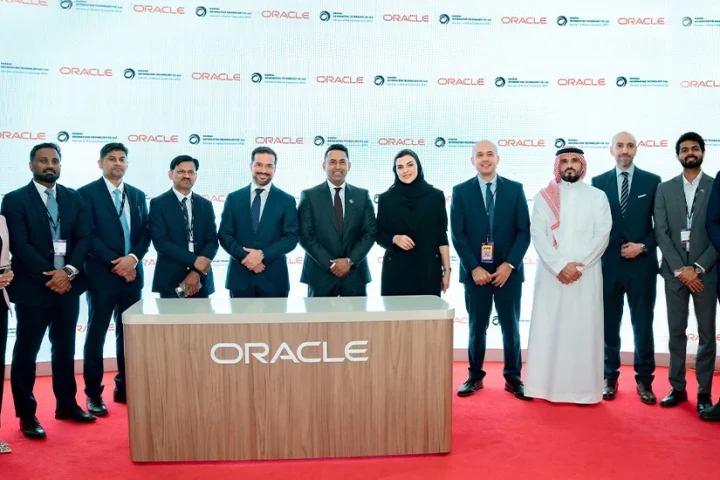
Oracle signed a strategic partnership with STC to deliver sovereign AI capability from Oracle Cloud under STC’s operational control. The Saudi telecoms operator manages the cloud and provides support to Saudi customers, staffed by Saudi nationals vetted by the authorities.
Adly is direct about why this mattered more than another compliance certificate. Customers wanted assurance that the people with hands on the environment were accountable within the same jurisdiction as the data. A national operator with existing government trust supplies that in a way a global vendor cannot supply for itself.
“That gives us a comprehensive sovereign framework,” he says.
Every border in the Gulf forces the model to be rebuilt, and Adly says that is the region’s structural disadvantage
The comparison Adly reaches for is the European Union, where a shared set of sovereign controls means a provider can build once and serve customers in Spain and Germany from the same compliance posture.
The Gulf offers no such economy. Saudi Arabia, the UAE and Qatar each maintain distinct rules, distinct regulators and distinct expectations of what a local partner should look like. Oracle’s answer has been repetition. In the UAE, the company has signed with G42 and e& enterprise, described by Adly as the equivalents of STC in their market. Oman has its own arrangement with a national partner. The template travels; the implementation does not.
Multicloud interoperability has taken a parallel path, and Adly is candid about where the industry started. “In the early days, all the cloud providers were dealing with cloud as isolated islands. If you come to my cloud, you cannot touch or you cannot work on any others.”
Two architectures now sit against that. Oracle has built high-speed interconnects between its own regional cloud and other hyperscalers, allowing a customer to run analytics on Google while the data itself stays on Oracle Cloud without a latency penalty. The second, Oracle Cloud at a hyperscaler, deploys a compact Oracle footprint inside another provider’s data centre so services can be mixed across both. That model has been running for a couple of years elsewhere and has not yet reached the region, though Adly says work is under way to bring it.
The models do not know which country they are running in, which is why the guardrails have become the regulation
Adly’s assessment of the past two years is that adoption ran ahead of governance, and that everybody involved, vendors included, allowed it to. Speed of deployment and visible use cases took priority while the rules were still being written.
He describes the correction as already visible, with regulators across the region publishing controls on data handling and guardrails for AI deployment. Oracle is working with the Digital Government Authority in Saudi Arabia and with UAE authorities on the guardrails applied to generative models made available in each market, alongside local providers doing fine-tuning to adapt models to regional culture and regulation before they reach the Oracle Cloud Marketplace.
The reasoning behind that work is the sharpest thing he says in the interview.
“What is acceptable here in Saudi is different from what is acceptable in Sweden. But the AI model doesn’t understand this because it’s running on the same infrastructure. It doesn’t differentiate. It differentiates only through the guardrails that we implement.”
The energy question has a commercial answer, and it involves customers switching their own data centres off
On the sustainability argument now attached to every AI build-out, Adly cites an internal target that 99% of Oracle’s data centres run on renewable energy, a figure he says has been achieved in Europe with the regional estate at roughly 95%. He also points to water recycling in some US facilities, returning water for community use rather than treating it as waste. These are Oracle’s own figures and are not independently verified.
His view of where capacity is heading is more concrete. Customers are running what the industry now calls data centre exit projects, decommissioning their own facilities and consolidating onto large shared sites. The efficiency argument rests on load profiles that do not coincide. Three organisations each running a separate megawatt-scale facility hit their peaks at different hours; consolidated onto one site, the aggregate requirement falls below the sum of the parts, and so does the energy draw.
Oracle is working with several of the operators building large facilities in Saudi Arabia on exactly this consolidation. The pattern Adly expects into next year is fewer, bigger, better-governed sites, with the regulatory guardrails maturing at roughly the same pace as the concrete.