


A KPMG report reveals that 84 percent of Middle East family businesses expect to outperform global competitors, driven by strong brand equity, geographic expansion, and long-term stewardship. However, governance challenges remain regarding artificial intelligence and cybersecurity.
The report, which surveyed 135 senior family business leaders across the region, found that 84% of family businesses in the Middle East expect to outperform their competitors over the next five to ten years, compared to 72% globally. That confidence is grounded in strategic clarity, with 85% reporting a defined growth strategy for the next to ten years and 80% reporting strong internal consensus among family members and leadership on how best to grow the business.
Much of that confidence traces back to how these businesses understand their competitive advantage. Family reputation and brand equity ranked as the most successfully leveraged assets among respondents, with 93% rating them as key value drivers, followed by shared values and purpose at 89%. The region also places significantly greater emphasis on long-term stewardship than the global average, with 81% saying they would prioritise family unity even at the cost of lower returns, compared to 66% globally.
Geographic expansion has emerged as the defining growth priority for the decade ahead. More than a third of respondents (36%) ranked expanding their geographic footprint as their single highest-impact growth driver to 2035, more than any other lever, with more than half placing it among their top two priorities. That long-term mindset is also reflected in how growth is funded, with 55% of respondents identifying reinvestment of earnings and shareholder equity as their preferred source of growth capital over the next two years.
Looking further ahead, the leadership and governance agenda is shifting. Business succession and next-generation readiness have risen to become the single highest-ranked long-term concern among regional family business leaders, cited by 34% of respondents as their top challenge through to 2035, up from 29% in the near term. Governance and strategic decision-making showed the sharpest climb between time horizons, rising from 19% in the short term to 27% long term, reflecting expectations that decision-making structures are becoming more demanding as they grow and transition across generations.
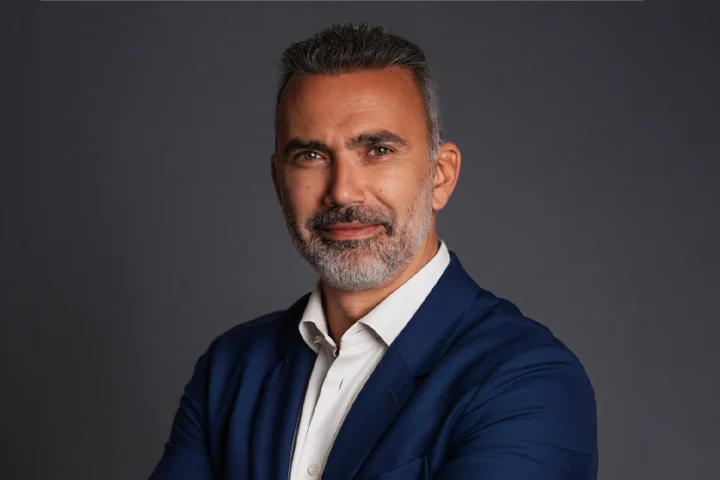
Abdullah Akbar, Partner and Head of Private Enterprise at KPMG Middle East, said: “Family-owned enterprises have driven regional economic growth for generations. Across the Middle East, they have repeatedly demonstrated that long-term thinking, strong values, and deep relationships are genuine competitive strengths. As they continue to expand into new markets and embrace new technologies, leadership continuity, governance and organisational capability become increasingly important for sustaining growth while remaining true to the principles that have defined their success for generations.”
The report also identifies areas where capability must keep pace with ambition. While 67% of family businesses are actively deploying AI, only 25% have established formal governance frameworks to oversee it. AI adoption and governance rank as the top near-term challenge, cited by 37% of respondents, broadly in line with the global average. On cybersecurity, 56% of respondents continue to view it primarily as an IT responsibility rather than a board-level risk, a governance gap the report identifies as increasingly consequential as these businesses scale and become more complex.