



Only 14.4% of organisations send all their AI agents live with full security or IT approval, according to Gravitee’s State of AI Agent Security 2026 report. The survey of more than 900 executives and technical practitioners also found that 82% of executives feel confident their policies protect them from unauthorised agent actions. On average, though, just 47.1% of an organisation’s agents are actively monitored or secured.
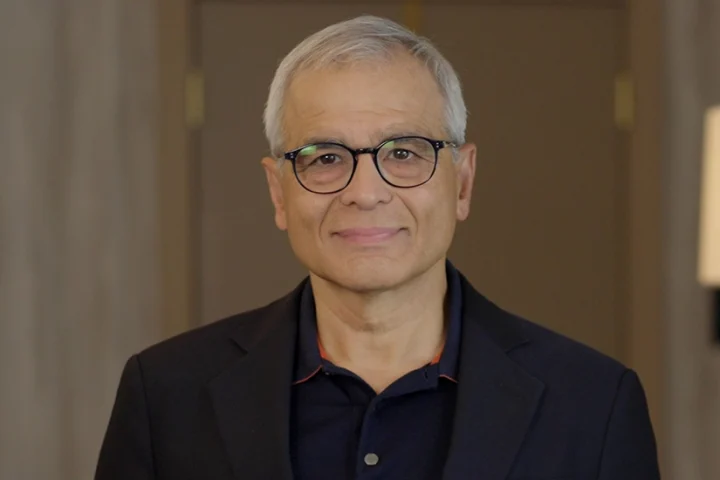
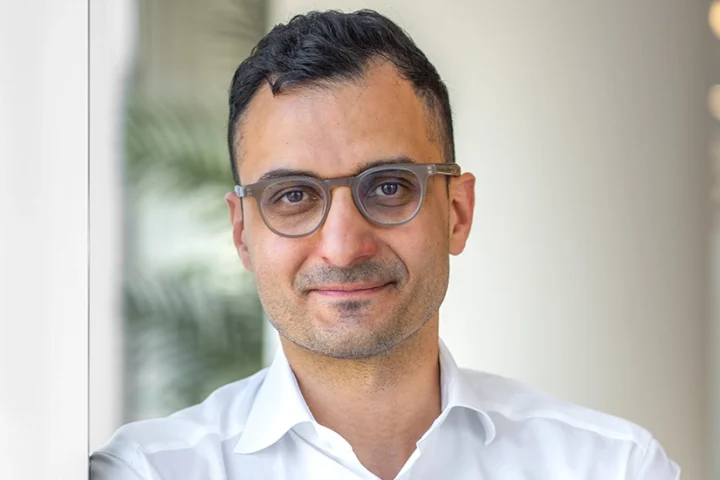
Mostafa Kabel is chief technology officer of Mindware, whose customers run multiple AI models alongside security, cloud and data technologies. He is based in Dubai, has spent 17 years in technology distribution and holds postgraduate qualifications in artificial intelligence, cybersecurity and infrastructure. GEC Newswire asked him what leaders should be doing now, from the boardroom question that exposes hidden agents to the decisions that determine whether a sovereign AI plan holds up.
If a board could put one question to its technology team about AI agents, what should it be?
I would ask: how many AI agents are operating in this organisation right now? It sounds like a basic question, and a surprising number of organisations cannot answer it with confidence. Every other part of agent governance depends on that number. If you do not know how many agents exist, you cannot know what they are doing, what they can reach or who is answerable for them. You cannot manage what you cannot see. An organisation that cannot count its agents is carrying risk it has not measured, however comprehensive its policies look.
Staff have used generative AI tools for some time. Why do agents call for more scrutiny?
The difference is who takes the final step. A generative AI tool produces something and then waits for you. If you ask it to tidy up an email, it gives you a cleaner version, and you read it, decide whether you agree, then copy it into your email and press send. A person makes every decision that matters.
An agent is given instructions, rules and a scope of work, and then it acts. It sends the email itself, updates the system and moves to the next task, much as an employee would. We have gone from AI that answers questions to AI that takes actions, and that shifts the risk entirely. The human checkpoint that made generative AI relatively safe is no longer built in. Organisations have to replace it deliberately with ownership, permissions and monitoring.
When a CIO reports that agents are being monitored, what should that actually cover?
Far more than a status light showing an agent is switched on. For every agent, a CIO should be able to say who owns it, what set it off, which data it read, which systems it touched, what it did and what came of it. With those six answers, you can predict how an agent will behave and reconstruct its actions when something goes wrong. Without them, monitoring is mostly reassurance.
I find it useful to treat agents as a new digital workforce. When a person joins a company, they receive a login, a defined role, specific access rights and a manager who answers for their work. Agents need the same four things: identity, permissions, monitoring and accountability. Most organisations would never let an unnamed contractor roam their systems, yet many are letting agents do exactly that.
A department discovers that the technical team has built an agent for it without its input. What is likely to go wrong?
The agent will be working blind. Suppose the technical team builds an agent for operations without involving the operations team. The people who understand the work were never asked how the process runs, what the exceptions are or which data can be trusted. Once the agent is live, nobody close to the work is checking it. Is it performing well? Are its instructions flawed? Does its data need cleaning or moving? Those questions go unasked, and the agent quietly underperforms or causes damage.
This is why I believe every production agent needs two owners. The business owner, marketing for a marketing agent, decides the strategy, writes the instructions and chooses the data the agent works with. The technical owner keeps it secure, stable and within its permissions. Right now, many organisations are still debating whether agents belong to cybersecurity, the business or the AI team. Splitting ownership between business and technology resolves that.
What would an agent registry give an enterprise that it lacks today?
A single, reliable answer to the board’s question. A registry is one place that records every agent, its business and technical owners, its permissions and the systems it can access. It turns a scattered collection of experiments into something leadership can govern.
It also exposes the agents nobody approved. We have been here before. Earlier technology waves produced shadow IT, where teams adopted tools the IT department never knew about. Generative AI is now producing shadow agents, and they are more dangerous, as they can act on data and systems. Leadership often watches the official AI platform closely while marketing, operations or individual teams build agents elsewhere. We have seen many such cases in the Middle East, and the same thing happens wherever adoption is moving fast. A registry closes that gap.
Is a large fleet of agents a sign of AI maturity?
No. Some small companies run only two agents and compete effectively with businesses that have invested millions of dollars in hundreds of them. The two agents can be the more efficient, as they were built carefully and given the right instructions.
Think of a highly capable colleague who knows the job inside out. If that person leaves and you replace them with several people who do not understand the work, you get more activity and worse results. Agents behave the same way. Maturity shows in how well an organisation knows what each of its agents is doing. The number of agents says very little.
What would make the biggest difference to visibility across the industry within the next two years?
Three things, in this order: identity, standard telemetry and unified visibility. Identity is the foundation. Every agent, including a small one that manages a calendar, should have its own identity and clearly scoped permissions from the day it is created.
Standard telemetry comes next. Enterprises will not run agents on one platform. Our customers at Mindware use multiple AI models alongside different security, cloud and data technologies, so the way agent activity is recorded needs to be consistent across all of them. Unified visibility then brings that telemetry together, so leaders see one picture of every agent and its outcomes instead of fragments from each vendor.
Turning to sovereign AI, what would you tell a government planning to build its national programme on an open-weight model?
I would tell them it is a sensible place to start, and that it will not make them independent on its own. Very few countries need to train a foundation model from nothing. An open-weight base lets them put their money where it counts: their own data, their language, their industry knowledge and their use cases.
The weights do not remove the dependency. The programme may still rely on the original developer for updates, security fixes and future versions, and on the community and tools around the model. I would also give them a test. If one technology provider vanished tomorrow, how much of your AI capability would still work? That answer shows where they really stand. Sovereignty also has to be checked at three levels: who controls the data, where the infrastructure sits and who runs it, and how much control and flexibility they have over the model. The model level is the hardest to secure.
A CIO is about to standardise on the top-ranked foundation model. What should make them pause?
The ranking will not last. A capability appears in ChatGPT, open-source models match it, Gemini adds strengths of its own, and new entrants keep arriving. A decision built on who leads today will need revisiting within months.
I would ask the CIO to start from their own requirements instead: security, data governance, performance and infrastructure. Then match models to workloads. Different models are better at different jobs, and individuals already work this way. Plenty of people use ChatGPT for emails and planning and Claude for presentations. Enterprises learned the same lesson with cloud, when spreading workloads across AWS, Microsoft and others became standard practice. Cost varies widely between models too, which strengthens the case. At Mindware, we design AI architecture so that each model is one replaceable component, and we advise every customer to do the same.
When is building a model from scratch the right call, and how should the payoff be judged?
Building from scratch is justified when the stakes are strategic, usually national security, language or intellectual property that defines the organisation. For most enterprises, adapting an existing model will be faster and cheaper, and I expect it to remain the dominant approach. I also expect smaller, specialised models to grow, as organisations look for the leanest model that still delivers the result they need.
The payoff should be judged against targets agreed before any work begins. Define the use case precisely: what you need and what output you expect. When it is delivered, go back to those targets. Did it produce the return on investment you wanted? Did it cut the time you set out to save? Did it grow the business by the amount you planned? An organisation that sets those measures up front will find the choice of model, and the choice between building and adapting, far easier.
Which parts of the AI stack can an organisation safely buy in, and which must it keep?
It can buy in the technology itself. Global providers offer excellent models, platforms and infrastructure, and there is no sense in refusing them. What must stay in-house is control of strategic data, security, architecture, governance and what I call critical operational knowledge.
That last one is mastery of your data and your models. You should know exactly which data you will train on and which data must never go near a model. You should understand how your models behave, including where they fail and how they can surprise you, as many organisations have watched models do things nobody predicted. Hold on to that knowledge and keep the freedom to switch providers without losing control of your business or your data. The line I repeat to every customer is that sovereignty is about owning your choices, and that does not require owning everything.