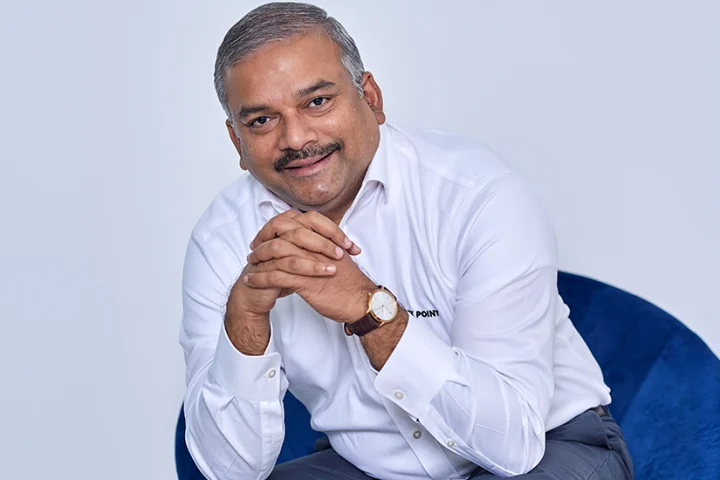



Nvidia reinstated Jensen Huang as president, CEO and board director on 23 November, reversing in less than a week a decision its chair had presented as final.
The board voted unanimously after a series of discussions and meetings with Huang, after which it said it was satisfied with his candour and ability to lead Nvidia. A regulatory filing showed the board took the decision on Sunday 22 November and announced it before Monday’s market open. In the same statement, the board said it had received input from senior levels of the US government and, on that basis, was confident Huang’s return “poses no national security risk.”
“The Board believes Jensen is the right person to lead NVIDIA, and that his reinstatement is in the best interests of our stockholders, employees, partners, and customers,” said Harvey C. Jones, Chair of the Board of Nvidia, who will remain in the role. Colette Kress, who ran the company as interim CEO through its record third-quarter results, continues as executive vice president and CFO.
Huang described himself as honoured to lead the company at the beginning of what he called a new industrial revolution. “I take this responsibility with the greatest humility and renewed commitment,” he said, closing his statement with the words “I can’t wait to get back to work.”
Six Days From No To Yes
On 8 November, the board opened an independent investigation following reports that Huang had been the target of a foreign intelligence effort, and the same day he acknowledged an extramarital affair in a message to employees. He resigned on 12 November. Five days later, opening Nvidia’s earnings call, Jones told investors that the board “unanimously accepted his resignation and does not intend to reinstate Jensen as CEO.” Hours earlier, Huang had posted that he would be honoured to return if the board judged it to be in the company’s interest.
Pressure from outside the boardroom built steadily through the following days. A petition calling for his return gathered more than 175,000 signatures, Elon Musk publicly backed him, and shareholders Altimeter Capital and Atreides Management urged the board to reconsider. US President Donald Trump said he would not mind seeing Huang reinstated, repeated the call on Truth Social on Sunday night, and said in a PBS NewsHour interview on Monday that Huang was “back where he should be.”
Markets responded at once. Nvidia shares jumped about 30% at Monday’s open from Friday’s close of $125.53, a level reached after a 14% fall that day and a seven-session losing streak. The stock had lost 23% over the previous week. The Nasdaq Composite rose 7% at the open, and the rally spread to Micron, AMD and CoreWeave as investors returned to the AI infrastructure trade.
Part of that gain predates the announcement. Nvidia shares and Nasdaq futures were already climbing in early premarket trading after the Nasdaq’s worst week since 2020, in which all three major US indexes lost 8% or more. Huang’s reinstatement accelerated a rebound that had already begun, which makes it difficult to measure precisely how much of Monday’s move belongs to him.
The Inquiry Is Not Over
The board was careful to separate the leadership decision from the inquiry. Its committee of independent directors, advised by Joon H. Kim of Wachtell, Lipton, Rosen & Katz, will continue its investigation to its conclusion, and the company said Huang “fully supports the investigation and is committed to cooperating with it.” Nvidia has also formed a National Security and Export Control Committee made up solely of independent directors. It has begun searching for a Chief Compliance Officer, who will report to the board’s Nominating and Corporate Governance Committee.
Washington will test that framework within days. On 1 and 2 December, Huang and Nvidia’s general counsel, Tim Teter, are due to answer questions behind closed doors from the House Foreign Affairs and Intelligence Committees and the House Select Committee on the Chinese Communist Party. The Justice Department is separately conducting a criminal investigation of Megaspeed, the Singapore-based Nvidia customer at the centre of the reports. Nvidia has also confirmed it is not shipping its Hopper data centre products, including H200 processors, to China.
For investors, the immediate question of who leads the world’s most important AI chipmaker has been settled. The outcome of the board’s inquiry and the congressional sessions in December will determine whether the return holds.