



The AI economy has long depended on a handful of companies, and this week showed how much rests on each of them. On Thursday, Nvidia’s board announced that Jensen Huang, who co-founded the company in 1993 and has run it ever since, had resigned as president, chief executive and director with immediate effect.
Within hours, Microsoft 365 began failing across more than 70 countries, cutting businesses off from Outlook, Teams and Copilot. On Friday 13 November, that outage is in its second day. One event shook the chip company the AI boom depends on. The other took down the software most organisations open every morning.
Microsoft 365 outage runs into a second day
For most organisations, the outage has done more practical damage than anything else this week. Problems with Exchange Online began on Thursday 12 November and spread to Outlook, Teams, SharePoint and Copilot. Microsoft first described the issue as limited to the Americas, then warned that users in any region could be affected. It blamed elevated load across several regions after a number of servers went offline unexpectedly, and said there was no sign of malicious or cyber activity.
Recovery has been slow and uneven. Microsoft paused deployments, moved traffic off the affected infrastructure and restarted servers. On Thursday evening, US time, it said some servers were back and stable, then warned they could become unresponsive again once traffic returned. On Friday morning the company reported early stabilisation and better capacity, but full service had not been restored. Government agencies reported delays, and the electric truck maker Workhorse moved its quarterly results from 12 to 16 November, blaming the disruption.
Copilot went down with everything else, and that matters more than it might seem. Over the past two years enterprises have built AI assistants, automated workflows and early agent deployments on top of their productivity suite. When the suite fails, all of that fails with it. Organisations consolidated onto a few cloud platforms because it made them faster, cheaper to run and easier to secure. The trade-off is that a single provider’s bad day now becomes everyone’s bad day.
Technology outages are now a boardroom risk
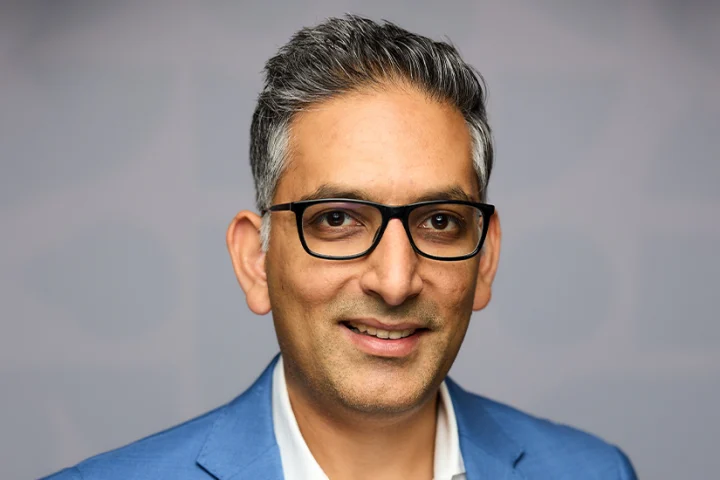
Andreas Hassellöf, chief executive of Ombori, said directors need to look past the IT department’s checklist. “Boards should treat an outage as an operational and financial risk, and ask questions that go past which systems would stop. Who can approve payments and decisions if email and chat are down? Do our emergency channel and admin access depend on the platform that failed? What does our provider contract say about advance notice of changes to shared components, and about when a post-incident report must arrive?”
Hassellöf said most recovery plans have a blind spot. “Recovery time targets need a second number: how long the business itself can run in a degraded state while the platform recovers. Set that one deliberately, because the provider’s own target does not cover it.”
The hidden risk of technology concentration
Organisations consolidated onto a few cloud platforms because it made them faster, cheaper to run and easier to secure. Hassellöf said that was the right decision, though it comes at a price. “Consolidation is necessary. With too many systems and vendors it is hard to move fast and stay secure, and every extra system is another way in. But putting more on fewer platforms concentrates risk, so when one fails, more fails with it.”
The next failure may not be an accident. “Microsoft reports no sign of an attack this time, but AI-driven attacks are accelerating. CrowdStrike reported in October that likely agentic intrusions this half-year are running at about three times the first half,” he said. His answer is to be selective rather than duplicate everything. “Duplicating everything adds cost and complexity, so decide what earns a second source: alternative ways to authenticate users, communicate and process essential transactions. The rest can stay consolidated.”
Rethinking infrastructure ownership in the age of AI
The concentration problem will get worse as AI agents move into the same platforms. “As UAE organisations adopt AI agents, those agents will sit inside the same shared platforms. Hold control of critical data, run the essentials independently, and isolate each agent with narrow permissions and a safe fallback, so a failure or compromise in one does not spread,” Hassellöf said.
He expects defence to become automated too, and the roles around it to change. “I expect more companies to deploy their own agents to watch their systems and respond at machine speed, with a named person accountable for each. Everyone should expect their job to change. As agents take over monitoring and response, people’s work shifts to setting limits, checking what agents did and deciding when to step in. Train teams for that now.”
Nvidia’s founder steps down
Nvidia’s news brought the same lesson to the stock market. The company sells the chips behind most of the world’s AI, invests in many of its customers, and its founder was its chief strategist, salesman and envoy to Washington. There was no gentle way to lose him. The stock swung by as much as 14 per cent during Thursday’s session before closing down 4.3 per cent at $166.19, its lowest point in a year. At the worst moment, Bloomberg’s figures suggested as much as $601 billion in market value had been erased. The money did not leave semiconductors. It moved into AMD and Broadcom as investors spread their exposure across more than one supplier, and that rotation may prove to be the week’s most lasting signal.
Huang’s departure followed days of reporting on his private life. He acknowledged an extramarital relationship with a businesswoman whom US intelligence agencies reportedly suspect of working for China. The New York Times then reported a second affair, with a senior Nvidia executive. None of the espionage allegations has been proven, and Nvidia says it has found no evidence that corporate or national security secrets were compromised. Beijing has dismissed the claims as a smear.
The board moved to show it was in control. Chief financial officer Colette Kress, the executive investors know best, becomes interim chief executive while a search for a permanent successor runs. Harvey C. Jones, a former Synopsys chief executive who has sat on the board since 1993, becomes Nvidia’s first board chair. For 33 years Huang ran the company without anyone above him in that role. The board has told customers that operations, commitments and the product roadmap will continue without interruption. The real test is whether hyperscalers, sovereign AI programmes and chip allocation queues behave as though they believe it.
Washington isn’t finished with the case either. Huang has agreed to testify before Congress, the Senate Banking Committee wants to hear from him alongside Commerce Secretary Howard Lutnick, and members of the Senate Armed Services Committee have asked whether Nvidia has become too big to fail. Once lawmakers start asking that about a company, it rarely leads to lighter oversight.
Anthropic’s IPO shows how much AI depends on Nvidia
The awkward timing for Anthropic goes well beyond bad luck. The Claude developer opened its roadshow on Tuesday, offering 825 million shares at $70 to $78 each on Nasdaq under the ticker ANT. At the top of the range the public offering would raise about $64 billion and value the company at roughly $1.4 trillion on a fully diluted basis. A further $26 billion is coming through a private placement at the IPO price from AMD, Broadcom, Google, Micron, Microsoft, Nvidia and TSMC. Nvidia is the largest of those buyers, at roughly $10 billion.
That arrangement shows the circularity of the AI economy more clearly than any analyst note could. The companies that sell compute are buying equity in the company that buys their compute, and one of them is now led by an interim chief executive. Anthropic’s amended filing shows why the capital is needed. The company booked about $17 billion in revenue in the September quarter and more than $33 billion over nine months, against a net loss of $104 billion for the same period. Pricing is reportedly set for 18 November with trading the following day, though Anthropic has not confirmed either date.
OpenAI published its own numbers the same week. Quarterly revenue reached $10 billion for the first time in the three months to September, up about half on the previous quarter, giving it an annualised run rate near $50 billion. Both leading labs are growing faster than almost any company before them, and both are losing money at a similar scale. From next week public investors, not private funding rounds, will decide what that combination is worth.
Frontier models get faster and cheaper
The model market kept moving fast, and buyers benefited. Anthropic released Claude Fable 5.2 and Claude Mythos 5.2 on 9 November. They are one model offered under two safeguard settings, and Anthropic says output is up to 30 per cent faster than the previous generation, at prices about 20 per cent lower: $8 per million input tokens and $40 per million output tokens. Fable is open to all customers. Mythos stays restricted to verified organisations in cybersecurity and life sciences.
Google released two models. Gemini 4 Carbon reached Ultra subscribers on 10 November, and by the end of the week Google had added Gemini 4 Hydrogen, a cheaper and faster model built for coding and agents. Hydrogen charges a flat $1.50 per million input tokens and $7.50 per million output tokens across its full one-million-token context window, which removes the long-context premium that inflates costs for document-heavy and agent-heavy workloads. Cost per completed task increasingly decides which AI projects survive, and on that measure prices are falling quickly.
The agent push went from demonstrations to real tooling. AWS released a free local emulator covering more than 200 of its services, written entirely by autonomous agents. Anthropic opened a private beta of self-hosted Claude Managed Agents, so companies can keep agent sessions on their own servers. Resistance also grew. United Airlines moved to block AI agents from its platform, citing security risks and unauthorised account changes, and other consumer-facing companies are likely to follow.
Infrastructure spending outruns the supply chain
Plans for capital spending got bigger again. SpaceX outlined more than $74 billion in AI supercomputing campuses across Texas and Arizona. The Arizona site in Cochise County alone would cost up to $50 billion and draw as much as six gigawatts at full build-out, and it still needs county approval. In South-East Asia, SoftBank and Grab committed $1.85 billion to AI infrastructure in Malaysia. Cerebras raised its 2026 revenue outlook and said it expects revenue to triple next year on a backlog of about $26 billion.
Under the headline numbers, the financing is starting to show strain. CoreWeave’s bonds now yield more than 16 per cent, a level credit markets reserve for borrowers they doubt. SoftBank took a $3.7 billion charge after revising orders for data-centre power equipment. Hardware supply has not caught up either. Server CPU lead times are running at 25 to 30 weeks, roughly double normal levels, and DRAM deliveries are taking 18 weeks. TrendForce expects enterprise storage prices to keep rising through the end of 2027. Any organisation planning a 2027 refresh should order early and expect to pay more.
Brussels targets the subscription economy
On 11 November, the European Commission put forward its Digital Fairness Act. The proposal targets manipulative design: fake notifications, repeated pressure to reverse choices, subscription traps, and undisclosed influencer advertising. Platforms would have to let users switch off features designed to encourage compulsive use, and companies would need explicit consent before a free trial turns into a paid plan. Leaked drafts pointed to fines of up to 6 per cent of global turnover. The law still has to pass the European Parliament and member states, and lawyers don’t expect it to take effect before the end of 2028. Any software company selling subscriptions in Europe should treat it as a product-design brief now rather than a compliance task later.
Australia said it plans an AI safety regulator with powers to require incident reporting and independent testing of frontier models. In the US, a coalition of nonprofits sued OpenAI, Anthropic, Google, Meta and SpaceX, asking a court to halt development of models more capable than those they already run.
This week’s notable breach came through an AI supplier rather than the company that suffered the exposure. Attackers broke into the model provider Fireworks and accessed chat transcripts belonging to some Notion customers. Fewer than 1 per cent of Notion workspaces were affected, but it is a clear warning that every AI provider built into a product carries that product’s data. On the defensive side, Cisco added Claude Mythos to its AI Defense platform to test enterprise agents for weaknesses. Microsoft said its AI bug-hunting system had found a Rust vulnerability that went undetected for nearly 11 years.
What the week means for the GCC region
For organisations in the GCC region, the week was a reminder of how much they depend on suppliers they don’t control. Microsoft’s Saudi Arabia East cloud region is due to open to customers this month, and AWS plans its first Saudi region for December. Both will bring regulated workloads into the Kingdom. But the Microsoft 365 failure showed that keeping data local is not the same as keeping services running, and that continuity planning has to cover the software layer as well as where data is stored. Governments and enterprises across the region are moving fast to put AI agents into public services and core operations, which raises the stakes when a shared platform goes down. The Nvidia shake-up also matters for the sovereign AI build-outs across the region, nearly all of which depend on Nvidia supply agreements. The board says those commitments are safe. Regional buyers are entitled to ask for that in writing.
The week ahead
The first priority is whether Microsoft fully restores service before Monday, and what it says about the root cause. After that, attention moves to 18 November. Anthropic is expected to price its shares that day, and Kress holds her first Nvidia all-hands as interim chief executive. By the end of the week investors will know what public markets will pay for a frontier AI lab. They will also see whether Nvidia’s customers trust a board-led company as much as they trusted its founder.