


Autonomous agents are arriving in the region’s security operations faster than anyone can prove they work. Gamal Emara, General Manager, Middle East at SimSpace, told AI Times why agentic AI has to be tested against a replica of the real network before it is trusted with the real thing.
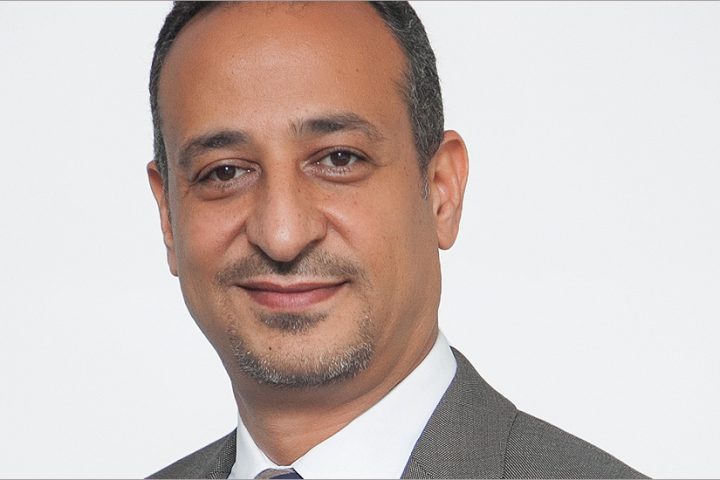
Gamal Emara, General Manager, Middle East at SimSpace, has little patience for the way agentic AI is being sold in the region. The vendors pitching autonomous agents to banks, government entities and critical infrastructure operators are, in his reading, asking customers to buy something they have no means of checking until the agent is already acting inside a live environment.
“A lot of agentic AI is available in the market, and all of them are selling the concept,” he said. “In order to prove the concept, you need to test it. Otherwise, you don’t know what action the agentic AI is going to take.”
An agent that has never faced a real attack cannot be trusted with a real network
His case rests on three gaps. Most agents are trained in clean conditions and rarely meet the noisy traffic, overlapping alerts and hostile behaviour of a production network, which makes their decisions under pressure difficult to predict. They also arrive with no knowledge of the organisation’s own policies, procedures and incident playbooks, so an agent can follow its developer’s logic faithfully and still break the customer’s rules. The third gap is the shortage of places where either problem can be exposed before go-live.
According to Emara, a customer cannot prove the value of an agent until it has been tested before production, and the only credible test bed is one that resembles the customer’s own network closely enough to create realism. Validation, he argued, has to come before operation.
A platform built to rehearse cyber warfare now rehearses the machines
The environment he describes has military origins. SimSpace was founded in 2015 by people from US Cyber Command and MIT Lincoln Laboratory to build offensive and defensive capabilities for elite US military and intelligence units. Its cyber range reproduces a production network so that defenders can rehearse against live-fire attacks, and the company now positions the platform as a proving ground where AI agents are measured, their failure modes identified, and their readiness established before deployment. Emara said SimSpace was also helping developers of frontier agentic AI models to train and test them on the platform.
The region’s AI spending turns validation into a regulatory matter
He was unequivocal about the timeline. “Let’s agree that every client, in one or two years, needs to adopt agentic AI in their production network,” he said. “There is no doubt, in order to be as fast as the attacker.”
That adoption curve, he said, is why SimSpace already works with a regulator as well as large enterprises in the region to validate agentic AI before it is approved for production. He pointed to the dedicated AI budgets set aside by the UAE, Saudi Arabia, Qatar, Oman, Bahrain and Kuwait as the reason the company is investing in the GCC for the long term, including plans to host an instance of its platform locally.
“SimSpace comes to the Middle East to stay, especially in the GCC region,” he said. For CISOs weighing an autonomous agent this year, his argument leaves them with a question to put to every vendor in the room: where has this agent been tested, against which attacks, and under whose playbook?