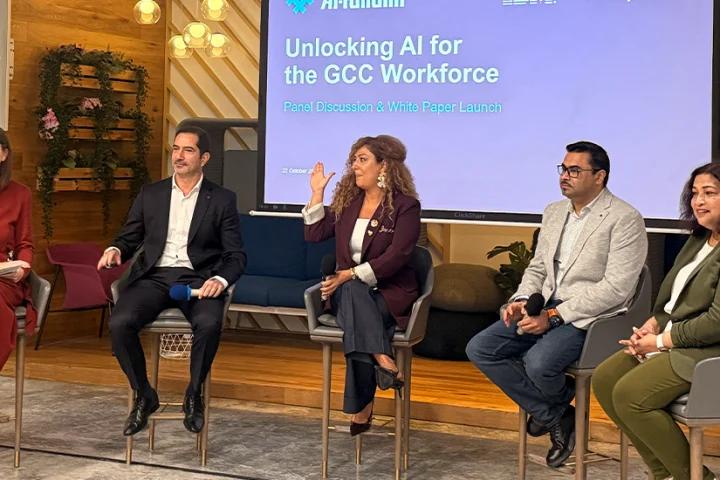




The GCC has emerged as a global leader in workplace AI adoption, with 93% of frontline staff and 95% of managers using the technology weekly. According to Boston Consulting Group (BCG), the region is seeing significant productivity gains and increased job satisfaction, though strategic leadership is required to sustain long-term value.
The report reveals that GCC workforce is experiencing significant productivity gains, with 58% of frontline employees and 67% of managers and leaders saving at least eight hours per week through AI tools. These findings position the region alongside India as a leader in AI integration, surpassing the global average of 74% adoption among frontline workers.
Beyond productivity gains, the research indicates that AI adoption is reshaping the nature of work itself across the GCC. In fact, 85% of frontline employees and 92% of managers and leaders believe that AI has fundamentally changed the skills expected of them in their roles.
The integration of AI into daily workflows appears to be enhancing workplace satisfaction across the region. Among GCC respondents, 69% of frontline employees and 77% of managers and leaders report experiencing increased joy at work since adopting AI technologies. Organizations that capture the most business value from AI are also where employees find greater fulfillment.
“The GCC’s exceptional AI adoption rates reflect a workforce that has moved decisively beyond experimentation into real integration,” said Robert Xu, Managing Director and Partner at BCG X. “What distinguishes the highest-performing organizations in this region is not simply their deployment of AI tools, but their deep investment in their people. Compared to other organizations in their cohort, GCC organizations that lead with AI have leaders personally invested in building their teams’ AI fluency, resulting in tangible productivity gains and turning technological advantage into competitive edge. While this year’s GCC findings demonstrate AI’s ability to reduce toil and increase joy at work, leaders must anticipate the organizational shifts ahead by embedding comprehensive change management and redesigning workflows to fully harness AI’s potential.”
AI Agents Poised to Transform Half of Job Functions
The BCG report reveals striking expectations about AI’s evolving capabilities. Across the GCC, 60% of frontline employees and 66% of managers and leaders believe that AI agents could perform at least half of their current job responsibilities within the next three years. Globally, integration of AI agents into workflows has more than doubled since 2025, though governance frameworks have not kept pace with technological advancement.
Despite the enthusiasm surrounding AI, concerns about job displacement remain relatively measured in the region. Only 28% of frontline employees and 29% of managers and leaders express fear of losing their positions to AI, suggesting a workforce that views the technology as constructive rather than threatening.
The report emphasizes that capturing AI’s full potential requires more than adoption. Globally, 42% of frontline employees who regularly use AI save a full working day or more each week, while 66% still receive limited or no guidance on how to redirect that recovered time. More than half fail to channel saved hours toward strategic work, representing a significant missed opportunity for organizations. The findings cement the report’s defining insight: AI’s true potential is unlocked not by adoption alone, but by the strategic architecture organizations build around it.
“The promisingly rapid initial phase of AI adoption will only be sustained with deliberate leadership action,” said Rami Mourtada, Partner and Director at BCG. ” Our research demonstrates that lasting workplace satisfaction, and related business impact, emerge when leaders provide strategic guidance and ensure alignment between organizational messages on AI and actual day-to-day employee responsibilities. In the GCC, where adoption has notably accelerated, it’s imperative to build the proper core operating models and governance structures to transform individual productivity gains from AI into organization-wide benefits. ”
BCG’s AI at Work 2026 report analyzes how AI is reshaping the modern workplace and what distinguishes organizations that successfully capture value from those that merely deploy tools. The report underlines that training remains a critical gap globally, with only 36% of respondents feeling they have received sufficient preparation despite 72% of regular AI users acknowledging that skill expectations have shifted significantly. Similarly, only 33% of frontline employees globally report that leadership communicates clearly about AI, and just 28% perceive strong alignment between leadership statements and organizational action.
For the GCC, the data delivers a decisive verdict: adoption leadership has been achieved. The winners going forward will be those who recognize that in the next chapter of AI, strategy matters more than tools.