

SAP and Dubai Internet City recently hosted a forum highlighting that 80% of the 2024 Emirati graduates from SAP’s Young Professionals Programme are women. The event explored how AI and micro-credentials are increasingly replacing traditional degrees as the primary route into technology leadership. Leaders from the UAE government and academia discussed the necessity of moving beyond entry-level participation toward measurable progression into senior technical and management roles.
More than 80% of the Emirati graduates SAP reported from its Young Professionals Programme in 2024 were women, a figure the company put at the centre of an event at Dubai Internet City on 14 September that asked what happens to those graduates once the training ends.
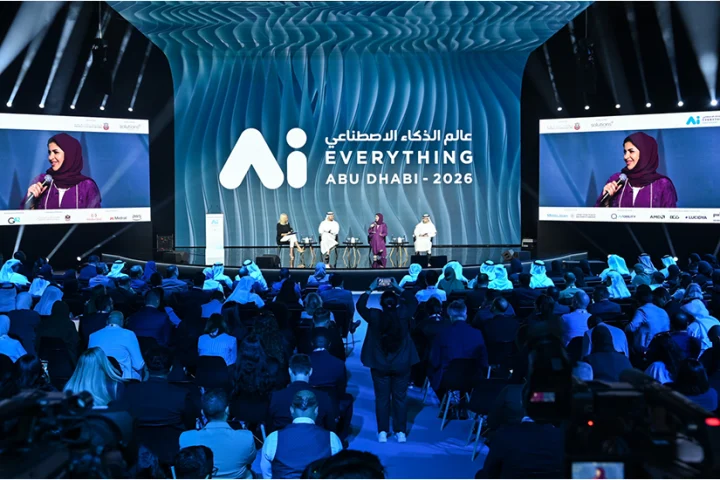
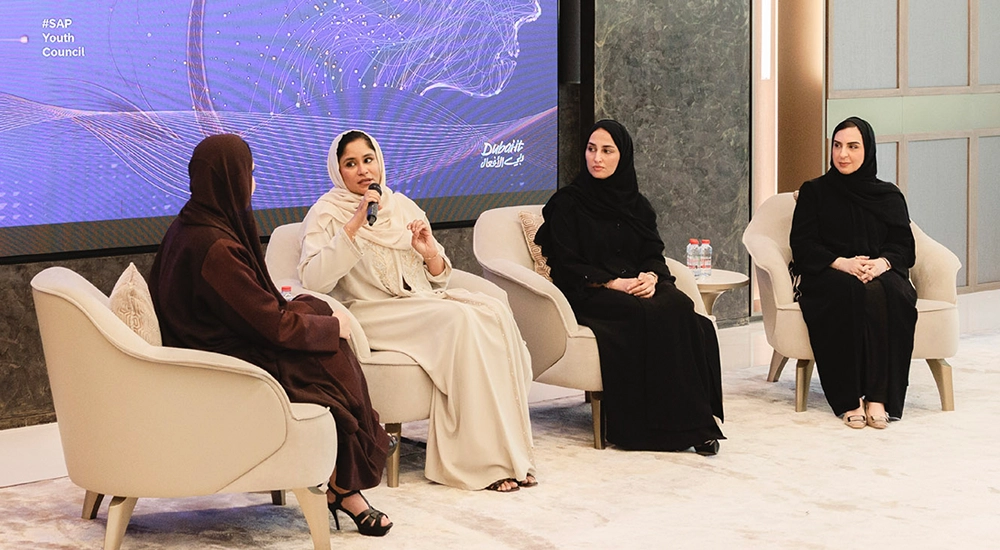
The event brought together the SAP Business Women’s Network and the SAP Youth Council with Dubai Internet City, the technology cluster owned by TECOM Group, under the theme “Intelligent Leadership: Women Driving AI, Digital Transformation and Sustainable Innovation”. An executive panel that included Somaya Abdulkarim, Group Chief HR Officer at Sharaf Group, ran alongside an interactive Youth Circle for younger Emiratis, structured as a World Cafe discussion on the skills a technology-led economy will demand of them.
H.E. Sarah Alzaabi, Director General at Ras Al Khaimah Government, delivered the keynote and joined the panel. “Emirati women have already demonstrated what they can achieve across government, business, science and technology. As AI changes the way we work, we need to ensure women have the skills, exposure and support to take advantage of the opportunities it creates,” she said.
“That starts with young women being able to develop relevant skills, meet role models and see clear pathways into emerging fields. Their participation and progression will be important to the UAE’s continued economic development.”
The distinction Alzaabi drew between participation and progression is the one the graduate numbers cannot settle on their own. SAP did not disclose the size of the 2024 cohort, the retention rate of its Emirati graduates, or how many have since moved into senior technical or management roles. Entry-level representation and seniority are separate measurements, and the second is the one regional employers have found harder to move.
The pipeline argument is being overtaken by a credentials argument
A second argument ran underneath the first, and it turned on whether the qualifications the UAE’s technology employers have historically screened for still describe the work. Dr Amina Abdulrahim, Executive Director of ICT and IT Security at American University of Sharjah, put the case for a shorter, more frequent model of qualification.
“As educators and employers, we need to create environments where young Emiratis have the opportunity to learn, contribute and prove themselves. The skills landscape is also changing. We are moving beyond the traditional degree toward continuous learning through micro-credentials. Curiosity, adaptability and empathy will be important for the next generation of technology leaders, particularly in an AI-driven workplace,” she said.
That shift carries a consequence the panel did not spell out.
If hiring moves away from the four-year degree and towards stackable, employer-recognised credentials, the advantage passes to whoever controls the credential, which in enterprise technology means the vendors.
SAP’s own University Alliances work and its Young Professionals Programme sit precisely at that junction, as does the training apparatus of every other large enterprise software company operating in the region. Employers gain faster access to job-ready candidates. Universities lose some of their gatekeeping function.
Graduates acquire skills with a shelf life set by a product roadmap rather than a curriculum committee. Moderating the panel was Mouza AlMansoori, an Emirati AI Advisor at SAP who also serves as President of the SAP Youth Council, a dual position that put her on both sides of the day’s question. “Technology is a field where young Emirati women should be able to see a future for themselves, particularly now that AI is creating new roles and changing existing ones,” she said.
“Working in AI, I see how important it is to have the opportunity to learn, gain practical experience and hear from people who have already built successful careers. Bringing senior women leaders and young Emiratis into the same conversation gives us a chance to learn from each other and consider how we can increase women’s participation as technology continues to evolve.”
A month-long national campaign raises the bar for what counts as follow-through
The event forms part of an unusually extended Emirati Women’s Day programme. H.H. Sheikha Fatima bint Mubarak, Chairwoman of the General Women’s Union and Supreme Chairwoman of the Family Development Foundation, announced that the 2026 celebration would run for a full month from 28 August under the theme “We Emerge Stronger and Better”.
Stretching the occasion from a single day to 30 changes what corporate participation looks like, because a month of activity invites the question of what survives into October.
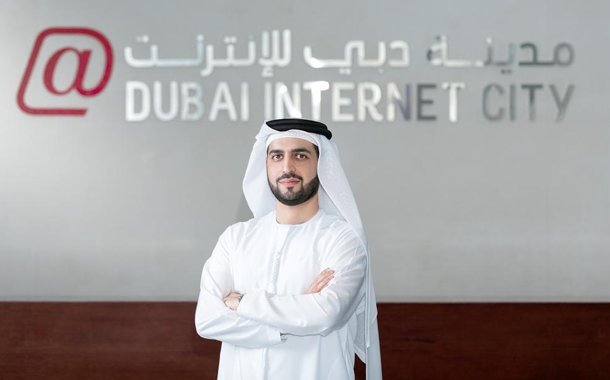
Ammar Al Malik, Executive Vice President of Commercial at TECOM Group and Managing Director of Dubai Internet City, positioned the cluster as the connective infrastructure for that activity. “As AI and technology continue to reshape industries, creating opportunities for Emirati women to develop their skills, build networks and progress in their careers is increasingly important.
Dubai Internet City provides a sector-focused ecosystem where businesses, talent and innovators can connect and exchange knowledge, and we are proud to support initiatives, such as this, that help create pathways for the next generation of Emirati women in technology,” he said.
The measurable output of a day like this one will be what the organisations behind it publish next: cohort sizes, promotion rates, the proportion of Emirati women holding technical leadership positions three years after they finish a training programme. SAP has the data on its own graduates. Releasing it would tell the UAE’s technology employers considerably more than another theme can.