

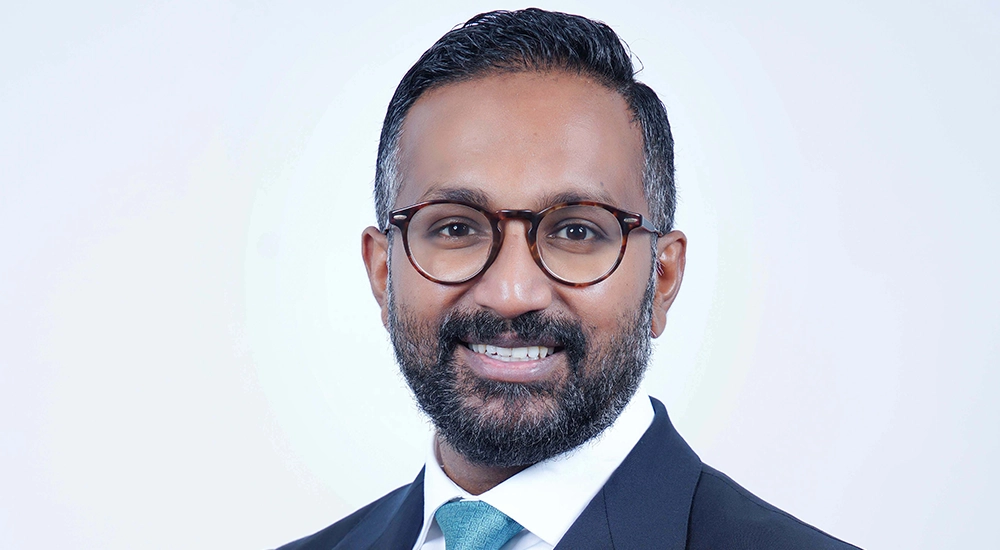
Inception42 started life as a research institute, and it took its models into oil and gas and sovereign investment before it built anything for a wider market. On the day the company launched Insight, a product that captures and analyses board meetings, Ashish Koshy, CEO of Inception42, discussed accountability, shadow agents, sovereignty, and why the UAE’s push to run half of federal operations on agentic AI within two years depends on someone in the business putting their name to every outcome.
The UAE wants agentic AI running half of federal operations within two years. What governance has to be in place before government entities and large enterprises deploy agents at that scale?
Inception42 builds solutions and products for both government and private enterprises. We deploy in hyperscaler cloud environments and in sovereign, air-gapped environments, and each comes with its own governance requirements. Some history helps here. Inception was a research institute, so we carry the scar tissue of getting models right. We chose heavily regulated sectors, oil and gas and investments, to show that AI can make a real difference and need not be a bolt-on. In energy we work with AIQ, and we work with Mubadala on the sovereign wealth side. These are highly regulated entities where we have deployed with the right trust and governance.
The prerequisites depend on whether the customer chooses sovereign or hyperscaler, and each choice brings its own requirements. At a high level, though, every organisation has to answer three questions: where the data needs to reside, who can access and control it, and who owns the outcomes. Those three questions apply to both. The owner should never be Inception, because we are an enablement arm for the mission.
Whether the workflow sits in procurement, investment or anywhere else in the enterprise, we work hand in hand with the subject matter expert who owns that process and build the workflow with them, because nobody knows it better. That owner is responsible when it fails, and it will fail sometimes because we are still on the journey. When it succeeds, the owner is responsible for that too.
That is our governance framework, and we have built it into our platform, Catalyst. It shows which agent is performing, which model it uses, how expensive and efficient it is, and how it drives intelligence for the firm. Our job is to give owners the right tools. The owner is accountable for the judgement in executing what the organisation needs.
One recent audit found a company running about 300 agents when its management believed it had 12 or 13. If employees can spin up their own agents with ease, who has oversight: the organisation, or the platform?
If you walk into Inception42, your task is to work towards a productive outcome, and building an agent is only a means to that. The tool of choice can be Copilot, Codex or Claude. It is your choice. We also need to define oversight. An organisation runs a P&L, and most CFOs have now run into what people call token maxing, where they want to know how many of those tokens actually generate intelligence. Oversight covers whether you are using AI efficiently as well as what your prompts say.
There is an education curve on when to use Fable 5, when to use Sonnet and when to use other models. That oversight matters to a CFO, because the conversation will soon move to how many agents you have built and how much difference they have made to outcomes. That middle layer is where the ‘command centre’ within Catalyst comes in. As an organisation, I can see what my employees are doing. They can pick any model and any agent, and they are empowered to improve decision-making around the outcome. They see the same dashboard for their spend, their agents’ performance and efficiency, and whether colleagues have built agents they can share and tap into. For anyone managing finance, that matters.
When I drive AI innovation, I want people to have the right tools without forcing one tool on them. They are the architects of the process because they know it better than anyone else. I cannot bring in a vendor to automate it, because the vendor will just run an n8n automation on an already broken process, and that does not work.
Agents are beginning to talk to each other in ways even their programmers struggle to follow. When something goes wrong inside a government entity or a large enterprise, who pays for the mistake?
Show me one enterprise where agents are currently talking to each other and generating intelligence. I think this is still happening in regulatory sandbox environments where organisations test it, and we are testing it the right way too. We are model-agnostic and agent-agnostic. We offer products and work hand in hand with customers.
There will be mistakes, and we work through them collectively. In most cases, enterprises bring their own APIs from the model of their choice and decide which model to use for which purpose, so we are the facilitator. This should not turn into finger-pointing. It is Inception’s duty to advocate the best guardrails so that this does not happen, and to stay alert to the pace of change. Spikes are inevitable, and that is how we learn. If you are tight on security, you will be low on innovation, so every organisation has to choose the risk appetite that suits it, one that promotes innovation with the right guardrails and the right partners to keep oversight in place.
Insight, launched today, takes in data from board meetings, which are among the most confidential conversations an organisation has. What guardrails protect that information?
We already deploy it in more than 30 boards in highly regulated sectors, including government entities, on cloud and on sovereign infrastructure. Sovereign is straightforward. We deploy our platform on the customer’s GPUs, on their infrastructure and on open-source models, so no data leaves the enterprise, and it is SOC-certified for cybersecurity. The risk sits on the cloud side. Insight runs on top of Catalyst, which we launched previously. Catalyst can be deployed on the enterprise’s own infrastructure if that is what the customer wants, and it holds the institutional knowledge. If customers bring in external frontier model APIs, those calls still pass through their own cybersecurity processes.
We also have a solution called Titan, which protects the prompts you write, because those prompts are institutional knowledge. They are your secret sauce. A board carries critical information on risk, strategy and people, which is the holy grail for any organisation. Catalyst and Insight both have enough mechanisms in place, and if you are not confident in your APIs, Titan keeps that protection inside the enterprise so no information goes out. The customer holds the key.
That extra security can mean a slight delay in response, but these organisations want the safest answer rather than the fastest. If you want the fastest or the most powerful answer, you should know there are compromises. It is the customer’s choice, much like choosing a car. A Ferrari, a Lamborghini and an EV each come with pros and cons. Choose an EV, and you might run out of charge, choose something else, and you might pick up traffic fines, so there are pros and cons for everything.
Every technology has carried risk, during the Industrial Revolution, people could get hit by trains, and people could get electrocuted. You manage it with the right governance and the right ministries, and the UAE has got this right. It has a dedicated AI portfolio in government and a full agentic push, and I have faith it can deliver because it has the foundations in place. You might find a small enterprise here or there doing use cases for the sake of it, but most of the work is aimed at changing workflows, and we are glad to be the enabling partner there.
Even the companies building frontier models are calling for a slowdown because they cannot predict where the technology is heading. Has the train already left the station, with governance trying to jump on board?
It has left the station, but I think they are catching up at the next station quickly to make sure the right mechanisms are in place. It is like raising children. I have two, a 15-year-old girl and a four-year-old boy, and the way I raised my daughter no longer works with my son. I had to apply new rules to catch up with him. AI works the same way. You will make mistakes, and that is acceptable as long as they happen in a controlled environment. That is why we need guardrails, with rules and boundaries for when certain tools can and cannot be used. Organisations are working towards that, but it has to be a collective effort. One country cannot slow down while the others catch up.
Sovereignty means one thing to Microsoft, OpenAI or Anthropic and something else to the region. How do you define it, and how do you work with global partners when those definitions diverge?
I go back to the fundamentals and start from what the customer needs. A highly sensitive government entity will have its own meaning of sovereignty, and we follow three parameters across all sovereign work: where the data resides, who controls it, and who is responsible for the outcome. For me, sovereignty also covers talent, because I am building an AI talent pool. After that come the questions of where the model resides, whether you have control over its outcome, and who in the enterprise owns that control and is accountable for it. It is never the IT department. It has to be a business owner. That is how we define trust.
Sovereignty has many nuances, including infrastructure and key encryption, but they all sit around three pillars: where the data resides, who controls it, and whether you can access and control the outcome or whether it is a black box. Most of our customers run in tightly air-gapped environments, and hyperscalers work across all of this. With partners we ask the same questions: what the customer needs, what the problem is and what solves it. If a partner can meet those demands, we join and build it together.
What will AI agents be able to do 12 months from now that they cannot do today?
I have pivoted product roadmaps within two months, because that is how fast things move. If somebody tells me their product roadmap for the next three years, I would challenge it. Even a year out is a stretch to predict. Inception is building towards a platform play.
We want organisations to reach the point where they no longer ask which model generated the savings or the positive outcome. The model will be headless, and the agent will be headless, and the focus will be on improving the outcome of the process. That is our play, and it is why I am doubling down on Catalyst as the platform for our solutions, beyond the products that sit on top of it, Insight and Alpha for investments. Models can change, agents can change, infrastructure and deployments can change, but the platform stays constant.