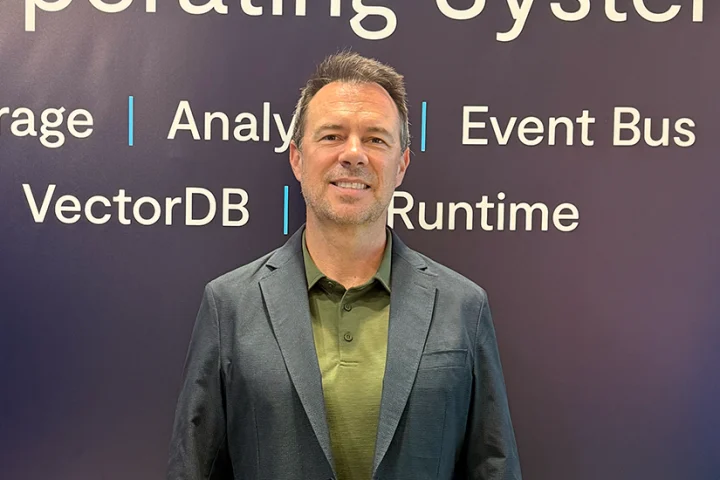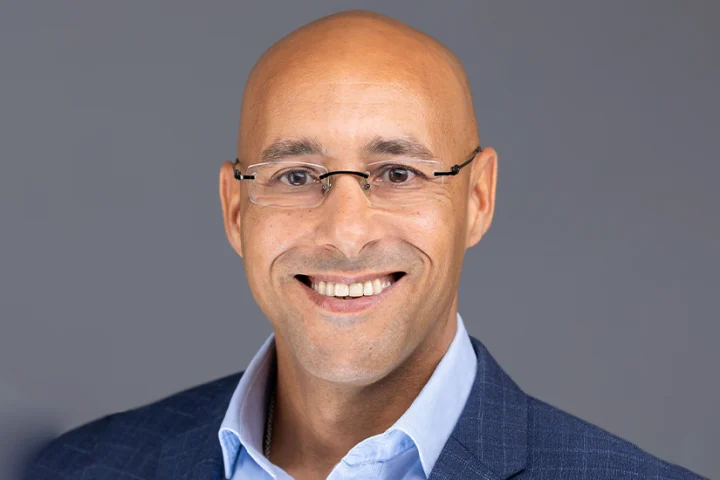



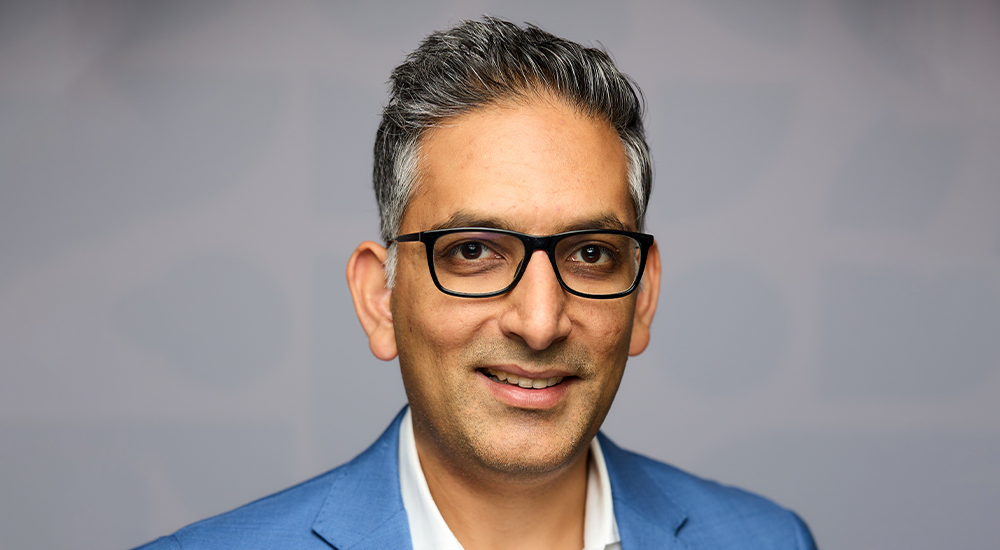
A significant part of Vaibhav Vohra’s day is spent on figuring out how AI systems can work better and faster. As CEO of Epicor, he is specifically focussed on Prism – the family of AI agents that powers the company’s cognitive ERP system.
“People are not going to go through hundreds and hundreds of screens. They’re going to have a conversation with their ERP,” he said in a conversation with GEC Media Group. To put it in numbers, Epicor has made revenue of $1.5 billion, has a global headcount of 5000 people and, by Vohra’s count, serves customers across 38 countries. Vohra has made “infusing AI into every part of the company” his mission.
And yet, for someone who has been bullish about AI and has been CEO for 26 days when we spoke, he believes people and guardrails are what will make these systems work, and he is wary of any promise that software can run on its own.
“When people say autonomous ERP or autonomous software, I think it’s a little disrespectful to people,” he said, “because none of this staff happens without the people.” The autonomous and AI systems have made life easier and harder for young professionals. Vohra added that they may never sit through the 2 am sessions that programmers of his generation knew, when the code would not compile, would not run fast enough, and the only way forward was to work the problem out from first principles.
“AI can give you the first 70%. But you may not know how accurate that first 70% is,” he said. Vohra has spent his career taking on the jobs other people walked away from, from a teenage summer measuring injured mice to building satellites and robots. “It’s more fun to do stuff where failure is not just possible but likely,” he said.
Experience watching autonomy failing
Before Epicor, Vohra worked for two robotic and AI startups. At one of them, he built what he describes as the largest fleet of autonomous robots in a consumer-facing setting in the US, for one of the country’s largest retailers.
“Their original thought process was they could replace people with robots,” he said. The robots went up and down the aisles checking which items were out of stock or mispriced, and whether the ketchup was where the mayonnaise should be. A person looking at an aisle could probably spot half of what was wrong, he said, while a machine could manage 90% to 100%, even at the busiest times of day.
“We built this thing. It was a technical marvel,” he said. The robot could scan the shelves and move around shoppers and their carts on its own. In real stores, things went differently. The more serious trouble came when the machines failed. “Robots catch fire, robots get stuck. The autonomous algorithm will just time out. It can’t find the dock to recharge. There are people that push the robot over. Everything that could go wrong with a completely automated system did go wrong,” he said.
The retailer had hoped each robot would atleast replace two people. Instead, it needed more staff, and better-trained ones, to look after the machines. “This technology, while it technically could do the job better than humans, couldn’t make the ad hoc decisions, and even worse, when robots go wrong, it ordered a thousand things in the back office that humans have to take care of,” he said, adding that all of it had really happened. “This is the real built world of manufacturers, distributors and retailers. This isn’t a hypothetical story,” he said. His team rebuilt the project so that people programmed the robots, fewer machines were deployed, and success was measured by what staff achieved. “We could not replace humans with robots and AI. Rather, we could help robots assist and empower people,” he said.
He brought that thinking to Epicor, where the company tracks what he calls a hero metric: the time its AI saves employees. One internal knowledge agent answers staff questions about using Epicor’s ERP and points them to the right help. “Something as simple as that has saved us 120,000 hours this year alone,” he said. As he described it, the goal is to give people time back for better work. “If you can create the right hero metric in technology that’s around empowering people, helping people, saving them time so they can focus on the creative, that’s actually the right way to think about it,” he said.
He returns often to decisions only people can make. “People make purchasing decisions, people pick suppliers,” he said. A customer with a problem may reach a virtual agent first, he added, but ultimately wants to speak to a human. “The moment we start to go away from that, I think society has potential for catastrophic failures, which we’re already starting to see with agents attacking humans,” he said. Epicor says Prism, which it launched in Europe in June and Latin America in August, works only with a customer’s own ERP data and can take only pre-approved actions under human oversight. Vohra sees guardrails as necessary but not enough on their own. “Putting the guardrails in place is super important, but having a hero metric that’s tied to the success of humanity is probably the most important thing at this time,” he said.
The 100 mice story
Vohra grew up in upstate New York, at a time when, as he puts it, “we didn’t have a TV with the sports stations on”. By age five, he read the newspaper’s baseball statistics, trying to understand batting averages and earned run averages, along with the rates used in cricket. “I remember trying to figure out, even at the age of five, how this all works, and so that’s actually what got me into maths,” he said. I had started the interview by telling him that I used to call my sister a psychopath for doing maths when she was bored. He said he had never thought about his childhood that way.
The family later moved to Alabama. “It’s a great place, but it’s a different place,” he said. His father, a physicist, is a dean at the University of Alabama at Birmingham, where Vohra joined a summer programme that placed high school students in university research. No young student wanted the spinal cord project, especially with mice. Several mice with spinal cord injuries were given injections, and the researchers needed to know whether their stride length had improved.
“The project was to paint the hind feet of mice and have them walk across a sheet of paper and make measurements,” he said, and the work could be unpleasant. “It could get kind of gross, but mice do a lot of things on pieces of paper,” he said.
Three students had taken on the project before him, and all three gave up after the first day. Vohra was told that if he somehow managed it, he would be the only one to have survived the process. “I was that child who actually wanted to do it and figure it out,” he said. He worked with about 100 mice, four hours a day, for a reason he still remembers. “This is a problem that nobody has solved, and if we’re somehow successful, it’s going to help with spinal cord research,” he said, though getting the mice to cooperate was another matter. “I would paint their hind feet and have them walk across a sheet of paper, and convincing them to do that was very hard,” he said.
A crashed satellite taught him to lead
The decision to choose the hard over the easy, especially if it solved a larger problem, has been Vohra’s modus operandi.
His first job, at 22, was building satellites, which he called “one of the more complex things at scale”. The hardware had to survive vibration testing, survive launch and keep working in outer space. Vohra was trained as an electrical engineer, but he was also responsible for the mechanical engineering, so he had to learn orbital dynamics, how hardware behaves at different temperatures and where to fit gussets so a satellite vibrated less. “There was no ChatGPT; you had to learn on the ground, and with those who had more experience than you did”, he said. It was these conversations where Vohra found most of his learning.
The same job gave him his first taste of ERP software, and he hated it. “I had to learn SQL just to use the user interface,” he said. He could not even find where his parts had gone. “I remember thinking to myself, I’m 22, I’ve got to show up to my job, and I have to use the software, and it is supposed to help me, but it simply didn’t,” he said.
“I’m an engineer. I just want to build,” he said. He made himself a promise that, if he ever had the chance, he would build software that people controlled. “I felt like I had been enclosed by technology. I wanted the humans to be in control of the technology,” he said.
The hardest moment of those years came when a satellite crashed to the ground during a lift. “It was hundreds of millions of dollars of manufactured work that went to zero dollars, because you cannot take something like that and put it back in space,” he said.
After the root cause analysis, the question was whose fault it was. The programme’s leader refused to answer it. “We’re not going to disclose who did it, because it was all of our fault, because we could have done something better to help right the situation,” Vohra remembers him saying.
He has kept that idea of shared responsibility ever since, along with the belief that “good teams outperform individual heroics every time”. He asks the same of his own teams. “This is important to me, to build a culture that’s hard on the problem, not people,” he said. When people are hard on the problem, he argued, “it also puts their energy in the right direction”.
Questions that made him CEO
From satellites, Vohra moved into software and then robotics, including Gecko Robotics, now a unicorn, whose robots meant people no longer had to rappel down oil and gas refineries. He looks for industries others avoid, such as manufacturing, distribution and retail. “People generally don’t want to go into a boiler that’s dirty and get a robot to work,” he said.
He joined Epicor in 2021 as chief product officer and became president in October 2024. For a few months he also ran marketing, a period he jokingly calls “the dark ages of Epicor”. He knew little about the subject at first. “I don’t understand anything to do with marketing, but I do know data, and I do understand the customer, so let me just ask you questions,” he said of his approach. He thinks the same habit explains his move to this current role.
“That’s sort of how I became CEO, potentially by doing nothing but asking the right questions,” he said. When I suggested that he had made the job sound simple, he replied, “Maybe I diminished it as well.”
His predecessor Steve Murphy, who came up through sales, talked with Vohra every day in the office. “I think we both had a general sense of curiosity about how things work,” Vohra said. From Murphy, he learnt what to focus on, since the CEO of a multi-billion-dollar company “could potentially spend 24 hours a day solving problems”.
Vohra’s focus is the future of ERP, and he has three bets. The first is conversation, which Epicor has built into Prism. The second is data, and he believes industry-specific data models will win. “A challenge that you face in entertainment is very different from the challenge you face in manufacturing,” he said.
The third is Epicor’s customer base, which he describes as one of the largest supply chain communities in the world. As companies go live on new ERP systems faster, he believes they will choose a partner by the community they can join, and he says this is already happening in automotive.
Vohra thinks ERP companies have an advantage in AI because data enters their systems first. “You’re on a factory floor, you’re creating data, and the first place it goes to is systems like Epicor, the system of record,” he said. Companies have spent years moving data into lakes and warehouses, he argued, using tools that do not own the work. “They don’t own the workflows of what happens on the shop floor, the top floor, the back office,” he said. Privacy rules and governance standards have been built into ERP systems for 40 to 50 years. “That is the sheer moat,” he said.
When we spoke, he had been CEO for 26 days, and he gave me the exact number before I had finished guessing. “I count every one of them,” he said. Most of that time has gone into culture, including a sales kick-off and a global town hall. “I’m a big culture person. It’s corny, but the CEO is the chief culture officer,” he said. He wants people across the business, beyond product and technology, to be “excited to work and innovate here”, at a company he describes as the place “where industry expertise meets AI”.
At an all-hands, he told staff about the 22-year-old who hated his ERP. The new role has also made the stakes clearer. “If Epicor stops working or ERP companies stop working, the world comes to a complete standstill,” he said. Manufacturers would stop making steel goods, he explained, and distributors would stop moving HVAC equipment.
Epicor competes with some of the largest ERP companies in the world, with research budgets that he says are “the size of GDPs of countries”. He has to build a company that can invent new products and also scale them, two jobs that usually need different people. “We know we have to be faster. We know we have to be better. But that’s what makes it exciting,” he said. He has no interest in simply defending a lead. “I think this is far more gratifying, and that’s the struggle, and that’s the opportunity,” he said.
He refuses the easy button
His concern about AI and young professionals comes from that history. “I think they have it easier, but they have it harder in a way,” he said. The risk, he explained, lies in critical thinking. “Sometimes when you use the AI technology, you end up using it as a crutch,” he said.
A junior coder may accept the first 70% without checking whether the variables are set up correctly or whether the code runs fast enough. He compared that with his own early years, when he sat through “the 2 am sessions of ‘my code won’t compile and it’s not fast enough’”. Young people save time, he said, “but they lose some intuition.”
For people already in work who need to learn AI tools, Epicor is redesigning each process from first principles, because those staff know how the job is done and what great looks like. For people early in their careers, his advice is different. “Don’t lose sight of the hard work and the struggles of being great at your profession,” he said. He compared it to my early years transcribing interviews from tape recorders, and to his own teenage attempts at recording music tapes, where repetition taught him tracking. “You don’t want to lose what makes your craft great, the magic that makes your craft great, because at some level it’s all about the struggle,” he said.
He credited Jensen Huang, the CEO of Nvidia, with the idea of wishing people early in their careers “as much pain and suffering as they can tolerate.” His own path took him from New York to Alabama, from electrical engineering to software and then to the top job at Epicor, and “these things don’t happen without struggles”, he said. He wants younger people to have the same chance. “I don’t think I would have been here without that, and I don’t want to rob people of that journey,” he said.
Asked what advice he would give a 22-year-old today, he quoted Doc Brown from Back to the Future, one of his favourite films: “Where we’re going, we don’t need roads.” People will try to put you on a set path, he said, and it helps to know where the roads lead. He would still tell his younger self to trust his instincts.
“Trusting your gut and saying, actually, there are no roads,” he said. The rest came from his father, who told him that where you think you are in your career matters more than where anyone else thinks you are. “You can be accomplished at any level, but you shouldn’t look at what other people think of you or say you are to define where you are in your career or your life,” he said. Then he added, “So I quoted Doc Brown and Dr Vohra, my dad, in the same sentence,” Vohra joked.
Epicor plans to show its next wave of cognitive ERP products at its Insights conference in May, aimed at the people who make, move and sell the world’s goods. Vohra said the company would avoid grand promises. “We’re not going to promise something of an intergalactic universe of whatever. We’re going to actually deliver stuff that makes their lives easier and better,” he said. He wants Epicor’s AI to save those people time, while those starting out still learn their trade the hard way. “People starting their career are starting a long journey,” he said, “and you don’t want to give them the easy button too quickly.”