


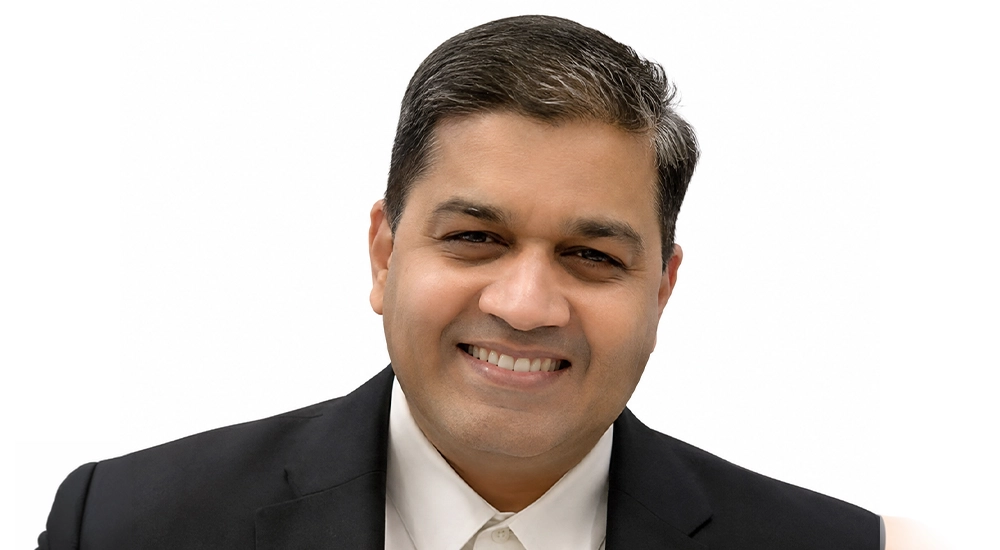
When Anji Reddy founded VisionSoft in 2017 in the US, he was already optimistic of the reach of technology and even what AI could do if it goes leave the research labs and touch enterprises and everyday lives of people.
“I have been waiting for an opportunity to apply this in industry, and for a long time the industry was not ready,” Reddy said. “Now it is ready. The tools are ready, the platforms are ready, the agents are ready. This is the moment we want to capture.”
Using his knowledge and time, VisionSoft has spent the past few years building Haneya, a suite of AI agents designed to sit inside or alongside enterprise resource planning systems and take over the work that has traditionally consumed migration teams, finance back offices and supply chain planners.
The company since has scaled internationally and now employs more than 120 people, with product development and delivery concentrated in India and further centres in Canada, the United States and, more recently, Latin America. The UAE operation is its most recent addition.
From migration headaches to a product
For founder and chief executive Anji Reddy, the interest in the technology predates the current market by three decades. He studied AI at university and graduated in 1993, then spent 25 years in corporate roles at IBM, PricewaterhouseCoopers, Johnson & Johnson, The New York Times, and ITW before starting the company.
He traces the decision to build to a gap he kept encountering in those corporate roles. “There were a number of clients looking for these solutions and tools. Either they were too expensive to afford, or the tools simply did not exist. That was the burning platform for me. If you can create this toolset, you make the clients happy, and money comes along the way.”
Licences, not subscriptions
Haneya, is packaged as licensed agent modules rather than a hosted service. Reddy compares the commercial model to buying Microsoft licences: clients pay for perpetual licences with annual maintenance and support charges attached.
The agents either operate within the client’s ERP system to execute business functions directly, or sit on top of it to monitor and orchestrate processes. Typical work includes migrating data from legacy platforms to new systems, resolving errors and exceptions thrown up during migration, and automating end to end processes such as order to cash and procure to pay.
“Anything you can do manually, if you have thousands or millions of records, technology will process it,” Reddy said. “Doing it manually is finding a needle in a haystack. What technology brings to the table is that identification at the speed of light, and then resolving those exceptions and errors in the migration process, in the data process, in supply chain automation. If I had to sit and do it myself, it would take years. We use Haneya to solve these problems in hours and weeks.”
Deployment is customised, though the base varies by sector. Reddy estimates that in a vertical such as oil and gas, 80 to 90 percent of an implementation is common across customers, with the remaining 10 to 50 percent configured to the individual client. VisionSoft architects handle the work either on site or remotely.
Groceries, fuel stations and hospital equipment
Reddy pointed to three areas where he sees the clearest returns. In consumer products and grocery retail, the agents forecast demand and inventory positions so that stock is in the right place at the right time. In oil and gas, the same forecasting logic is applied to fuel supply at retail stations, predicting how much will be needed and when.
The third is healthcare asset management. “Hospitals run a large number of medical devices, and many of them are dated. Our tools predict when equipment will fail, based on how many cycles it has run, and raise a notification so that preventive action can be taken. That is not just a maintenance saving. Those failures are life threatening situations.”
He also sees a large addressable base in ERP modernisation itself. “If you look at ERP systems across the globe, there are something like 500,000 to 600,000 installations. Every company needs an ERP. Our tools identify the systems that have become dated and modernise them so they operate effectively, with cost savings, better productivity and improved revenue.”
In the UAE, VisionSoft is focused on retail, construction, consumer products, mining and natural resources, and oil and gas. Globally the client base extends into healthcare, distribution and discrete manufacturing.
“This is a very interesting market and it is certainly picking up,” Reddy said of the region. “Competition for our agents here is thin, there is a real need on the client side, and clients see compelling value. I see the Middle East scaling up over the next decade.”
Company targets are set against that horizon. Reddy expects VisionSoft to build out 300 to 400 agents over the next decade, taking revenue into the $150 to 200 million range.
Nothing leaves the client landscape
Data residency rules and emerging AI regulation across the Gulf shape how the product is deployed. Reddy’s answer is architectural: the agents do not move data anywhere.
“Our agents sit within the firewalls of the client, inside their system landscape and IT landscape. No data goes outside the client landscape. The agents protect and preserve the data within those four walls,” he said. “They also do not need any additional infrastructure. They work from what the client already has, so storage requirements come down significantly, and so does the cost.”
Control over agent behaviour is handled through a mix of human oversight and process gates. VisionSoft architects are embedded with clients and act as operators of the agents.
“If an agent is not guided properly it could destroy the whole thing, so our architects sit with the agents and make sure they are used for the right purpose,” Reddy said. “There are checks and balances. Whatever our agents produce is reviewed and approved by the client management team before it is executed. There are policy gates, and there is a cancellation mechanism, to make sure the agents are doing the right things for the right purpose.”