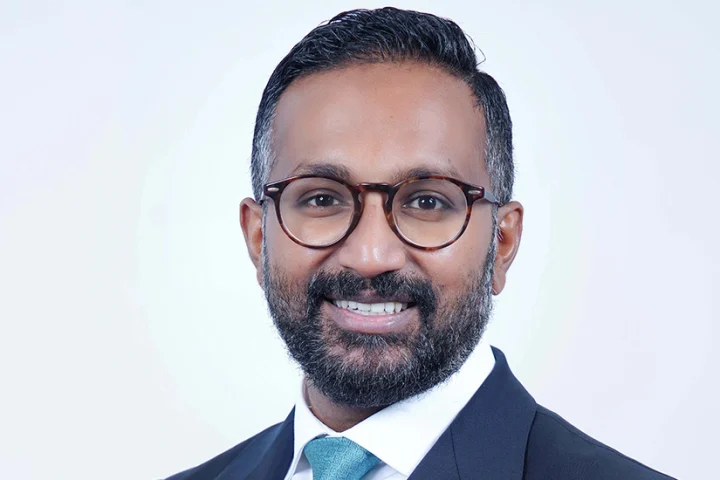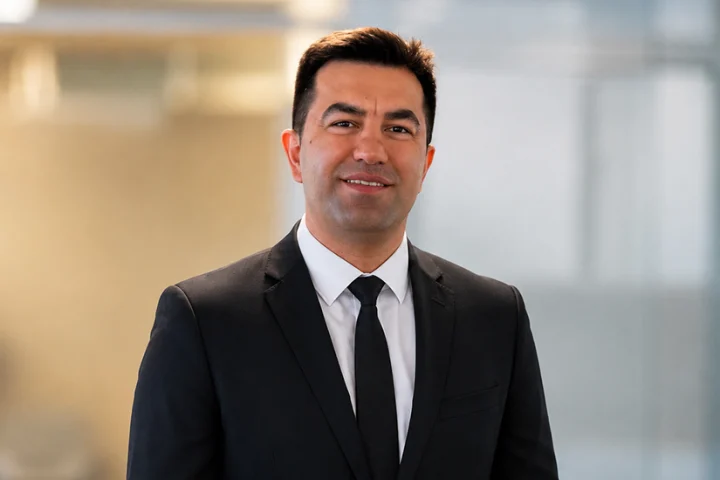


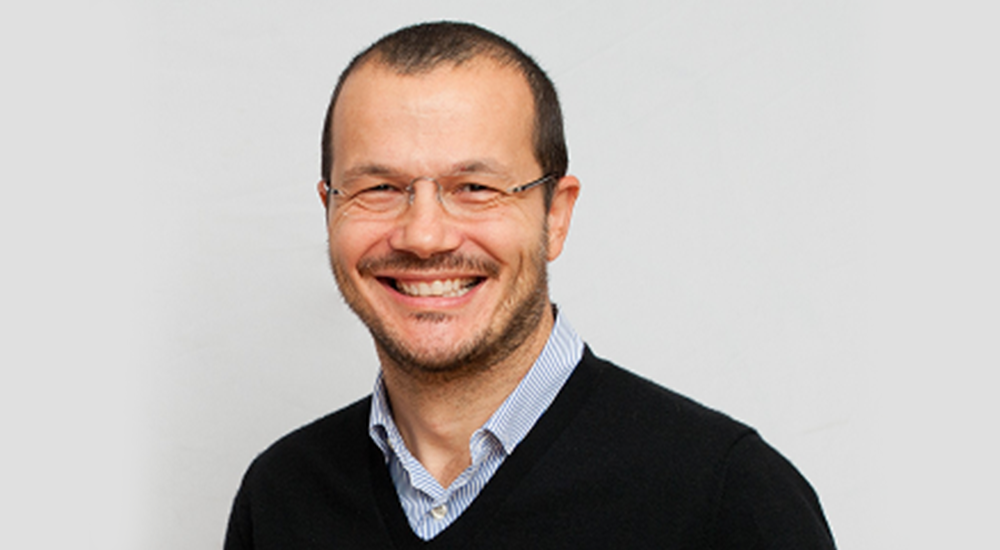
When a robotaxi pulls up in Abu Dhabi and its sliding doors open on an empty driver’s seat, Alessandro Tucci, Executive Director, House of Grand Challenges at ASPIRE, wants the passenger to step in without a second thought.
Over the past year, that aim has shaped his work on the Abu Dhabi Autonomous Racing League (A2RL), which he helped grow from a technology challenge into a motorsport competition.
Tucci has spent more than 25 years in senior roles across sport, media, technology, and investment-backed platforms. Before ASPIRE, he was an Operating Partner at Aser Ventures and Chief Operating Officer of MainStreaming, where he worked on market expansion, digital transformation and commercial growth. He holds an MBA from SDA Bocconi in Milan.
ASPIRE was launched in 2020 as the programme management pillar of Abu Dhabi’s Advanced Technology Research Council (ATRC), which is also home to the Technology Innovation Institute (TII). It has a dual mandate. One part is to match TII’s research with industry demand. The other is to run grand challenges that invite teams from around the world to solve problems designed with commercial sponsors. ASPIRE runs the Mohamed Bin Zayed International Robotics Challenge and has partnered with the XPRIZE Foundation.
A2RL is ASPIRE’s most visible challenge. Its first race, held at Yas Marina Circuit in April 2024, put four driverless cars on track. By the end of its second season the series had a six-car Grand Final with wheel-to-wheel racing at more than 250km/h. Its drone championship started at ADNEC in April 2025, when an AI-piloted drone beat a professional human pilot.
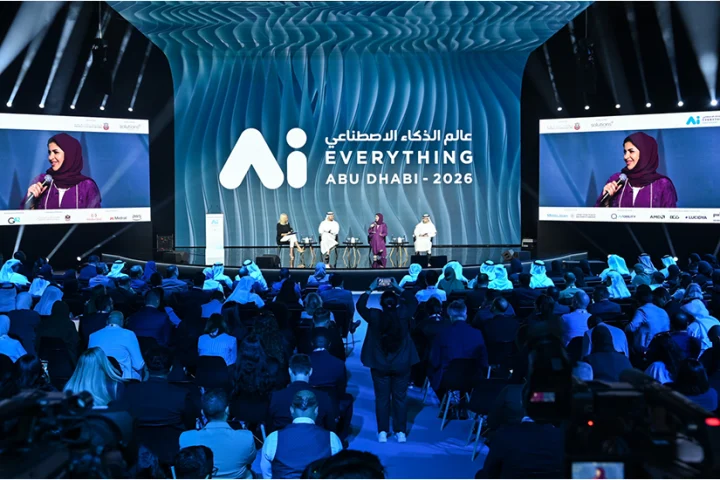
On 5 September 2026, the league raced outside the UAE for the first time, at Imola in Italy, and the season will end back in Abu Dhabi. On the sidelines of AI Everything, Tucci talked about how grand challenges differ from procurement, how a solution built in competition reaches commercial use, and why he sees physical AI as the next shift.
Your title includes the House of Grand Challenges at ASPIRE. What is it, and how does it fit into ASPIRE’s mandate?
ASPIRE is part of the ATRC family, and it has a mandate to do essentially two things. The first is business development. We bring the technologies that TII is developing to the ecosystem of industries in the UAE. It also works the other way around: we take industry’s needs to the TII research centres to see whether a technology can be developed to solve them. The second activity is the challenges.
A challenge is a way to identify new technologies that can solve existing problems. Instead of running a traditional search through a tender, you organise a specific challenge, normally designed together with a company or sponsor that has a particular technology problem. You then invite research centres, startups and established companies to come and try to solve it.
Can you give an example of how that works?
A2RL is a technology challenge, and we will come to that. We also had the MBZ challenge, which was designed around a specific technology problem. We invited teams from all over the world to come and try to solve it. A challenge normally carries a prize for whoever solves the problem, and the prize is linked to the complexity and duration of the challenge. The more complex the problem and the longer the challenge, the bigger the prize. The prize could be money. It could also be a contract with the sponsor, who commits to buying the solution and building it into their own technology to solve the problem the challenge was set up for.
What works in a hackathon often fails in the real world. How do you make sure a solution from a challenge carries over to real use cases?
The strength of a challenge is that it is built together with what we call the sponsor, the company that sets the problem. The problem can be a simple technical one, where a technology already exists and needs adapting. It can also need a totally new technology, and that is where the grand challenge comes in. A grand challenge is a new technology that solves an existing problem. Because the challenge is designed with the sponsor, the sponsor puts in their commercial needs, their real-world needs. The solution has to solve an existing commercial problem, and that is how it moves into real life. If one or more participants solve the problem, that solution is immediately applicable to real life.
If a challenge works like a testing sandbox, how do you scale the model so more solutions are built for more sectors?
There are two elements to that. First, each challenge is designed and customised to its own needs, but participants are normally not bound to the client. If they solve the technology problem, they are free to use their technology for other purposes, and that is one way it scales. Second, the more challenges we create, at a higher level and with more complexity, the more solutions we attract from all over the world. In today’s economy you cannot limit yourself to one physical region. When we run challenges, we open the call for solutions to everyone, including the UAE of course, and the teams come from everywhere.
AI faces a trust deficit, along with open questions on governance, sovereignty and security. How do challenges help close that gap?
I believe the challenge itself is a test bed with different participants. When different teams bring different solutions to new problems, they are demonstrating and testing their solutions, and that builds trust in them. Take A2RL. It is a technology challenge in autonomous driving that puts autonomous cars and drones into extreme conditions, with the cars tested at 250km/h, and every lesson learned at those extremes can be applied in real life.
Now, how do you build trust? Autonomous mobility is becoming mainstream and arriving in our cities. Here in Abu Dhabi there have been robotaxis for a few years, and more will come. Many cities around the world already have them. Autonomous driving is being applied to logistics and agritech, and very soon it will be applied more and more to public transport. Think about the ordinary consumer, someone who is less informed about the subject than you or me. She goes to the shop, buys her groceries and calls a taxi to go home. A very nice modern taxi arrives, the sliding doors open, she gets in, and there is no driver. By creating and promoting these challenges, we show ordinary people that this technology is ready for everyday use.
That technology may even be safer than us driving. The autonomous pilot is not distracted by an iPhone, or by a WhatsApp message it wants to read at the wheel. It is 100% focused on driving, knowing its purpose is to drive. So one very important objective of every challenge is to build trust in these new technologies. Any innovation meets some resistance from the general public. When the first mobile phones came out, very large and with a big antenna, people worried they would burn their brains. There was pushback because people did not know enough about them. I believe these challenges fill that gap in knowledge and build trust. That can be consumer trust, as in the autonomous example, or industry’s trust that a new technical solution can solve its existing problems, because it has seen that solution win the challenge.
AI is clearly the dominant force today. Where is technology heading next, and which areas will matter most across sectors?
Everyone is talking more and more about physical AI, and I think it will be the next interesting thing. That means AI that uses physical elements, for example, sensors along the streets that help an autonomous agent drive, and I believe 2027 will be the next step. I use autonomous driving as the example because we are very involved in it, but the same approach could easily be adapted to any other sector. Physical AI is proving to be the next real-world application of AI.