


Global CIO Forum and Resilient Leaders Elements have partnered to develop technology leaders who will run tomorrow’s organisations. Through three programmes now available to Global CIO Forum members and their organisations, CIOs and emerging technology leaders have access to evidence-based development that has produced measurable growth in 18,000+ leaders globally.
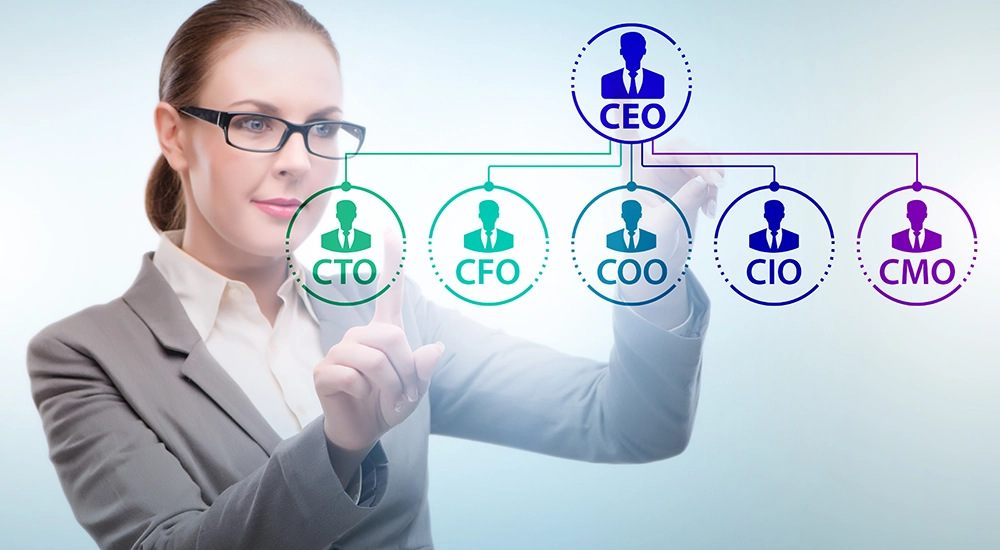
The next generation of Chief Executive Officers is already in post. They sit at the intersection of technology strategy, people leadership, business transformation and operational delivery. They manage budgets that rival entire divisions, lead teams spanning continents, and make decisions under sustained ambiguity that most board members will never experience. They are the CIOs, and the emerging technology leaders on their way to becoming CIOs.
Yet organisations consistently default to developing their technical leaders’ technical skills and neglect the leadership behaviours that boards look for when making that appointment at the top table: clarity under ambiguity, the ability to influence without authority across the whole business, and the self-awareness to sustain high performance over the long term.
The Global CIO Forum has recognised this gap and partnered with Resilient Leaders Elements, RLE™ to close it. This is not a generic leadership bolt-on, it is a strategic investment in the Forum’s community. Three distinct programmes, underpinned by 25 years of empirical research, designed to develop the human capabilities that turn exceptional technology leaders into the CEOs their organisations will need.
Transformation has a leadership problem
Across the Middle East, North Africa and the wider Global CIO Forum network, the pace of transformation has compressed from years to months. National digitisation programmes, giga-projects, rapid organisational scaling and the integration of AI across every function have created CIO roles that are already quasi-CEO positions in all but title.
The leaders who hold these roles are not simply managing technology. They are shaping the strategic direction of their organisations, building entirely new operating models and leading through a degree of uncertainty that is unprecedented in its speed and scale.
The data bears this out: the 2024 Gartner CIO and Technology Executive Survey of over 2,400 CIOs globally found that 43% are actively seeking to expand beyond their current scope into broader leadership responsibilities. Meanwhile, the Nash Squared Digital Leadership Report found that 68% of CIOs now sit on the operational board or executive management team. The CIO is no longer a back-office function. The question is whether the human infrastructure is being built to match.
This is the context in which the gap between technical capability and leadership readiness becomes most dangerous. Organisations across the region invest heavily in technology infrastructure. The Global CIO Forum and RLE partnership exists to ensure they invest with equal rigour in the leaders built to lead it.
Developing the person, not just the position
Every RLE programme is built around the Resilient Leaders Development Programme, RLDP™. A suite of development tools that assess, develop and measure leadership capability across four interconnected Elements: Clarity of Direction, Awareness, Leadership Presence and Resilient Decision Making. Together they map the territory between who a leader is and what a leader does.
That distinction is the key to the CIO-to-CEO transition. Most CIOs have been rewarded throughout their careers for what they do: delivery, transformation, technical strategy, operational excellence. The step to CEO demands equal strength in who they are: the presence to hold a boardroom, the self-awareness to know when to direct and when to listen, the clarity to set direction for an entire organisation and the resilience to sustain it.
The RLDP provides every participant with a personalised leadership development journey driven by their own data. At the end of the programme, it does not simply ask “did people enjoy the experience?” It evidences what has changed for this leader, by how much, what they did to effect the change and what they need to do next.
When anonymised and aggregated, RLE can also create organisational intelligence showing where leadership capability has grown, where gaps remain, and what needs to happen next. This is the kind of evidence that can be presented to a board, used to manage culture change, mapped to a succession plan and used to make an informed case for continued investment.


“RLE is the only leadership development programme I have done which combines the ‘who you are’ with ‘what you do’, alongside practical and measurable progress.”
Dee, Resilient Leaders Consultant

Three programmes, one framework
Through the Global CIO Forum partnership, CIOs and emerging technology leaders now have access to three distinct programme formats. Whether the priority is accelerating an individual leader’s readiness for a bigger role, building the collective leadership capability of a transformation team, or developing an entire leadership layer, the RLDP provides the consistent thread: the assessment, the challenge and the measurement that turns development into evidence of growth.
Programme #1 RLE Accelerate: For the CIO preparing for the boardroom
For the senior technology leader who is already in the conversation for a bigger role, or who should be, ‘Accelerate’ pairs expert one-to-one coaching and mentoring from an accredited Resilient Leaders Consultant, RLC with full RLDP access. It develops the specific leadership behaviours that boards look for: strategic clarity, executive presence, influence across the whole business and the self-sustaining habits that prevent the burnout which derails promising careers.
A typical participant sees overall growth of 20.5%, with Clarity of Direction up 25% and Awareness up 24%. The single biggest behavioural shift is in self-care: ‘I look after myself. I rest, reenergise and renew’ improved by 126.8% on average. The significance of this finding goes beyond personal wellness.
A 2022 Deloitte survey found that 69% of C-suite executives reported considering resignation due to burnout. For leaders who have been running on depleted reserves while carrying the weight of organisational transformation, that is not a marginal finding. It is the difference between arriving at the CEO role ready to lead and arriving already spent.

“RLE gave me the confidence to embrace my identity: who I am, not just what I have done.”
Skye, Former British Army Officer and Business Owner
Programme #2 RLE Lead in Uncertainty For the person ready to move from reacting to change to leading it
Lead in Uncertainty brings together individual CIOs and emerging technology leaders from different organisations, sectors and contexts into a cross-organisational cohort. The evidence for this model is strong: research consistently shows that exposure to leaders from different sectors and contexts accelerates behavioural change, as participants encounter divergent perspectives they would not meet inside their own organisations.
They learn from each other’s experiences, challenge each other’s assumptions and develop strategies for implementation of this learning in their work and wider lives.
Facilitated workshops provide focused, personalised development driven by their own RLDP data. Peer coaching enables leaders to practise their skills of listening, questioning and influencing. The programme’s biggest behavioural shift tells its own story: Strategic Intent, the capacity to visualise a future state and build backwards from it improved by 68.4% on average.
For a technology leader preparing for a bigger role, that is the capability that separates the leader who reacts to change from the leader who shapes it.

“The RLDP has helped me to focus on the controllables, which is me.”
James, Chief of Staff
Programme #3 RLE Resilient Leadership Unlocked For organisations that know their next CEO is already in the building
Resilient Leadership Unlocked is designed for organisations that recognise the CEO of the future is not one person, it supports the development of their pipeline of aspiring leaders, those that have been identified, and prepares them for what the future holds. Cohorts of 32 or more leaders move through an immersive experience combining personalised RLDP access, peer coaching partnerships, experiential leadership simulations, facilitated group reflection and plenary learning sessions.
For emerging CIOs, heads of IT, senior architects, directors of digital, transformation leads, this is the programme that accelerates readiness before the role demands it. The urgency is real: the Fortune/Deloitte CEO Survey found that only 31% of CEOs strongly agree their organisation has a strong slate of viable future CEO candidates. The standout behavioural shift in this programme is in influence: ‘I know the influence I have on others and how to use it to achieve the overall goal’ improved by 40.2%. In organisations where delivery depends on influence rather than positional authority, that changes how leaders show up.

“The RLE has provided me with a leadership language which I use to bring business leadership experiences alive in order to help others.”
Steven, HR Vice President

Introducing Resilient Leaders Elements
Resilient Leaders Elements, RLE is a global leadership development organisation preparing people to lead with confidence in uncertainty. Built on 25 years of research and real-world application, RLE delivers the Resilient Leaders Development Programme, RLDP, consultancy services and accredited training across all sectors.
Through the four core Elements of Awareness, Leadership Presence, Clarity of Direction and Resilient Decision Making, RLE has accredited over 200 consultants across multiple countries.
Behind the programmes is something rarer in professional development: a global community of over 200 accredited Resilient Leaders Consultants, RLCs who have completed the RLC Accreditation Programme, demonstrated competency with real clients and committed to an ongoing standard of evidence and peer accountability.
The community spans sectors from higher education and defence to energy, marine operations, schools and corporate organisations. For a CIO or emerging technology leader commissioning development through the Global CIO Forum partnership, this means something specific: RLE does not send a generalist trainer. It draws on a community whose members have built their own practices around the same evidence-based framework, in the same complex organisational environments that technology leaders inhabit.

Team members of Resilient Leaders Elements
Rachel Cooper, Co-founder and CEO
Rachel has spent her career making one argument: everyone leads and therefore needs to be prepared to lead themselves and others through varying degrees of uncertainty. This Resilient Leadership is developed through practice, deliberate challenge and must make a measured impact. With co-founder Dr Jeremy Mead, their vision has always been to make Resilient Leadership Development available to all, irrespective of role, level or sector.
Richard Greatorex, Commercial and Marketing Director
Richard brings a career spanning military service, elite sport and high-performance leadership. His first-hand experience of the damage that poor leadership causes to organisations, to teams and to individuals drives his work at RLE: helping leaders grow in confidence and capability and building the commercial foundations that allow RLE to scale its impact globally through partnerships like the Global CIO Forum.
Nina Dannan, Creative and Innovation Director
After years of collaboration on RLE’s marketing and digital development, including the redesign of the RLDP platform itself, Nina formally joined the community as a fully accredited RLC in 2023. She brings a values-led, pragmatic and creative discipline to everything RLE produces.
Bee Fisher, Head of Marketing
Bee brings a background in marketing leadership across complex, people-centred organisations. Currently undertaking the RLC Accreditation Programme herself, she leads all marketing communications for RLE’s programmes and community, including the three programmes central to the Global CIO Forum partnership.