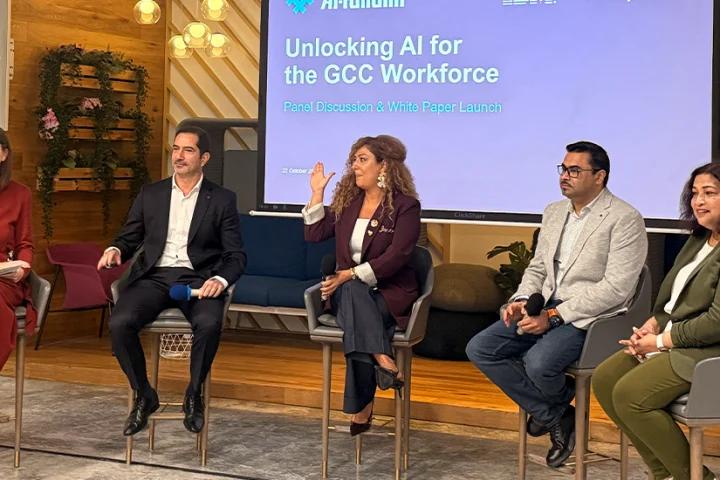




The UAE is embedding AI literacy into its national roadmap to enhance economic competitiveness and workforce development. A new report from Coursera highlights how the country treats AI skills as a measurable national target, integrating proficiency into regulatory frameworks and school curricula to drive responsible adoption and digital transformation.
The report, Navigating GCC AI Regulation: A Playbook for Building an AI-Literate & Compliant Workforce, examines the regulatory landscape in the UAE, Saudi Arabia, Qatar, Bahrain, and Kuwait. It highlights a distinctive regional approach in which AI literacy is treated not as a standalone skills initiative, but as a strategic pillar that helps organizations meet governance mandates while strengthening the capabilities needed to realize digital transformation ambitions.
Unlike many approaches to AI regulation in Europe and North America, where talent development and policymaking often progress independently, the UAE treats workforce AI capability as a measurable national target and a competitive differentiator, directly linked to the country’s economic diversification vision.
Kais Zribi, Coursera’s General Manager for the Middle East and Africa, said: “In the UAE, successful AI adoption is fundamentally dependent on having a workforce equipped with the skills to use these technologies responsibly. With foundational AI proficiency becoming a critical driver for both regulatory readiness and organizational resilience, businesses that proactively prioritize upskilling will be better positioned to navigate evolving regulations, accelerate innovation, and unlock AI’s full value.”
The report notes that organizations are increasingly expected to integrate regulatory requirements into their AI systems, processes, and learning programs from the outset, rather than addressing compliance after deployment. This includes role-based training tailored to specific privacy obligations, cybersecurity standards, and model governance expectations.
The UAE is also translating its strategy into nationwide initiatives. AI is being introduced as a mandatory subject across public schools, while initiatives such as One Million Prompters and AI for All are broadening access to practical AI skills. Public private partnerships are also supporting AI training efforts, with recent programs aiming to equip hundreds of thousands of students, educators, and government employees with hands-on experience. The country is also accelerating enterprise AI adoption through new initiatives aimed at supporting the private sector’s transition toward agentic AI over the next two years.
Organizations that fail to invest in AI literacy risk widening internal skills gaps and signaling misalignment with government objectives. In a region where governments play a central role as both regulators and leading adopters of AI, this can affect compliance readiness, procurement opportunities, and long-term market viability.
To help businesses respond, the report outlines nine best practices for building an AI-literate workforce. These include embedding AI literacy into governance structures rather than treating it solely as a learning function, assessing AI-related risks and capability gaps, and ensuring learning programs reflect emerging regulatory guidelines.
A central recommendation is to align AI training with Emiratization goals and workforce planning. By connecting AI upskilling to national talent priorities, companies can strengthen government relationships, support local expertise development, and drive sustainable business value. The report also emphasizes the importance of fostering a culture of continuous learning as technologies advance and regulatory expectations evolve.