


ALEC Holdings, a publicly listed company and part of the Investment Corporation of Dubai, is a diversified engineering and construction group operating in UAE and Saudi Arabia. ALEC builds and provides construction solutions that set industry benchmarks for innovation, quality, reliability and operational excellence.
ALEC offers its clients complete turnkey solutions in construction, MEP, fitout, marine, oil and gas, modular construction, energy efficiency and solar projects, heavy equipment rental, technology systems and asset maintenance. Through these capabilities, ALEC serves a diverse range of sectors including airports, retail, hotels and resorts, high-rise buildings, and themed projects.
For companies such as ALEC, that operate on enormous scale and cost and for multiple year projects, continuous improvement in operational processes, introduction of break-through processes, and a culture of innovation amongst its workforce is critical.
As the innovation department, we need to balance between people who can really do it and how do we get new people to be engaged.
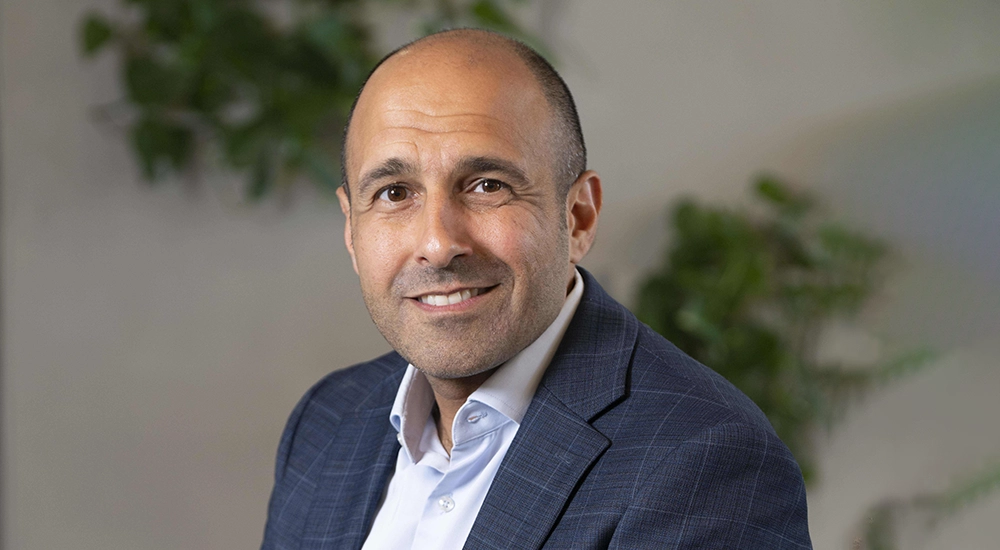
According to Imad Itani, Head of Innovation, ALEC, innovation in general is taking charge of all improvement initiatives across the company. These cover small improvements to process improvements to transformation initiatives, digital initiatives and everything else.
For Itani who manages a five-member team, ALEC has a clear framework to define innovation and focuses a lot on people. This includes training, empowering, supporting, and guiding people into the innovation journey. “That is our major focus,” says Itani.
“Continuous improvement is one area we focus a lot on. You are talking about tools, processes, systems. We also focus a lot on health, safety, and environmental initiatives. Then we go to the digital technology and automation initiatives and the last area is creating new business opportunities for the company. So we take the whole spectrum.”
For Imad who drives all the innovation programmes within ALEC, the most important part is to have proactive and passionate people who want to make a difference. Skills and abilities can be taught, and ALEC has attracted people from different industries and from different experiences and different backgrounds.
People that can do lean can be part of this; people who understand technology can be part of this; people who understand construction can be part of this; the most important criteria to participate in ALEC’s innovation programmes is to be open-minded and to try to do new things.
Itani also mentions, “Financial savviness is also critical. This means a little bit of analytics to be able to see what do we do before, what do we do after, and then how do we compare before and after and make sense of it and translate it into something meaningful.”
Our job is to also get the rest to join because we might be missing opportunities from some people and we spend lots of time on that.
Innovation teams also exist in other construction and project companies and according to Itani, 90% of them have innovation integrated with operations. The difference between ALEC and its competitors, is that the innovation team inside ALEC and the ALEC operation teams act as one team and not as separate teams.
“If I find a technology today that needs to be tested, we can go immediately to visit the site. That is how easy it is to meet with the people on the projects,” explains Itani.
To select people who will be involved with ALEC’s innovation activities and programmes, Imad accesses a database of employees that dates back to 2017. Through this database, Itani keeps track of innovation initiatives taken up by employees across the company.
“We already know that 1,000+ people in the company are involved in innovation at different stages and use their abilities to get things done immediately.” But Itani is also committed to expanding the scale of innovation activities to other employees and having mix of active doers and new entrants as well.
“As the innovation department, we need to balance between the people who can really do it and how do we get new people to be engaged. That is the important part because I can always rely on the dependable group.”
“Our job is to also get the rest to join because we might be missing opportunities from some people who are really good but may have been busy. We spend lots of time on that,” remarks Itani.
Challenges
Does Itani face any challenges in building a culture of innovation, acceptance and cooperation with employees and teams across ALEC? Itani indicates that a culture that is conducive to innovation, progress and improvement has been in ALEC from the beginning.
“The culture of the company has been right, even before innovation came to the picture. We have a good culture and good attitude that was set from day one in the company,” he explains.
This means that a top-down process has already been set into motion and does not need to be reinforced for every major initiative.
If I find a technology today that needs to be tested, we can go immediately to visit the site.
“We do not need senior management to tell people to submit ideas. We do not need senior management to tell people to work with innovation. We do not need that at all. We have lots of proactive people in the company who are naturally doing the right things.”
For Itani the challenge is more about, how do you get those proactive people to do the important things that the company is trying to achieve. That process is about alignment, communication, a little bit of direction and incentivization. And this segregates the available pool of people into multiple groups.
The first group of people are the innovators. They are the proactive people who are taking initiatives without any direction from Itani’s team and they do not need an innovation department.
This constitutes around 2.5% of an organization’s workforce. While they may have improved processes and operations in some areas those improvements have never been recorded. And this is the most difficult part for people to document all the benefits by writing it down and sharing it with their colleagues.
The next group of people who take part in ALEC’s innovation programmers are the early adopters. They are principally driven by FOMO or fear of missing out. This group of people are also proactive about innovation but only follow after the first initiatives have been taken. “These are the people who are also proactive, but were not sure,” says Itani.
The third group of people targeted by ALEC’s innovation programmes are the early majority and this includes 70% of business unit heads. They also do not have any doubts about the value of innovation and the fact that it can deliver big value.
We are creating the next generation of innovation leaders and this is not just about implementing an idea.
Itani’s initiatives across ALEC are to capture 25% of the workforce in the innovation programmes. But there is a rider. “You need those 25% to be the right employees, not any employee. So if you have 25% of all the right employees involved, you have done it,” he remarks.
The 25% umbrella is also not static as new employees are constantly joining ALEC. New employees need to be onboarded, they need to learn the processes, and then in six months to one year they begin to deliver value. Teaching programmes are also part of the innovation training.
ALEC’s innovation programmes are meant to help employees feel they can deliver and even access the CEO to share their thoughts. “We are creating the next generation of innovation leaders and this is not just about implementing an idea. The people who go through the innovation programmes and survive, they can literally implement any solution going forward.”
Idea generation across ALEC
ALEC has multiple initiatives to drive innovation across the organisation. The first is a formal process of encouraging ideas, consolidating them, and then taking them forward into teams and implementation.
“We have a platform for ideas that come into the business. We manage from inception to assessment, then securing the right teams to manage those initiatives, and then if some of them need to be tested or funded, all the way to implementation,” says Itani.
The ideas are assessed based on ALEC’s innovation framework. The ideas are segregated on the basis of quick wins, process improvements transformation and digital initiatives.
The responsibility of the innovation team is to ensure these initiatives to improve, generated by incoming ideas from the organisation, converge, align and facilitate ALEC’s priorities and strategic direction.
Another consideration is to ensure these improvement initiatives are spread across the organisation and across its people. If the focus is only on big transformation ideas, it will only cover 1% of ALEC’s people, leaving out the rest of the colleagues.
We talk to people all the time and we are with them which means we know where the challenges are.
“That is why we focus a lot on involving as many people as we can. Through this process, we need to ensure we are not only trying to do the biggest and best, but also balance our portfolio. So we do lots of work to ensure we are actually busy in all aspects,” says Itani.
By ensuring improvement initiatives are spread across ALEC and its people, the innovation team is also building up the capacity to drive innovation inside the organisation.
“One person inspires others and then one department inspires others and then one business unit inspires others, and that is the whole innovation ecosystem. It matures with time if you keep feeding it or nurturing it with the right things. So we manage our idea platform,” says Itani.
Tahadiy across ALEC
Another initiative to drive innovation across ALEC is called the challenges programme or Tahadiy.
Tahadiy is the Arabic word for challenges, and as a department the innovation team tries to understand what are the challenges the company is facing today, to achieve what the company needs to achieve. The innovation team works with the senior management, department heads and business unit heads.
Running this programme looks easier than it seems. In reality, most people in companies cannot even explain what are the bigger problems that the organisation is facing. Defining what the problem is, is usually not easy. It is for this reason that the Tahadiy initiative also requires pre-programme work, which requires effort as well.
The pre-programme work is a three-month process to collect challenges from senior management to business unit heads. This is the most difficult part, since sometimes the problem statement is not clear, and it means engaging with the senior management as well.
However on the positive side, ALEC’s innovation team is embedded within ALEC itself and is not an outside consulting team and is therefore aware of the challenges itself.
“We talk to people all the time and we are with them which means we know where the challenges are. Through this three-month phase, you are trying to define the problem and also whether it is worth working on it. There are many good problems to solve, but is it really what you want to solve, which means prioritizing the problems.”
Once the challenges are consolidated, the Tahadiy initiative runs for nine months and is managed by the innovation department. From the beginning of the programme the key requirement is to balance presentations, ideas, and other cool stuff with results.
“We put a different focus on it. We tell people, I want your best initiatives and the cool stuff, but at the same time, you are the team responsible to deliver.”
This means they not only have to ensure they have the coolest ideas, but they have to balance their ideas so that they are actionable, and they can be implemented. And therefore they need to focus on the whole innovation process.
ALEC invites its people to participate in the Tahadiy programme by selecting the challenge they want to work on and those who are applying do not need to have any specific background. The final objective is to have completely mixed teams.
While the programme is open to everyone in ALEC, Itani and his team does vet the people who apply. “We are rejecting 70% of people who are applying. Since we have data since 2017, we know every person, what they contributed to innovation, whether they submitted an idea, whether they drove an initiative forward, and whether they championed implementation.”
The teams are trained in a design thinking approach and the end-to-end Tahadiy approach. They are encouraged to forget about their past experiences, go on-ground and observe the problem situation, talk to the right people and understand the problem. The members of these team invest around 20% of their work time in the Tahadiy programme.
“Most of the times people have their pre-determined thinking of what the problem is and like to jump into the solution. For the first one and a half months we stop people from jumping into solution. We tell them, go and understand the problem first,” says Itani.
Only after they understand the problem can they define it and then start to brainstorm. “99% of people want to brainstorm on day one which is wrong,” adds Itani.
The entire Tahadiy programme is meant to be iterative and improvement driven and regular meetings every month are part of the feedback and control process. The whole approach of the challenge programme and design thinking is that it is iterative to reach a point.
At a certain point the teams move to feasibility assessment, prototype building and testing.
“Sometimes it works, sometimes it does not work. Sometimes it is required to find partners because you cannot develop everything yourself. Once you define what you are trying to solve, you can find a partner to work with you, and then we start testing. After we test, some items will work, some items will not work,” says Itani.
If the prototype is satisfactory the teams can get budgets from ALEC for further development and implementation. The time period of nine months is split between five months for the prototype development cycle and four months for implementation, improvements and closure.
Putting it all together
The innovation team is also responsible for monitoring technology trends, alliances and partnerships and industry networking. In November last year, ALEC celebrated its annual Innovation Day and how it has successfully evolved into a Platform for Global Innovation Solutions, where solutions shaping the future of construction are ideated, nurtured and then scaled across the wider industry.
The innovation team works with venture capital companies, strategic partners, subcontractors, suppliers and even competitors. “We benchmark to see where we are and that is another layer added to the equation,” says Itani.
Itani also adds that many of the initiatives might not save cost and time today. “But it might have the potential to benefit us a few years down the line. This is where we differentiate between quick wins, short term, medium term, and long term.”
At the end of all of this, the innovation team has a portfolio of initiatives. “Some of them we are driving ourselves, some are where champions are driving them, and some that are happening between department and business units. This is what we track on daily basis.”
For Itani, the challenges programme takes up around 20% of his time; the idea generation platform another 20%; monitoring trends and scouting for technologies another 20%; and scaling and adoption is another 15%. The rest is execution, without which the remaining are just good stories.
Key takeaways
- Defining what the problem is, is usually not easy.
- Financial savviness is critical and this a little bit of analytics to be able to see what do we do before, what do we do after.
- To select people who will be involved with innovation activities, ALEC accesses a database of employees that dates back to 2017.
- The innovation department needs to balance between people who can really do it and how to get new people to be engaged.
- The innovation team’s job is to get the rest to join, because they might be missing opportunities from some people who are good.
- The challenge is how do you get proactive people to do the important things that the company is trying to achieve.
- ALEC initiatives are to capture 25% of the workforce in the innovation programmes.
- You need 25% to be the right employees and not any employee and if you have 25% of the right employees involved, you have done it.
- The people who go through the innovation programmes and survive, they can literally implement any solution going forward.
- Most people in companies cannot even explain what are the bigger problems that the organisation is facing.
- Tahadiy invites coolest ideas, but teams have to balance ideas so that they are actionable, and can be implemented.
- ALEC invites its people to participate in the Tahadiy programme by selecting the challenge they want to work on.