

As enterprises accelerate digital transformation and AI adoption, a fundamental shift is redefining cybersecurity. The perimeter is no longer defined by networks or endpoints—it is defined by identity.
On Identity Security Management Day 2026, industry leaders converged on a clear and urgent reality: attackers are no longer breaking in—they are logging in.
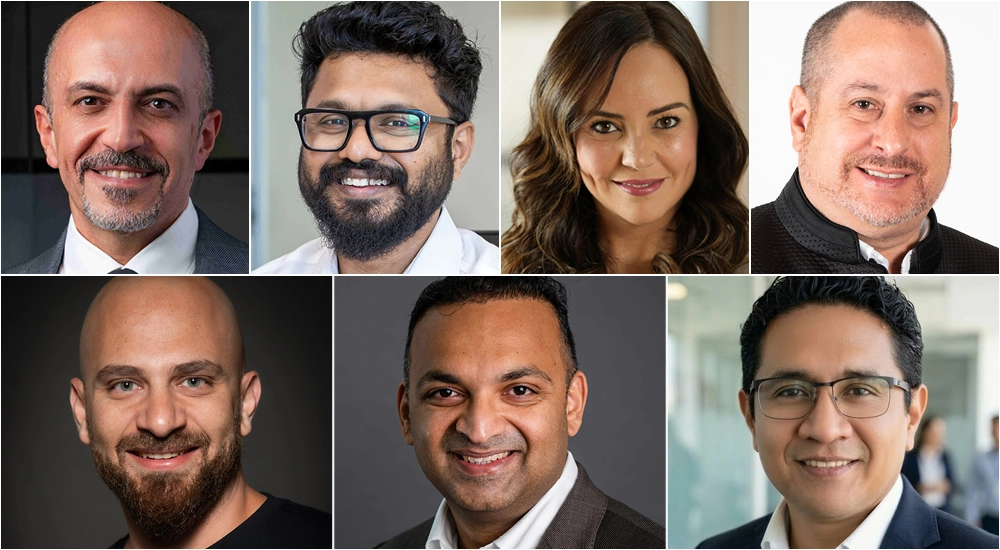
“The key takeaway is clear: identity is now the primary security perimeter… When identity is compromised, trust is automatically granted,” says Victor Garcia, Field CISO Associate at Sophos.
This shift is not just conceptual—it is operational. As organisations expand across cloud, SaaS, and hybrid environments, identity has become the connective tissue linking users, systems, and data.
“Identity has become the defining control point of the cloud era… making it central to how modern businesses operate and scale,” notes Vibin Shaju, Vice President, EMEA Solutions Engineering at Trellix.
Identity-based attacks are particularly dangerous because they are difficult to detect. With stolen credentials and authentication abuse, malicious activity often looks like normal user behaviour.
“With stolen credentials… malicious activity often looks like normal user behavior,” Garcia explains.
Speed further compounds the risk. Attackers can escalate privileges and target core identity systems within hours, leaving little time for response.
“Attackers can escalate privileges and target core identity systems within hours,” he adds.
The result is a new kind of breach—quiet, fast, and highly scalable.
“Identity-based incidents can scale massively from a single user compromise… often harder to detect,” says Shaju.
To counter this shift, organisations must move beyond static access models.
“Organisations must move beyond basic login controls and adopt continuous identity verification based on context, behavior, and risk,” Garcia emphasises.
This requires a proactive approach—monitoring behaviour, detecting anomalies, and continuously reassessing trust. Yet gaps remain.
“Identity controls are often deployed but not fully enforced. Inconsistent MFA and weak privileged access management continue to create avoidable risk,” Garcia warns.
A major, and often underestimated, challenge is the rise of non-human identities.
“Identity Security Management Day is no longer solely about humans… AI agents introduce autonomous decision making tied to privileged identities,” says Morey Haber, Chief Security Advisor at BeyondTrust.
These identities operate continuously and at machine speed, creating a new attack surface.
“AI agents represent an emerging risk surface that can be compromised at machine speed,” Haber adds.
Yet organisations continue to treat them as tools rather than identities requiring governance.
“Today’s enterprise environments are awash with AI agents… yet they are treated as tools,” says Mortada Ayad, VP – META at Delinea.
He describes this as the AI security paradox: “Organisations are scaling AI adoption faster than they can govern who, or what, has access to what.”
As machines begin to outnumber humans at scale, traditional identity frameworks are no longer sufficient.
“If we continue to rely on frameworks designed for humans alone, they will increasingly fail,” Ayad cautions.
In this new reality, identity security is no longer just about access, it is about accountability.
“If you do not govern non-human identities… you are delegating trust without accountability,” Haber states.
Organisations must extend core principles—least privilege, just-in-time access, and continuous verification—across all identities, human and machine alike.
Beyond technology, identity security is now deeply tied to resilience.
“Identity is the very perimeter we must protect… attackers do not break in, they log in,” says Ezzeldin Hussein, Regional Senior Director, Solution Engineering, SentinelOne.
He highlights the broader implications: “Every identity stands for a person, a mission, a nation’s continuity… protecting identity becomes an act of resilience.”
Meriam ElOuazzani, Vice President at Censys, brings attention to a critical flaw in current security thinking.
“Identity Management Day comes around every year with the same advice… but it’s no longer enough.”
The real challenge begins after authentication.
“Most identity systems grant trust at login and rarely reassess it. Once attackers are inside with valid credentials, they inherit that trust entirely.”
This allows them to move undetected.
“Authentication appeared to be working perfectly. That is the problem.”
Cloud environments have made this risk more severe, with stolen identity tokens becoming a primary attack vector.
“Continuous verification, behavioural monitoring… most organisations haven’t gotten there yet,” she notes.
She concludes with a stark reminder: “You cannot secure what you don’t know. Full visibility into your attack surface is essential.”
As the landscape evolves, one conclusion is unavoidable.
“Identity risk is now continuous, expanding, and increasingly autonomous,” says Jay Reddy, Head of Growth at ManageEngine.
With AI agents and non-human identities growing rapidly, organisations must extend Zero Trust and least privilege across every identity.
“The ability to continuously answer ‘who has access to what’ is now fundamental to resilience,” he adds.