


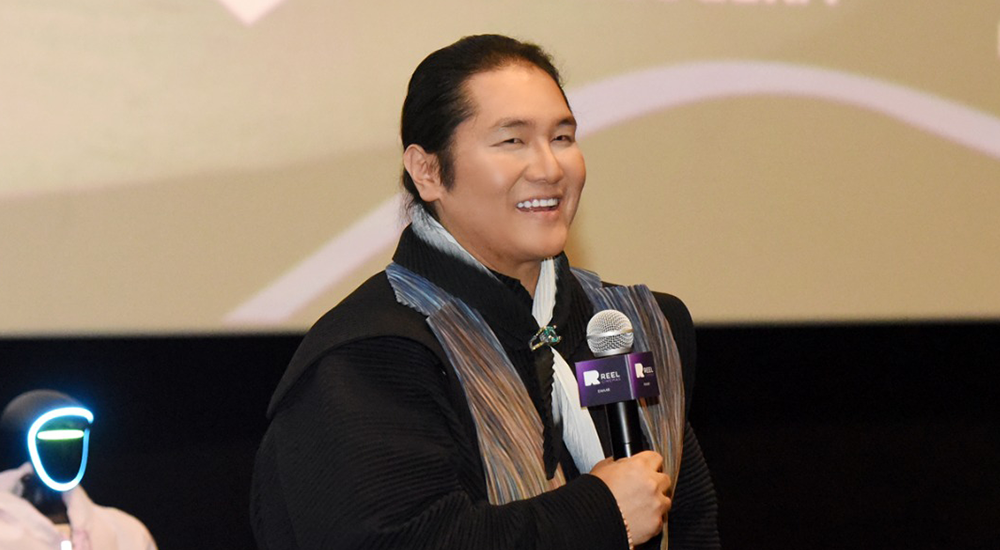
Galaxy Corporation has opened its first international robot arena in Dubai, a permanent venue inside a Reel Cinemas site where humanoid robots performed choreographed dance routines and a taekwondo display at the launch this week. The arena follows the Galaxy Robo Theme Park, which the company opened in Seoul earlier this year, and it is the first step in a plan to expand into a larger robot theme park in Dubai next year.
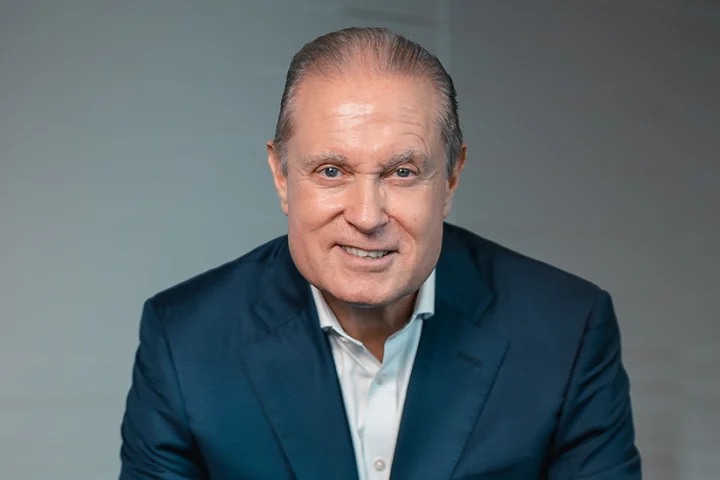
Galaxy Corporation represents some of South Korea’s best-known talent, including G-Dragon, SHINee’s Taemin and Parasite actor Song Kang-ho, and it is now betting that audiences will turn out for robots as readily as they do for stars. Yong-ho Choi, who named the company after his two sons, Galaxy and Universe, spoke about why he chose Dubai, why the arena sits inside a cinema, the ethics of giving machines a conscience, and why making money ranks eleventh among his company’s values.
Why did you choose Dubai for Galaxy Corporation’s first international robot arena?
Dubai is a city where the impossible becomes possible, and that is exactly what a launch like this needs. I believed in it so strongly that six months ago I made one of the biggest decisions of my life and moved here. I didn’t come alone. I brought my wife, my parents, my brother and my fellow founders, and around 20 of us now live here together. People often ask me why I chose Dubai, and my answer is always the same. This is where I wanted to invest, and it is where I wanted my family to live, so that we could build this arena from the ground up rather than manage it from a distance. Working with Emaar and Reel Cinemas gave us the right partners to open here. We are starting with live robot performances, and next year we plan to expand into a larger robot theme park. Our ambition is to make Dubai the global centre of robot entertainment, moving from Seoul to Dubai and from Dubai to the rest of the world.
What did the Seoul theme park teach you about how people respond to robots?
When we opened the Galaxy Robo Theme Park in Seoul earlier this year, families paid to come and spend time with our robots, and what happened there surprised even us. Children walked up to the robots without any fear. Parents laughed alongside their kids, and whole families shared the experience together. Over time, people stopped seeing the robots as machines and started seeing them as friends. That changed how I think about this industry. I am now convinced the robot revolution will not begin in a laboratory or a factory. It will begin in ordinary, everyday life, in the moments families spend together, and Dubai is where we are taking that next.
How long has the Dubai arena been in the making?
We have been working towards it for more than a year, so this is not something we put together quickly. The serious preparation began six months ago, when I arrived in Dubai and could work on it in person every day. Being here, living here and understanding the city first-hand made a very big difference to how we planned the arena.
Why did you choose a cinema as the venue?
Cinemas around the world are under real pressure at the moment, partly because of streaming platforms like Netflix, and I didn’t want to simply take space from them. I wanted to create a model where both sides win, where the robots bring new audiences into the cinema and the cinema gives us a home. We also needed a permanent venue where we could perform regardless of whether it was hot or cold outside, which matters a great deal in a city like Dubai. A cinema answered both of those needs perfectly. We will run a robot programme of about an hour every weekend, and that is only the first stage. Next year we plan to expand into a much larger robot theme park.
Your robots performed to G-Dragon’s “Power.” Whose personality are they modelled on?
Galaxy Corporation represents a number of superstars, including G-Dragon, Taemin from SHINee and Song Kang-ho, and this project began with G-Dragon, the leader of Big Bang. The robots learned to dance by training on “Power,” and that became our starting point for bringing our artists’ IP into robotics. But I think the more important question is not whose face or movement a robot carries, but which values sit inside it. At Galaxy Corporation, making money is only the eleventh most important thing we pursue. There are at least ten things in this world that matter more than money, including humanity, love and family, and those are the values we want to place in a robot’s heart. We are not trying to manufacture a copy of a human being. Our goal is to build robots whose entire purpose is to help people and protect them.
You said on stage that robots could have a heart and consciousness within a year. Critics would call that utopian. AI runs on ones and zeros, while human emotion is shaped by heartbreak, rejection, love and jealousy, often all at once. How do you close that gap?
Humans are not born fully formed, and robots will not be either. Every person starts life as a baby and grows, and I think robots will follow a similar path, beginning with what I call a baby robot. Emotion, sensitivity and awareness can develop gradually, one layer at a time, in much the same way they develop in a child. We already accept that animals have emotions, even though they are not human. Reaching the emotional depth of a fully grown adult will take a very long time, and there will be considerable risks along the way. But a robot with the emotional maturity of a young child is technically achievable within a year. Even then, we will only release it when we are confident it is safe.
Do you believe robots will eventually make their own decisions?
I believe people have a heart and consciousness, and I believe robots can have them too. The question is what kind. The heart has to be warm and the consciousness has to be healthy, and that is exactly why we are writing safety guidelines for physical AI now, before the technology arrives. Free will is coming, but it cannot be granted carelessly. For the moment we keep it firmly under control. These robots exist to protect children and to protect people, and only when they can do that reliably will we be ready to take the next step. Technically, I think we could see this by around this time next year.
What is the hardest technical challenge in building robots like this?
Free will is by far the hardest. A robot given 10% free will behaves very differently from one given 50%, and differently again from one given 100%. On top of that, the way it behaves will depend on how the people around it respond, just as human behaviour changes from one situation to another. Deciding how much freedom to give, and when, is the central problem in this field, and it is the issue we spend the most time thinking about.
How do you intend to solve it?
Some traits can be tuned fairly precisely. You might set humour at 50% and kindness at 70%, for example, and the robot will behave accordingly. Free will is far more delicate than that. We will introduce it in stages, starting at 10%, then moving to 30% and then 50%, and we will learn from each stage before going further. Before any of that, the robots need to absorb human goodness, and they need to be trained so that they can stop themselves if they are ever about to harm someone. That ability to stop has to come from within the robot. It will take a great deal of time and experimentation, and there will certainly be trial and error. Reaching 100% will take a long time, which is exactly why the training has to start now.
AI models increasingly learn on their own. How do you put checks and balances in place from the day a robot is switched on?
The answer comes back to the idea of a baby robot. The way a child turns out depends on how it is raised, what it is fed, what it is taught and what it experiences as it grows. Robots are no different. When a robot first comes to us, we shape it through the environments and experiences we give it, and we are responsible for what it learns. Seen that way, the problem is actually quite simple to understand, even if it is hard to do. It demands patience, care and sustained effort, in the same way raising a human being does.
As a father, what concerns you most about a future shaped by robots?
I ask myself the same question parents everywhere are asking. If my son struggles to control his smartphone today, how will he manage when the day comes that he has to live alongside robots? Will those robots protect him? It is a genuinely difficult problem, and I won’t pretend it has an easy answer. That is the reason we are building safety guidelines now, before that future arrives. We are developing emergency-stop technology that can halt a robot instantly when something goes wrong, along with security systems to protect people’s privacy. None of this can be rushed. It has to be done step by step, and we expect to learn from our mistakes as we go.
How long can the robots perform before their batteries run down?
During intense choreography, they last two to three hours, which is not so different from a human dancer performing at full energy. With smoother movement, they can perform for around ten hours a day. Each robot also has its own stamina and its own level of training, much like people do. Robots that have rehearsed a routine hundreds or thousands of times are noticeably sharper, both in their movement and in how well they hold their positions on stage. We had hoped to put five to seven robots on stage today, but several of them are still trainees. We felt they needed more practice before performing in public, so we decided to show three instead.
You and your team dress almost identically. Is there a story behind it?
I have always admired Steve Jobs. These clothes come from the same Japanese brand and designer who made his signature black outfit. I come from South Korea, and the brand comes from Japan, but the inspiration comes from him. I chose to follow his example, and now this is the only thing I wear. That is really all there is to it.
What do you hope people take away from this launch?
For years the world has asked how intelligent robots can become. The question I care about is how much happiness they can bring to people. I don’t want my children to grow up afraid of robots. I want them to grow up with robots as friends, robots that dance with them, laugh with them and bring something good into their lives. I hope this moment is remembered not simply as the opening of a robot arena, but as the beginning of a new relationship between people and machines. I started this journey for my own children, and in Dubai I am continuing it for children everywhere. In the end, the future of AI has to be about humanity.