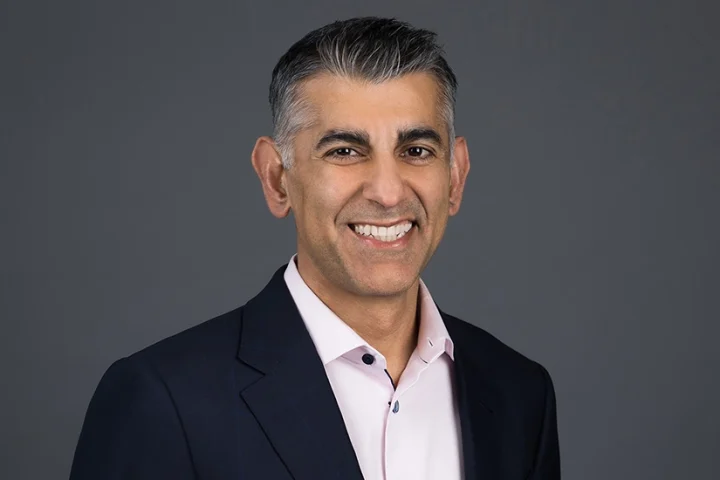




Ask the technology leadership of a large enterprise how many AI agents it has in production and, in Dataiku’s experience, the answer arrives quickly and with some confidence. Jed Dougherty, SVP of AI & Platform at Dataiku, said customers typically put the figure at 30 or 40 when the company asks them.
“And then we’ll do the full scan, and we’ll find 300 across their organisation,” he told GEC Newswire, speaking ahead of the product’s general release.
That gap between what companies believe they are running and what a scan turns up is the commercial premise of Agent Management, a standalone product Dataiku unveiled on 24 September at Dataiku Succeed, its annual conference. Dougherty said general availability is targeted for 15 October. The software connects to AWS Bedrock, Databricks Agents, Google Vertex, Microsoft Copilot Studio and Azure Foundry, Salesforce Agentforce, Snowflake Cortex and Dataiku’s own platform, with OpenTelemetry support for custom environments, and pulls every agent it finds into a single inventory that records which tools and models each one depends on.
The proliferation has a simple cause, and Dougherty was candid about his own industry’s part in it. “Basically, every vendor is offering the ability to build agents right now,” he said, adding that Dataiku was among them, “for better or worse”. The result, as he described it, is an enterprise in which one team builds agents in AWS and Azure while others build in Databricks, Snowflake, Dataiku and, he noted with evident bemusement, “Workday for some reason”.
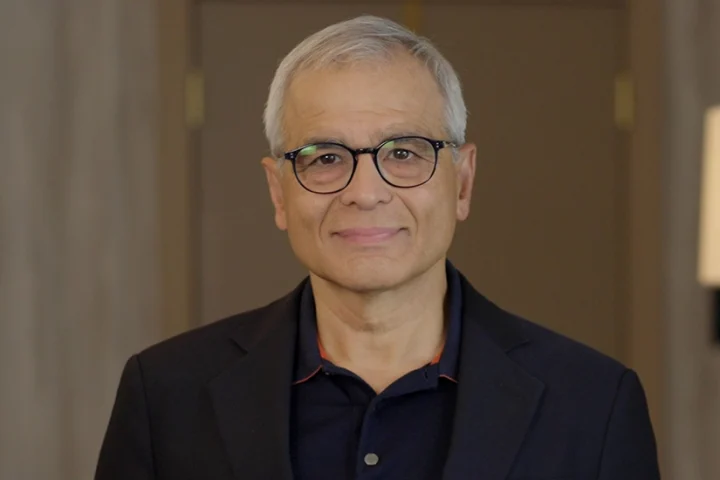
Florian Douetteau, co-founder and CEO of Dataiku, made the same point in the company’s launch announcement by comparing agents with older infrastructure. “Ask a bank how many servers it runs, and you get an answer to the decimal. Ask how many AI agents it’s running, and you get a shrug or a guess,” he said. Dataiku’s launch material cited IBM research finding that fewer than one in five organisations maintain a complete, current inventory of their AI systems.
Behaviour drift is the reason Dataiku reached for an HR analogy
Dataiku describes Agent Management as a human resources system for software, and Dougherty was quick to concede where the comparison stops working. Agents have no emotions to manage and no morale to lift. What they share with employees, in his account, is conduct that changes over time and needs watching.
Before generative AI, the systems a monitoring tool had to track were largely deterministic, such as APIs, where the only questions were whether the service was up and whether it was responding. “With agents, you do need to track behaviour, because agent behaviour can change over time, and the way human beings interact with agents can change over time,” Dougherty said.
In practice, the system watches for symptoms such as topic drift, where an agent begins wandering from its assigned task and, in the example Dougherty gave, starts providing bad advice to the people using it. The HR comparison extends to performance management as well. Enterprises can run several agents built for the same job side by side and let the results decide between them.
“You also have some concept of being able to have multiple agents trying to do the same thing and allowing them to compete, and then identify which ones should be promoted or fired in HR parlance,” he said.
The inventory matters most on the day an agent’s owner leaves
The more pressing problem for most enterprises arrives when a person moves on. An employee who has built and supervised a set of agents may leave for another company, and whoever inherits the work will interact with those agents differently. Without a record, the successor starts from nothing.
Dougherty argued that the first defence is simply knowing what exists. That means “having an agent management system where you have the full list of every agent that’s in the organisation and what it’s doing, and which human being is the owner of it,” he said.
The second is history. Agent Management records the telemetry logs between people and agents, which Dougherty said gives a picture of what topics are being covered and how the agents are acting. “And so that can be transitioned between different owners. Basically, we keep the history,” he said.
For the agents Dataiku classifies as highest risk, including those dealing with customers, handling sensitive data or executing live transactions, the product keeps a standing record of certification status, named risks and tests that rerun on a schedule. The company’s pitch to compliance teams is that the evidence trail will already exist by the time a manager, auditor or regulator asks for it. Users can query the whole portfolio in plain language, asking which agents are unmonitored, where risk is concentrated and which ones justify their cost.
Sovereign infrastructure in the GCC shaped how the product was built
Asked how Dataiku approached the product from first principles, Dougherty traced it back to the company’s origins as a platform that connects to dozens of databases so that teams can work across them. “We’ve done that for more than a decade now with data,” he said. “Extending that kind of philosophy and capability to agents was very natural for us to do.”
The second design constraint came from regulated industries, where many of Dataiku’s clients operate. Agent Management can be installed inside a customer’s own sandboxed environment, which Dougherty said was built with markets such as the GCC in mind. “You may have your own proprietary cloud or might be running fully on-prem, and we made sure that agent management fully supports those types of deployment setups because we know that’s where we need to help people,” he said.
Operating across the region brings a further complication, since the UAE, Saudi Arabia, Qatar and Oman each set their own rules on data and AI. Dougherty’s answer on regional adaptability rested on the technical layer: any system instrumented with OpenTelemetry can be brought into the inventory, and he said customers would have considerable influence over which third-party tools Dataiku supports next. He did not describe jurisdiction-specific rule sets, which leaves the question of how a single inventory maps onto several national regimes for early regional customers to work through.
Dataiku is preparing the software to stop misbehaving agents on its own
Dougherty’s case for buying such a system from a vendor, instead of building it internally, rests on how quickly agents are changing. “If you’re not a technology company and you’re trying to build something like this yourself, you’re going to find that it is a very, very large challenge, and it’s a big time and energy and technology sink,” he said.
He pointed to the shift over the past year as evidence. “A year ago, most agents were conversational chatbots. Now we’re seeing many, many more agents be more autonomous systems that are working on their own to perform actions or make real decisions,” he said, adding that this requires a different structure for testing and understanding them.
Dataiku ran an early access programme with existing clients and prospects over the past six months, and Dougherty said the resulting feature backlog already represents six months to a year of work. At the top of it is proactivity. The current version alerts a human owner when something goes wrong and leaves the fix to be carried out in whichever platform built the agent. The next version is intended to act directly. “We’re evolving that to starting to have a kill switch inside of Agent Management. So if Agent Management detects something going wrong, we can have it auto-stop the agent,” he said.
Deeper integrations with OpenAI’s and Anthropic’s own agent platforms are next on the connector list, since most agents built on third-party tools already run on those two companies’ models. Dougherty would commit only to the near future for both. Pricing is set per instance annually, with monitoring metered per agent, and Dataiku has not published figures.
For the customer whose estimate of 40 agents became 300 after a scan, a working kill switch would place an automated stop over roughly 260 agents that nobody in the organisation had previously counted.