


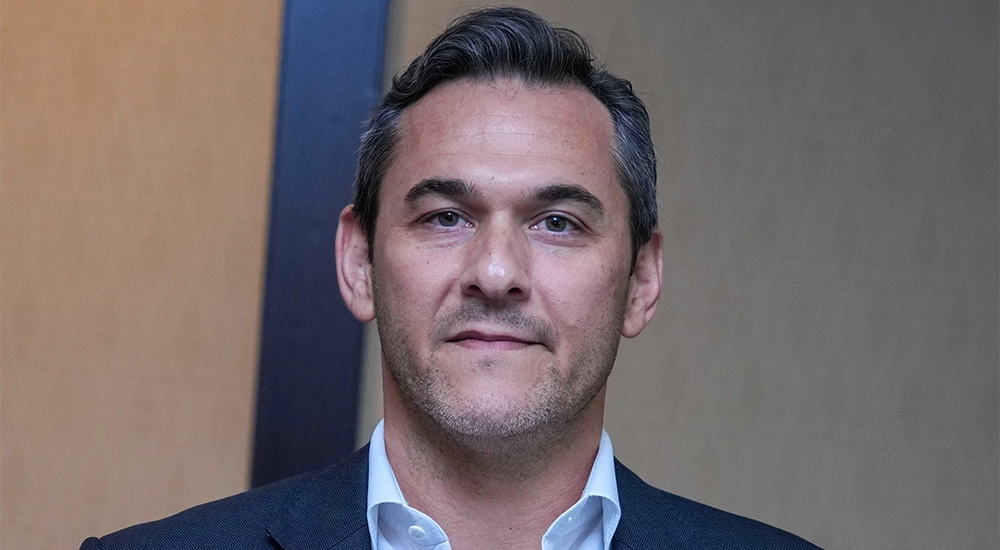
As an agritech company redefining food production in climate-challenged regions, Pure Harvest is proving that modern agriculture is as much about data and systems as it is about soil and seeds. To support its vertically integrated operations, spanning farm design, cultivation, logistics, and sales, Pure Harvest has adopted Oracle NetSuite’s AI-powered ERP system as the digital backbone of its business.
By unifying finance, supply chain, inventory, and customer management with NetSuite, Andrew Bolter, CFO of Pure Harvest, explains how the smart farm is building the operational visibility and real-time intelligence required to scale efficiently, optimise yields, and strengthen food security across the region.
Tell us about Pure Harvest.
Pure Harvest was founded in 2017 with a vision to decouple agricultural production from climate. Specifically, our founders wanted to prove that you can produce high-quality, fresh fruits and vegetables, at a reasonable cost, in the middle of the desert. Today, we grow 365 days a year in high-tech greenhouse facilities designed to replicate a Mediterranean climate, ensuring optimal yield and quality.
We produce crops such as tomatoes, blackberries, leafy greens, raspberries, and strawberries. As a tech-enabled agribusiness, we are addressing food security challenges in this region through controlled-environment agriculture and technology integration.
How critical was it to have a unified ERP backbone such as NetSuite for Pure Harvest?
It was unbelievably important. We are vertically integrated across multiple segments. We design and build our own farms, operate them, manage packing and logistics, run our own fleet of trucks, and handle sales and marketing in-house.
In reality, we are running five different businesses under one umbrella. Initially, we rolled out NetSuite to ensure our financial operations were under control. From there, we expanded into warehousing, supply chain management, CRM, and other modules. Over time, we implemented more capabilities in NetSuite to gain deeper control and visibility across the business.
Did this implementation change how you view agriculture? Are you now a more data-driven company?
We’ve always been data-driven, but the implementation reinforced how much value comes from capturing and standardizing what was historically observed and acted on by experienced growers. Farmers have always used data – often through close observation, like monitoring stem thickness or leaf colour to assess plant health. Now we can capture those signals consistently, combine them with sensor and operational data, and make them available in a structured way across the business. This improves decision-making and creates a foundation for analytics and AI-enabled decision support.
With the rise of conversational AI and natural language querying, do you think ERP systems will become more accessible to business users?
Finance teams are generally comfortable working directly in ERP systems, but other functions often prefer to consume data through tools and interfaces that fit their daily workflows rather than navigating an ERP environment. To support that, we’ve built user-friendly reporting layers and workflows on top of the ERP, so non-finance teams can access and analyse information – and, where relevant, capture inputs or initiate requests – without needing to work directly in the ERP interface.
That said, vendors are improving ERP usability, and conversational AI and natural-language querying can make access dramatically more intuitive. Over time, I expect the ERP to be less of a place people “go” and will instead be seen as an organisation’s data backbone, with AI acting as an accessible front-end for a much broader set of business users.
Your farms rely heavily on IoT automation and climate control. Are you integrating operational farm data with financial decision-making?
Yes, we are currently working on this. We’ve established an AWS data lake that integrates data from NetSuite, SharePoint, IoT devices across farms (heavy equipment, generators, cooling systems, etc.) and other agricultural technologies.
We are now evaluating AI tools to extract insights from this unified data environment and enable natural language queries. For example, instead of calling procurement to ask about open purchase orders, someone could simply query the system directly. That level of independence and accessibility improves operational efficiency.
Did ERP implementation require cultural change within the organisation?
Yes, absolutely. We implemented changes gradually and iteratively to allow teams time to adapt. Many operational staff had never interacted with ERP systems before, so we were mindful of providing time to learn and integrate these tools into daily routines. Our rollout strategy was calibrated to each department’s readiness and adoption pace, using a phased, incremental deployment rather than a blanket organization-wide launch.
How important is real-time analytics in climate-controlled environments?
Extremely important. While we do not sell commodity products, our pricing is still influenced by supply and demand dynamics. Daily market data is critical for optimizing performance.
On the production side, even small changes in temperature can impact crop yields for weeks. Real-time analytics allow us to respond proactively and optimize growing conditions.
What are your expansion plans?
We currently operate in the UAE and Saudi Arabia and supply premium fresh produce across the GCC. In the near term, we aim to establish a production base in Morocco to serve Europe, and expand our sales, marketing, and distribution presence in Southeast Asia – building commercial demand and partnerships ahead of potential farm operations in this market.
Can your ERP support compliance and sustainability reporting across multiple jurisdictions?
Yes. In the GCC, where we currently operate, we’ve configured our ERP to support country-specific compliance requirements; this remains a priority as we roll out additional modules. As we expand into new markets, we will continue to ensure our systems and reporting processes meet local regulatory requirements.
How do you manage inventory and resource utilisation?
Our ERP system – NetSuite – provides comprehensive tracking and visibility of inventory movement and resource allocation.
We manage inventory through real-time ERP tracking and MRP-driven planning to align demand, production, and procurement. All inventory movements — from harvest, grading, and packing to dispatch and returns — are captured end-to-end within the system in real time, ensuring full traceability and stock accuracy across sites.
In parallel, we are integrating biometric attendance and a department-specific labor management system with NetSuite to ensure accurate time capture, productivity visibility, and seamless payroll processing — improving labor cost control at crop and site level.
With AI-powered ERP systems, who ultimately becomes accountable — CIO, CFO, or business leadership?
It depends on the initiative. If AI enhances financial planning and analysis, the CFO would sponsor it. If AI improves yield forecasting, the master agronomist would lead. Our digital transformation team supports department heads in implementing AI solutions aligned with their objectives.
Are you adopting cloud ERP across all operations? How do you see the future of farming evolving?
We are leveraging cloud ERP extensively across our operations. Farming will increasingly be managed through integrated software dashboards supported by AI-driven insights. However, agricultural expertise remains essential. Technology enhances decision-making, but it complements, rather than replaces functional expertise.