


Firebird on Saturday announced, it has opened the CIS region’s largest AI factory in Armenia. It is the first operational site in a global build-out targeting two gigawatts of capacity by the end of 2028, with NVIDIA announcing its intention to invest in the company and Perplexity signed as first customer.
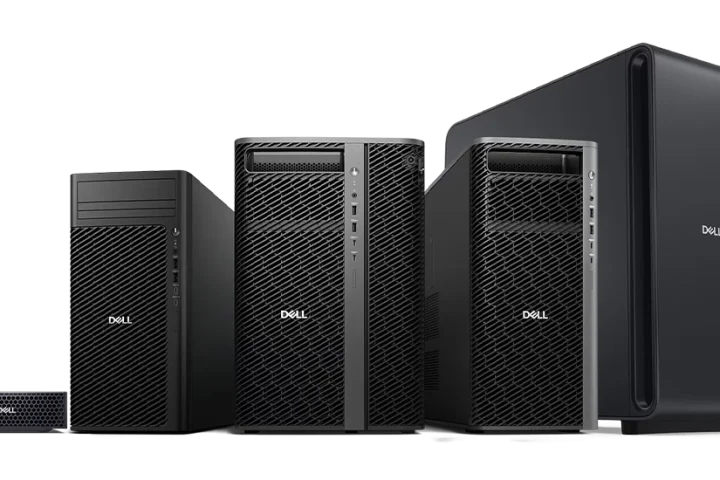
The Armenian facility, built to the NVIDIA DSX reference design on Dell PowerEdge servers, went from ground-break to operational readiness in just over six months. Firebird plans to scale it beyond 70,000 NVIDIA Rubin and Blackwell GPUs and 300 megawatts of capacity by the end of 2027. Kazakhstan is the second market, where the company has secured 125 megawatts at Data Center Valley with government approvals and export authorisation from the US Department of Commerce’s Bureau of Industry and Security.
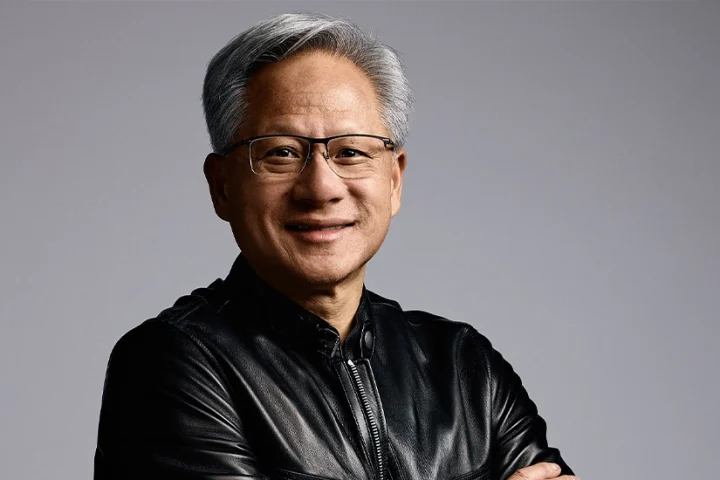
Armenian Prime Minister Nikol Pashinyan opened the ceremony alongside NVIDIA founder and CEO Jensen Huang, Kazakhstan’s Deputy Prime Minister Zhaslan Madiyev, US chargé d’affaires ad interim David Allen, and NVIDIA’s vice president of physical AI simulation, Rev Lebaredian.
Pashinyan tied the launch to Armenia’s technology agreement with Washington. “Exactly one year after signing the U.S.-Armenia Memorandum of Understanding on AI and technology cooperation with President Donald Trump, we are now seeing this major achievement,” he said.
“As AI becomes foundational infrastructure for every modern economy, countries need trusted partners who can deliver secure, scalable AI platforms fast,” said Razmig Hovaghimian, co-founder and CEO of Firebird. “Firebird combines proven execution, deep partnerships with NVIDIA and leading infrastructure providers, U.S. regulatory expertise, and a growing international pipeline.”
Six months from ground-break to operational AI factory
“Just over six months ago, this was an empty construction site. Today, it is the region’s largest operational AI factory and the foundation of one of Europe’s most ambitious AI infrastructure programs,” said co-founder Alexander Yesayan.
That timeline is well outside where most announced projects sit. Across the Gulf, Europe and Southeast Asia, the gap between announcement and racks drawing power routinely runs two to three years. The constraint is rarely GPU allocation. It is grid connection, substation work, cooling permits, and the sequencing between contractors who each need the site at a different stage.
Firebird compressed the power and cooling build into the same schedule as the compute install rather than running them in series. Schneider Electric delivered medium- and low-voltage switchgear, three-phase UPS systems and rack enclosures at the pace the servers arrived. Vertiv supplied a chilled-water cooling architecture with TrimCooler heat rejection and its iCOM CWM controller coordinating resources centrally as load shifts.
Hrazdan helped. The town is a legacy power centre in Armenia with existing generation and transmission nearby, which removes the single longest pole in most data centre schedules.
Why the NVIDIA DSX reference design matters commercially
The compute runs on Dell PowerEdge servers built to the NVIDIA DSX reference design, interconnected with Spectrum-X Ethernet. Firebird says the configuration supports up to 40 percent more GPUs within the same footprint.
For anyone financing this kind of asset, that number is the whole argument. AI infrastructure is priced and constrained by megawatts, not square metres. If a site can host meaningfully more accelerators per megawatt contracted, the revenue per unit of power rises without renegotiating anything with the utility. That is what turns a national prestige project into something a lender or an equity investor will underwrite.
The reference architecture approach also removes design risk. Firebird did not engineer a bespoke facility. It deployed a validated blueprint, which is a large part of how six months was possible, and a route other frontier-market operators can copy.
NVIDIA and CoreWeave invest in Firebird
NVIDIA’s intention to invest follows an earlier investment by CoreWeave this year. It should be noted that a vendor’s investment in a customer is not neutral. It signals that NVIDIA sees frontier markets as a durable demand channel rather than opportunistic sales, and it gives Firebird something more valuable than capital: priority in an allocation queue where availability, not price, decides who builds and who waits.
“AI factories are the infrastructure nations need to create intelligence, drive economic growth and compete in the age of AI,” Huang said. “Together with Firebird, we are building AI infrastructure across Armenia and Kazakhstan that will give researchers, startups and industries the computing foundation to develop AI at home, attract innovators from around the world and participate in the global AI economy.”
Michael Dell, chairman and CEO of Dell Technologies, framed it as a template. “The future of AI will be shaped by organizations and countries that can turn vision into capability,” he said. “Firebird is demonstrating what’s possible by creating an AI factory in Armenia that expands the infrastructure needed to develop and deploy AI locally.”
BIS export authorisation is the real gate on sovereign compute
The BIS authorisation covering Kazakhstan deserves more attention than it usually gets. For any country outside the core allied bloc, the binding constraint on sovereign compute is not money, land or power. It is whether advanced accelerators can legally arrive. Firebird is a US-incorporated company, which puts it on the workable side of that process and makes the clearance a repeatable asset rather than a one-off concession.
Read that way, Firebird’s product is not really the concrete in Hrazdan. It is a packaged route to compute for governments that cannot easily obtain it alone: US corporate structure, export clearance, a validated architecture, and a supply chain that will show up on schedule.
Perplexity signs as first Firebird customer
Perplexity will use the infrastructure for its answer engine and AI-powered digital coworker platform.
Capacity without tenants is a stranded asset. Most national AI capacity announced in the past two years leans heavily on government and university users, which does not produce the utilisation rates the economics require. An anchor tenant with commercial volume changes that, and gives Armenian developers, startups and universities a local option with proven load behind it.
For CIOs and policymakers across the UAE, Saudi Arabia, Qatar and Egypt, the useful comparison is not Armenia’s ambition but its clock. Six months from ground-break to operational, using a reference architecture, a named power and cooling supply chain, and a cleared export path, is now a visible benchmark. Regional programmes measured in years will be asked why.
The second takeaway is structural. Firebird’s advantage came from assembling a repeatable package: corporate domicile, licence, blueprint, partners. That package is portable, and Kazakhstan is the test of whether it travels. If it does, the model becomes available to any market willing to supply power and permits and let someone else carry the regulatory and design load.