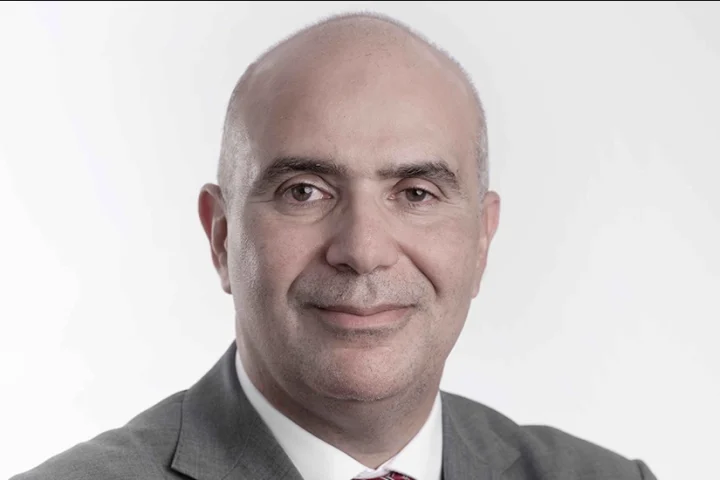



At LEAP’s fifth edition in Riyadh, Etihad Salam Telecom Company used its stand to announce a repositioning built on an uncomfortable industry statistic. Chief Business Officer Abdullah Khorami explains why the operator stopped counting products and started counting the projects that never make it past pilot.
Riyadh’s LEAP has reached its fifth edition, and the exhibition halls have filled with the familiar inventory of national ambition: sovereign cloud, gigawatt data centre commitments, model announcements timed for the opening keynote. On the Salam stand, the centrepiece was something considerably less abstract. A working demonstration of an instrumented factory floor, sensors feeding production data into a management dashboard, sat as the physical argument for a strategy the company chose LEAP to make public.
Etihad Salam Telecom Company used the show to announce Salam B2B 2.0, a restructuring of its enterprise business that Chief Business Officer Abdullah Khorami described in terms unusually candid about the limits of what a telecommunications operator can do by itself.
“We at Salam believe in partners because we cannot build everything alone, and we should not,” he said. “We count on our partners to build the right solutions and the right product selection to be sold to our customers, and this is very important partnership strategy.”
The admission matters more than it first appears. Operators across the region have spent the past three years announcing full-stack capability, generally without specifying which parts of the stack they own and which they resell. Khorami’s version starts from the opposite premise, which is that the operator’s contribution is infrastructure and integration, and that the specialist layers arrive through a partner network chosen deliberately rather than opportunistically.
The failure rate became the business case
What gives the repositioning its shape is a pair of numbers Khorami returns to repeatedly. He cited BCG research indicating that 77% of major transformational projects fall short of their full potential value, and Gartner findings suggesting that a comparable proportion never progress beyond the pilot phase.
“We find an opportunity where we can fill the gap of being the partner of choice who can deliver the full services in this gap,” he said.
Reading a failure rate as a market opportunity is a reasonable commercial instinct, though it is worth noting what the statistic actually describes. Transformation projects stall for reasons that are rarely technological. Governance, data quality, procurement cycles and internal ownership disputes account for a large share of the attrition, and none of those are solved by a broader product catalogue. The claim Salam is making is that a single accountable partner with 20 years of infrastructure ownership can absorb the integration burden that fragments these programmes. It is a plausible claim. It is also one that only customer references over the next 18 months can settle.
Eight new business units, and a catalogue that tripled
The mechanics of the rebuild are specific. Khorami described eight new business units spanning cloud, AI infrastructure, cybersecurity, applications and managed services, constructed alongside the existing connectivity business rather than replacing it.
“We’re moving from being a traditional telco provider into a digital partner selling digital services,” he said. “We moved from 60 product into 180 products within 18 months of building this new portfolio.”
Tripling a catalogue in 18 months is a considerable operational undertaking, and it raises the question that always follows portfolio expansion, which is whether depth survived the breadth. Khorami’s answer is that the selection process was not internal.
“The minute we built this solution, it was not a decision taken by Salam only,” he said. “It was a decision taken by discussing with customers, with vendors. Therefore, we believe today the solution is actually driving outcomes.”
That sourcing method, building the catalogue outward from customer and vendor conversations rather than from vendor incentive schemes, is the more interesting detail. It is also the harder one to verify from outside, and Salam has not disclosed which customers participated or how the resulting solutions have performed commercially.
Saudi Arabia’s 4,000 factories are the proving ground
The smart factory demonstration on the stand connects the repositioning to a specific national programme. The Ministry of Industry and Mineral Resources runs Future Factories, which targets the transformation of 4,000 factories from labour-intensive operation to automated, digitally instrumented production, assessed against the Smart Industry Readiness Index.
“We decided to jump on this train because we believe we have the right capabilities,” Khorami said, describing an industrial IoT layer intended to give factory management current operational information at the point of decision rather than in a monthly report.
Industrial IoT is a demanding proving ground for the partner-of-choice argument, because factory environments punish integration failure in ways that office deployments do not. Legacy machinery, proprietary control systems and operational technology security requirements all sit between a sensor and a dashboard.
An operator that can make those interfaces work, and can state clearly which components it owns and which its partners provide, has a genuinely differentiated position in a market where a large number of vendors are describing the same opportunity in the same language.
Salam’s own infrastructure gives it a starting advantage that resellers do not have. Two decades of fibre and data centre construction means the company is monetising assets it already owns rather than buying capacity to resell, and the economics of that difference compound as enterprise workloads move onto domestic infrastructure under Vision 2030’s data residency direction.
Whether the repositioning holds depends on evidence Salam does not yet have. The company has restructured, hired, and built a catalogue. The customers who determine whether 180 products constitute a portfolio or an inventory will report their verdicts through renewal rates over the coming financial year, and those are the numbers worth returning for at LEAP’s sixth edition.