


SandboxAQ has released Switch, software that brings AI agents from competing vendors into the same Slack, Microsoft Teams, and Discord channels employees already use, and has published the code for free. Announced on in August, Switch is positioned as the connective layer between the agents developers keep building and the collaboration tools enterprises have already bought.
The product converts a chat channel into what SandboxAQ calls a room: a shared space where people and agents draw on the same context, resources and history, with no work passed between separate applications. Teams can connect agents built with Claude Code, Google’s Agent Development Kit, LangChain and OpenAI tooling, and the room retains context when participants join, leave or hand over a task. Connections run through MCP, APIs and adapters, which is how the company arrives at its claim of vendor neutrality.
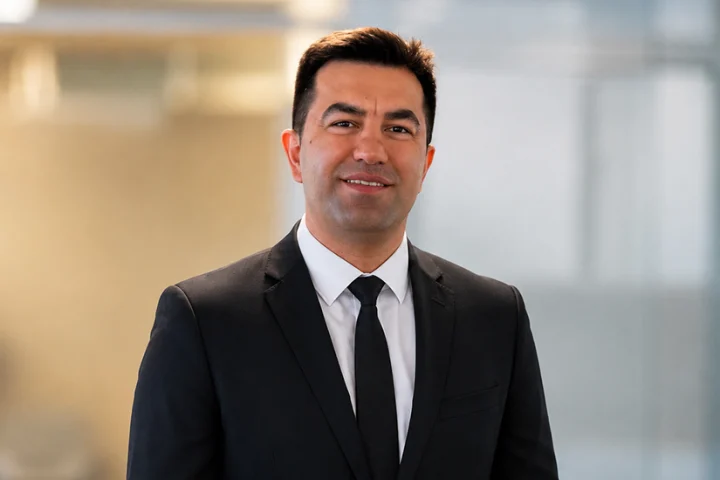
“Every team we talk to has capable agents trapped in separate tools, and a coordination tax eating the productivity those agents were supposed to deliver,” said Mohammed Aboul-Magd, General Manager at SandboxAQ. “Switch pulls agents into the channels where teams already work, where knowledge compounds instead of being relearned with every task. If you can message a colleague, you can put an agent to work.”
The scenarios SandboxAQ describes are recognisable to anyone running an enterprise technology function. A security team pulls specialist agents into a live incident channel that already holds the timeline, so nobody has to brief the agent on what happened at 02:00. A marketing team staffs a campaign room with research, copy and design agents that each build on the previous output. A legal team adds review agents carrying a deal’s full history between rounds. SandboxAQ says its own engineering, design and marketing teams built and launched Switch inside Switch rooms.
The licence deserves closer attention than the headline allows. SandboxAQ describes Switch as open source, and the code is genuinely public on GitHub. The terms are Apache 2.0 with the Commons Clause attached, and the authors of that clause state plainly that software carrying it is not open source under the definition maintained by the Open Source Initiative. What the clause removes is the right to sell the software itself, meaning any product or service whose value derives substantially from Switch. Internal enterprise use, personal use and building free products on top of it are all permitted. Reselling a managed Switch service is where the licence bites, which matters a great deal to the regional systems integrators and managed service providers who make their margins doing exactly that.
For Gulf CIOs the distinction has a practical edge. A large share of enterprise AI deployment across the UAE and Saudi Arabia runs through channel partners and integrators. Any partner planning to wrap Switch into a billable agent orchestration offering will need legal review before quoting a client. The software is free to run and constrained in how it can be sold, and those are separate questions.
The second question the announcement leaves open is governance. Putting agents from four or five different vendors into a shared channel means giving them access to the conversation history in that channel, which in most organisations is where the least structured and most sensitive discussion lives. Slack and Teams channels routinely contain customer names, contract terms, salary discussions and incident details that were never classified for machine processing. SandboxAQ’s materials describe how context persists in a room, and say nothing about how that context is scoped, redacted or logged when an agent joins a room that predates it.
That gap is more consequential in the Gulf than in most markets. Saudi Arabia’s Personal Data Protection Law and the National Cybersecurity Authority’s controls both place obligations on where data is processed and who can access it. The UAE’s AI governance work pushes in the same direction. An agent running on a US-hosted model, reading a Teams channel belonging to a Riyadh bank, is a data transfer question before it is a productivity question. Any organisation adopting Switch will need to answer it before the first room goes live.
The “coordination tax” the company describes is real enough that most CIOs will recognise it without needing evidence. SandboxAQ has not quantified it anywhere in the launch material, offering no baseline, no time saved, no reduction in handovers and no customer numbers. The pitch rests on the plausibility of the idea, which is where most agent orchestration products currently sit.
Switch forms part of Flint AI, SandboxAQ’s agent product portfolio, extending from the free Flint CLI that developers use to scan and evaluate a single agent locally. The software is available now on GitHub, with tutorials and documentation at FlintAI.dev.
Nobody has yet won the argument over where agents actually live inside a company, and SandboxAQ is betting the answer is the chat window enterprises already pay for. Giving the code away makes that bet cheaper for everyone else to take, which is the point.