

Abu Dhabi’s Advanced Technology Research Council (ATRC) funds work that most people will never see, from quantum security to autonomous systems developed in the laboratories of the Technology Innovation Institute. Whether any of it reaches a factory floor, a warehouse or a coastline is decided at VentureOne, the council’s commercialisation arm, which was set up in 2022 to license that technology to industry, develop it into projects for partners or spin it out into companies of its own.
Its ventures include SteerAI in autonomous vehicles, QuantumGate in data security and Nabat, which uses AI and robotics to map, seed and monitor mangrove forests as the UAE works towards its target of planting 100 million mangroves by 2030.
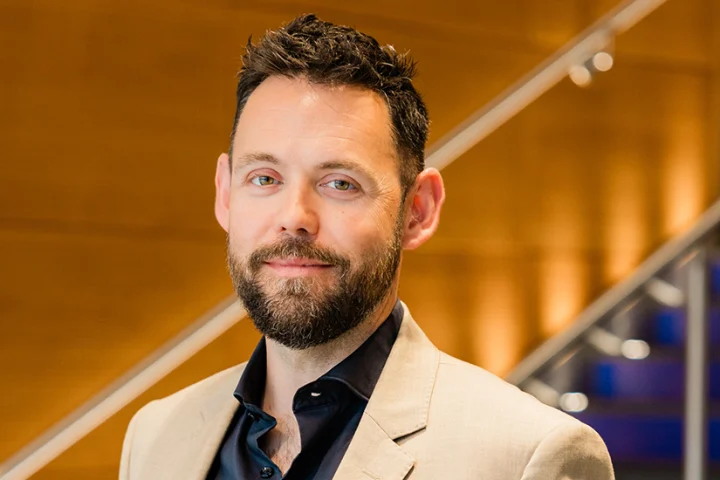
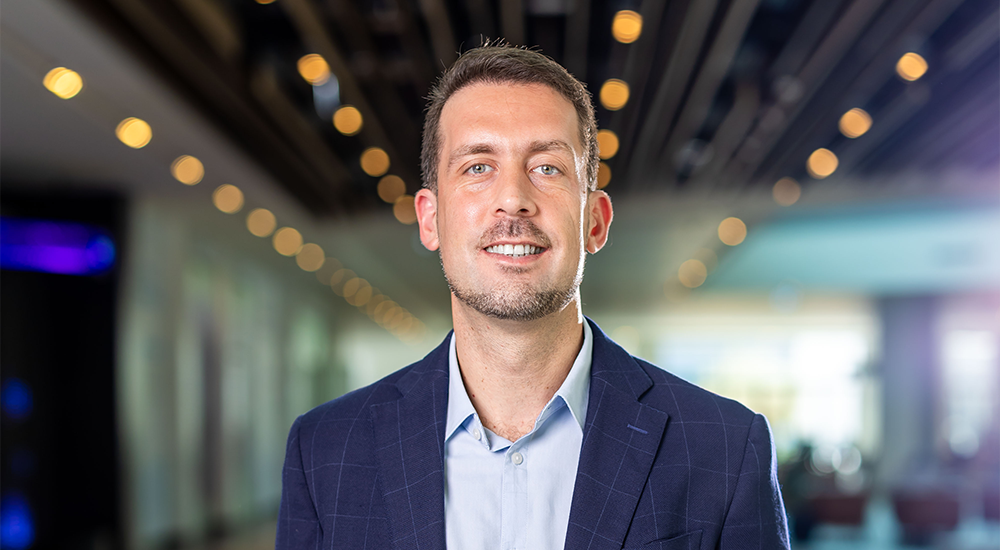
Rodrigo Campos, Chief Commercial Officer at VentureOne, works on the final stretch of that journey, where a prototype must prove that someone will pay for it. In conversation with GEC Newswire, he explained why VentureOne starts with the problems of industries and governments, how anchor clients steer a technology long before it becomes a product, and why so many AI deployments stop short of changing how organisations work.
Researchers and technologists can be convinced a product is remarkable when it has no commercial future. How does VentureOne turn advanced research into deep tech ventures that are commercially practical?
The very first step for any successful enterprise is a client’s willingness to pay. That comes from applied research that focuses on solving real problems that industries and governments are facing. If you start from the problem and move from the problem to the solution, your likelihood of transitioning that research to market is much higher than if you start with a technology that has no clear fit for a particular purpose.
This is not just about VentureOne, it is part of what we do across the Advanced Technology Research Council ecosystem, with the Technology Innovation Institute, ASPIRE and VentureOne, is to make sure our research projects focus on solving specific pain points for clients and industries.
We then work with them at the various stages of development, from finding the problem to building the solution and the technology. VentureOne does the final leg, which is transitioning that technology to market. For that, we use different commercialisation models. We decide whether to license the technology to an industry player, develop a particular project, or build a venture from the ground up and take the technology all the way to the finish line.
Research carried out for space missions has found its way into everyday devices such as laptops, yet a great deal of deep tech never leaves the laboratory. How do you set up that a technology is truly market ready, and what are the steps to get it there?
From a framework point of view, this is nothing new. What you usually look at is the technology readiness level scale. The early levels cover the moment we sit down over a coffee and write down an idea, and then the point at which that idea is proven to work in a laboratory environment.
Levels 5 and 6 are reached when the idea is working in the lab and has also been proven with a client in an operational environment, so there is a proof-of-concept creating value for a client, still at an experimental level.
Once that prototype has proven to be functional from a safety and regulatory point of view as well as a capability point of view, the technology moves into industrialisation. This is when you develop it to solve problems at scale for end users. The scale finishes at TRL 9, which is when you have a ready product.
The most important ingredient in our process is that across the whole scale you work very closely with your anchor clients. As you make design choices about your technology, whether those concern the inputs, the cost structure, the features you build or the use case, the client is the sounding board that confirms them. That way, at the end of the cycle, you have built something clients will be willing to pay for.
Can you take us through a venture you have already taken to market, and how it got there?
Nabat is a representative example. It is our venture in agritech, and one of its core use cases is mangrove forestation, which requires seeding that is usually done manually in the sand. In the preliminary stages, we had a series of technologies that were not fully joined up, each resolving part of what could become a fully automated mangrove forestation operation covering mapping, seeding, and monitoring.
We used several systems and algorithms from the field of autonomous robotics to automate that process.
Those capabilities started out performing isolated activities: mapping the terrain, dropping seeds with precision and monitoring growth. Brought together, they became a complete value proposition, and that became the Nabat venture. It is successful now and is adding tremendous value to the UAE.
What are the hardest challenges in taking a research concept or prototype to market at scale, and how do you overcome them?
One challenge arises when a technology has not been fully confirmed with the client, because you can end up with solutions looking for problems, which is not a good place to start. That is the reason more of our focus is on research that solves clear problems for clients, industries, and governments, so starting development with a clear problem in mind deals with the first challenge.
The second concerns the stage of development and the maturity of the industries involved. When you do research in deep tech fields such as quantum and space exploration, you are building technologies for problems and markets that are not yet fully mature or well defined. That means the commercialisation cycle and the funding cycle are much longer, which is why patient capital that invests in bold ideas for large future markets plays a significant role.
Governance and sovereignty now sit high on the agenda for every organisation adopting AI. What should companies keep in mind as they take AI products to market?
Part of the question holds the answer. Data privacy and sovereignty are fundamentally important. It is one of the areas where the UAE is positioning itself very strongly, and a successful AI stack must include that layer. It is also one of the areas where we deliver and where we have decided to play.
Which trends in AI innovation will matter most in the years ahead, and what should industries keep in mind?
A very important trend is applied AI, which means using the power of AI to automate industrial processes and warehouse operations, and combining AI with robotics to automate fleet management and other operations that previously carried a lot of human friction or room for improvement. The applicability of AI is becoming extremely important, and so is the challenge of applying it.
The last mile of AI, when it comes to changing processes that are long-established and long-lived, is not easy. You might see a lot of AI use cases that industries and companies adopt, but how many of them are improving the way we work at a fundamental level? That is why adoption of AI, and applied AI in particular, is such a critical part.