

Over 27 years ago, in September 1999, Ikonos became the first commercial satellite to sell high-resolution imagery. Built by Lockheed Martin, the camera was created by Eastman Kodak; the Ikonos could pick out objects on the ground roughly one metre across, about 82 centimetres in black and white, with colour images at around three to four metres, sharp enough to show cars and buildings.
Until that point, high-resolution imagery of the Earth had been restricted to governments and space agencies. Ikonos put it in front of the everyday users in a way spy satellite pictures never could. Its images appeared on Google Earth and Google Maps, giving many people their first view of their own homes from space.
Over two decades later, this has transformed into a space for multiple private companies operating fleets of optical satellites that can photograph the ground through clouds and darkness. Coastguards, port authorities, and security agencies now buy images of almost any place on Earth from several suppliers at once.
However, spoilt for choice typically brings its own set of problems. Every supplier sells through its own ordering system, and an organisation with several contracts must check every one of them separately to find out which satellite can photograph a site, at what resolution and at what price.
This led to the birth of the startup TACTICA AI founded by Dr Chaouki Kasmi, which sells software that helps organisations, mostly government, defence and security users, make operational decisions faster from the data they already have.
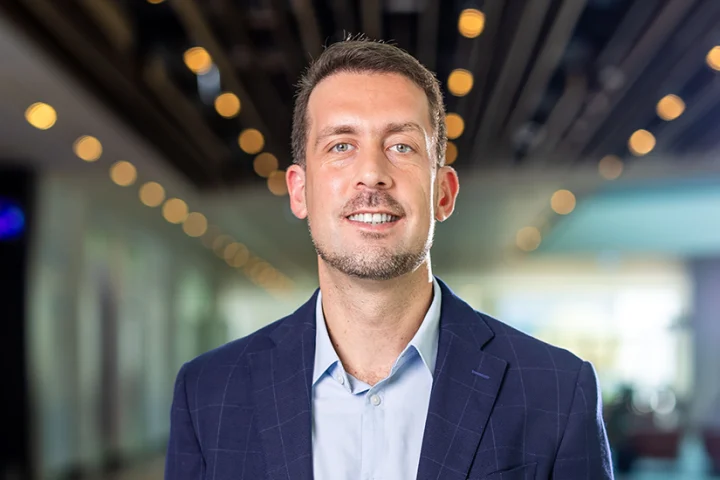
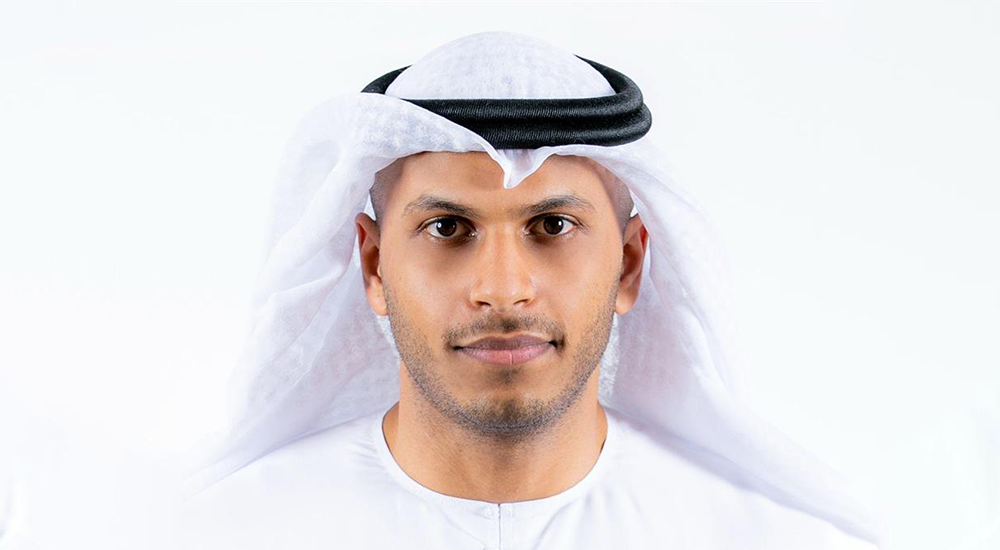
Explaining what it looks like for an organisation buying imagery, Dr Saeed Aljaberi, Director of AI Workflows at TACTICA AI, said, “If an organisation happens to be dealing with 10 satellite providers, it would have 10 computers and 10 systems it would use.”
It’s a set-up Aljaberi is familiar with – he had met a company that needed help analysing the satellite images it was buying. Looking at the fragmentation, the first thing the team at TACTICA AI did was to unify all these platforms into one operational picture. This single screen provided visibility of every capture opportunity from every service provider side-by-side.
The customer could then weigh them against each other before deciding or committing to any budget. “You can compare different configurations of the images, quality, and the resolution, and the cost for each one,” said Aljaberi. This single screen grew into a multi-domain decision-support platform by May 2026.
TACTICA AI took this to a wider market at ‘Make it in the Emirates,’ with partnerships involving France’s Safran and Poland’s Satim.
The company says the platform now fuses satellite and radar imagery with ship-tracking signals, CCTV and sensor feeds into one real-time picture, and according to its launch announcement, it is built on technology developed by the Technology Innovation Institute (TII), the applied research arm of Abu Dhabi’s Advanced Technology Research Council, in under 35 days, with deployments already running in mission-critical environments.
“TACTICA AI is an AI-first intelligence platform that supports operations and decision-making, one especially focused on agentic AI, the class of systems that can plan and carry out multi-step tasks with a degree of autonomy.
TACTICA AI found its product by sitting inside the client’s problem
Half of TACTICA AI’s staff work in engineering and development, a group that includes software developers and a deployment engineering team working directly with clients. The team spends a significant amount of time inside each client’s operations before deciding what to build.
“We look for where we can implement AI to speed up and to automate the process. The platform is built around the client’s challenges and bottlenecks,” said Aljaberi. It starts with an operator setting the outcome needed by a mission; TACTICA AI’s agents identify which data sources, tools, models and workflows are required to reach the outcome. The agents extend the logic of the first ordering screen from one purchase to an entire operation.
Intelligence, sensor and operational information flows through TACTICA AI’s platform, which in turn is translated based on what each client needs. What is also important is the question of who builds and controls the software. Aljaberi emphasised the importance of sovereignty; what helps TACTICA AI’s whole team is that it is based out of Abu Dhabi.
He pointed to a dedicated security team and a working knowledge of the cyber security compliance requirements that clients bring to each deployment. Aljaberi added that since the team builds around each client’s specific requirements, the process of deployment includes both software and data sovereignty.
“This is part of the motivation to build TACTICA, to have sovereign solutions and governance of the solutions,” he said. In Aljaberi’s account, the company’s software engineers and forward-deployed engineers are well aware of the risks surrounding AI at present, and the team kept those risks in view from the first day of development.
AI agents will dominate 2027, and governments will want control over them
In the near future, the implementation of AI agents and technology would be a continued focus of the TACTICA AI platform.
Aljaberi placed the company within a wider national effort, alongside TII’s research programmes and the UAE’s investment in AI capability. “We’re one part in a larger ecosystem where we try and aspire to make Abu Dhabi a hub for AI innovation,” he said.
Twenty-seven years after Ikonos put the first commercial high-resolution images on sale, the organisations buying them have more satellites to choose from than at any point in history, and TACTICA AI is building its business on the work that follows the purchase: putting every option on one screen, joining the imagery to radar, ship-tracking and sensor data, and using AI agents built in Abu Dhabi to help operators decide what to do next.